From January to July, the revenue and total volume of telecom services increased by 8.3% and 22.2% respectively.
Overall operation situation
The revenue of telecom business maintained steady growth, and the total telecom business maintained double-digit growth.1— In July, the telecom business revenue totaled 944.2 billion yuan, up 8.3% year-on-year, and the growth rate was the same as that in the first half of the year. The total telecommunications business calculated at the constant price of the previous year increased by 22.2% year-on-year.
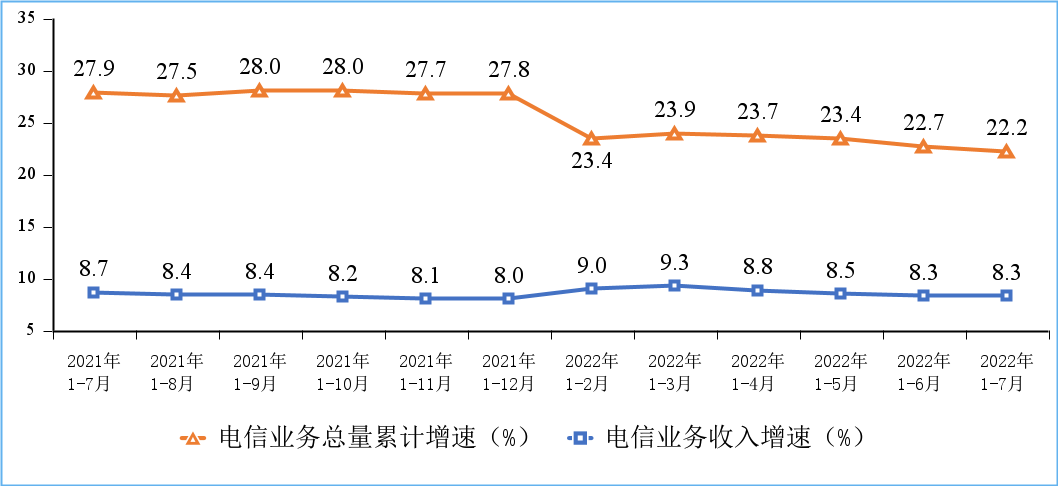
Figure 1 Cumulative growth rate of telecom business income and total telecom business
Fixed Internet broadband business revenue grew steadily.1— In July, the income of three basic telecom enterprises from Internet broadband services was 142.1 billion yuan, up 9.3% year-on-year, accounting for 15.1% of the telecom business income, up 0.1 percentage point compared with the first half of the year, driving the telecom business income to increase by 1.4 percentage points.
Mobile data traffic business revenue grew at a low speed.1— In July, the three basic telecom enterprises completed mobile data traffic business income of 386.5 billion yuan, up 0.5% year-on-year, accounting for 40.9% of the telecom business income, which boosted the telecom business income growth by 0.2 percentage points.
The income of emerging businesses maintained rapid growth.Three basic telecom enterprises actively develop IPTV, Internet data center, big data, cloud computing, Internet of Things and other emerging services, 1-mdash; In July, the revenue from emerging business totaled 184.3 billion yuan, up 35.1% year-on-year, accounting for 19.5% of the telecom business revenue, which boosted the telecom business revenue growth by 5.5 percentage points. Among them, the revenue of cloud computing and big data increased by 131.7% and 60.3% respectively, the revenue of data center business increased by 16.5% and the revenue of Internet of Things business increased by 25.9%.
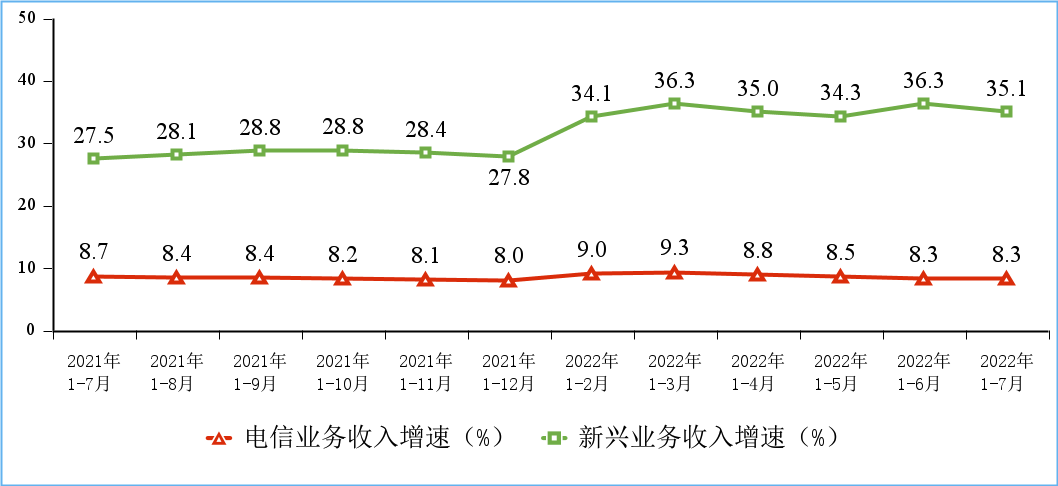
Figure 2 Income growth of emerging businesses
The decline in voice business revenue narrowed slightly.1— In July, the revenue of fixed voice and mobile voice services of the three basic telecom enterprises reached 12.18 billion yuan and 67.3 billion yuan, down by 10.1% and 3.8% respectively, which was 0.7 and 0.6 percentage points lower than that of the first half of the year, accounting for 8.4% of the total telecom business revenue, down by 1.2 percentage points compared with the same period of last year.
Development of telecom users
The scale of fixed broadband access users has increased steadily, and the number of gigabit users has continued to expand.By the end of July, the total number of fixed Internet broadband access users of the three basic telecommunications enterprises reached 566 million, a net increase of 30.7 million over the end of last year. Among them, there are 531 million fixed Internet broadband access users with access rates of 100Mbps and above, accounting for 93.8% of the total number of users, accounting for 0.8 percentage points higher than the end of last year; There are 65.7 million fixed Internet broadband access users with access rate of 1000Mbps or above, a net increase of 31.12 million over the end of last year, accounting for 11.6% of the total users.
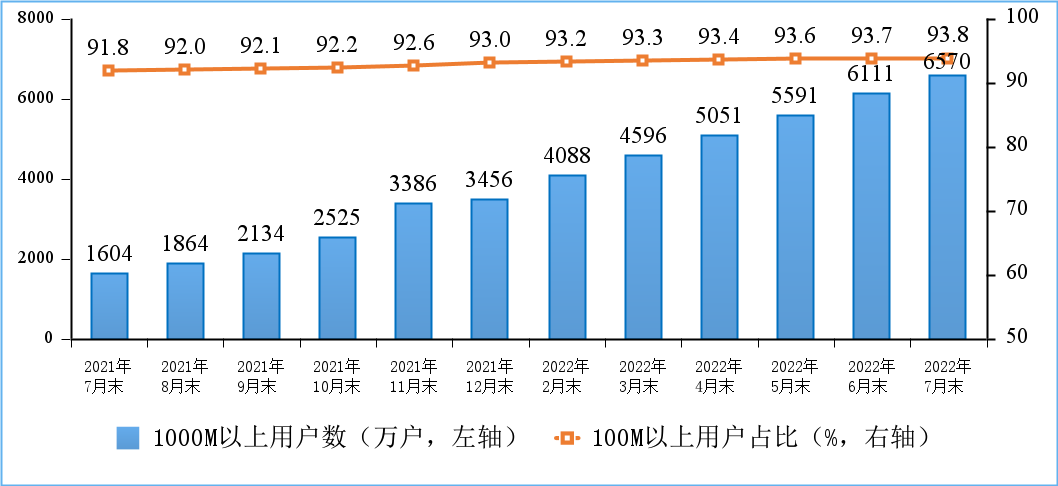
Figure 3 Fixed Internet broadband access users with a rate of over 100 m and over 1000 m.
The scale of mobile phone users has increased steadily, and 5G users have developed rapidly.By the end of July, the total number of mobile phone users in the three basic telecommunications enterprises reached 1.672 billion, a net increase of 29.41 million over the end of last year. Among them, 5G mobile phone users reached 475 million, a net increase of 120 million over the end of last year, accounting for 28.4% of mobile phone users, accounting for an increase of 6.8 percentage points over the end of last year.
Internet of things users account for nearly half of mobile network connection terminals, and the number of IPTV users has increased steadily.By the end of July, the three basic telecommunications companies had developed 1.667 billion cellular Internet of Things terminal users, a net increase of 270 million over the end of last year, accounting for 49.9% of the number of mobile network terminal connections (including mobile phone users and cellular Internet of Things terminal users). The total number of IPTV users reached 368 million, a net increase of 19.79 million over the end of last year.
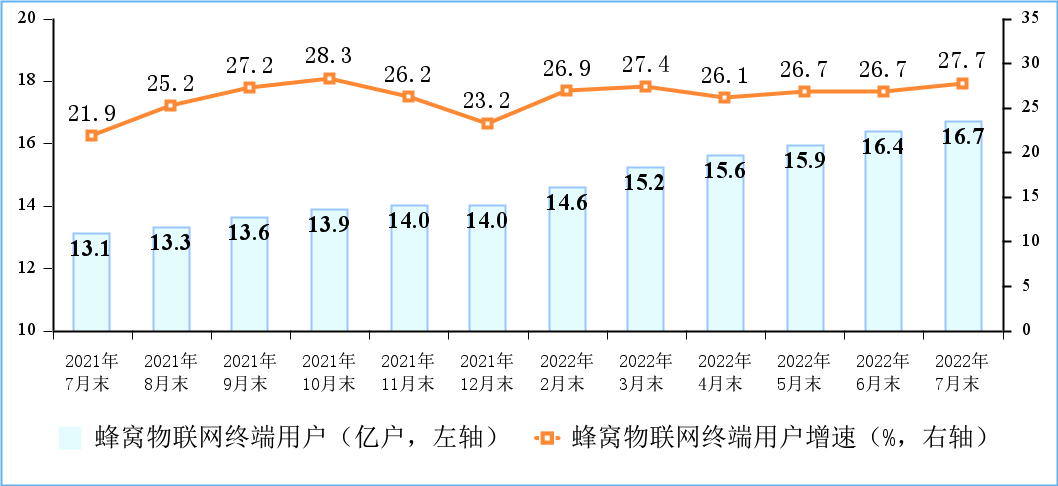
Figure 4 End-users of the Internet of Things
Telecom service usage
Mobile Internet traffic grew rapidly.1— In July, the cumulative traffic of mobile Internet reached 146.3 billion GB, a year-on-year increase of 19.1%. By the end of July, the number of mobile Internet users had reached 1.455 billion, a net increase of 39.55 million over the end of last year. In July, the average mobile Internet access traffic (DOU) reached 15.27GB/ household month, up 8.5% year-on-year and 0.55GB/ household month higher than the end of last year.
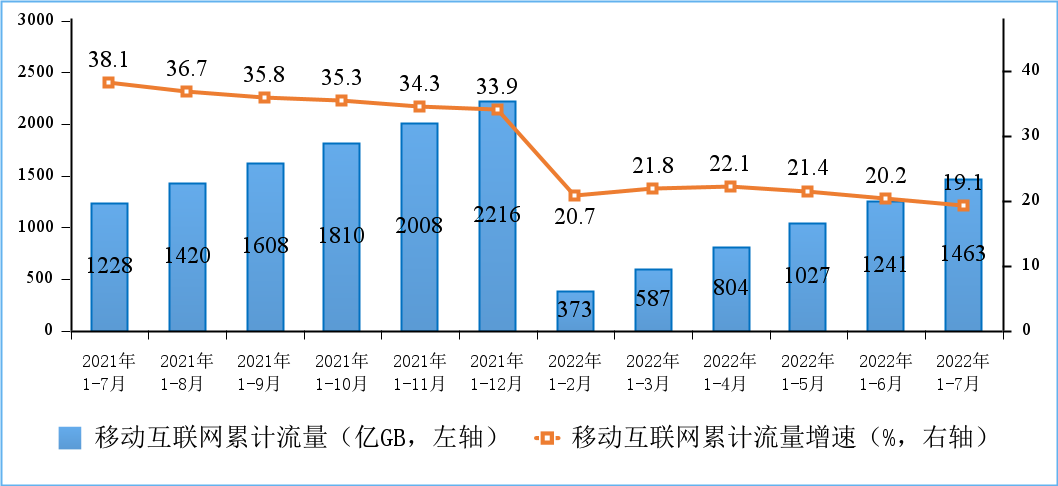
Figure 5 Cumulative access traffic and growth rate of mobile Internet
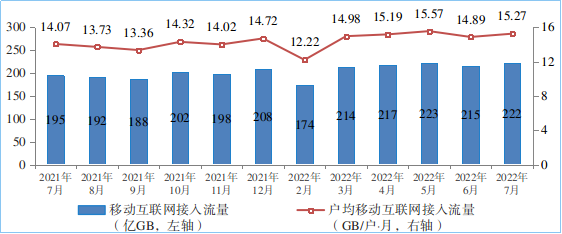
Fig. 6 Monthly traffic and DOU of mobile Internet access.
The volume of mobile phone calls increased slightly, and the growth rate of mobile short message service revenue rebounded.1— In July, the length of outgoing calls on mobile phones was 1.32 trillion minutes, a year-on-year increase of 1.1%; The call duration of fixed-line callers was 48.35 billion minutes, down 11.8% year-on-year. 1— In July, the national mobile SMS business volume increased by 2.1% year-on-year, and the revenue of mobile SMS business increased by 0.8% year-on-year. The growth rate dropped by 0.4 and increased by 0.5 percentage points respectively compared with the first half of the year.
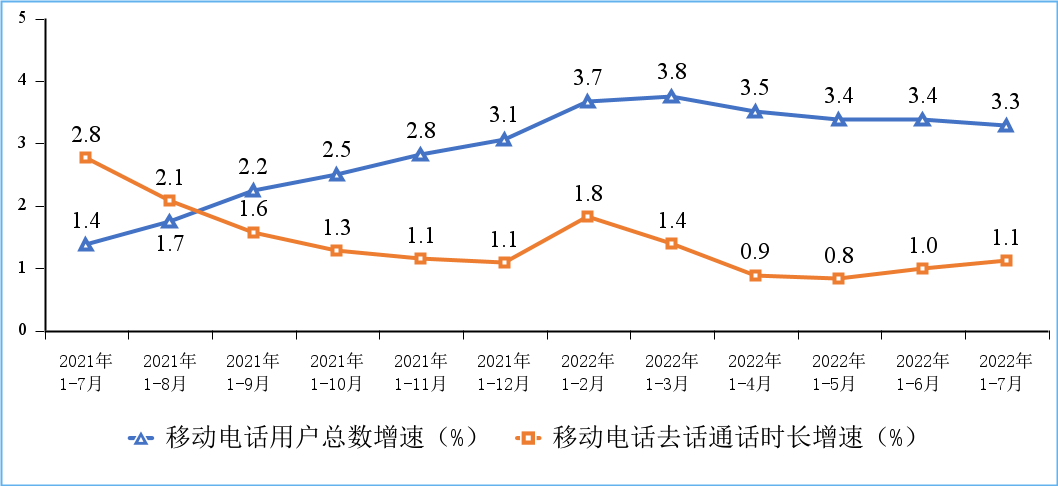
Figure 7 The growth rate of mobile phone users and call duration.
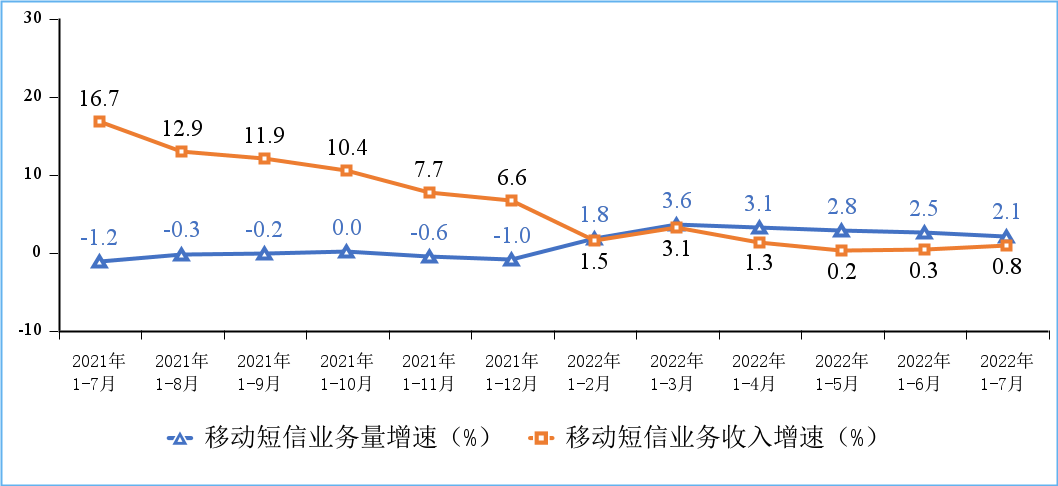
Figure 8 Year-on-year growth of SMS business volume and revenue.
Communication ability situation
The construction of broadband networks has been steadily advanced, and the service capacity of gigabit networks has been continuously improved.By the end of July, the number of broadband Internet access ports in China had reached 1.043 billion, a net increase of 25.6 million over the end of last year. Among them, the number of FTTH/O ports reached 995 million, a net increase of 35.04 million compared with the end of last year, accounting for 95.4% of the broadband access ports of the Internet, accounting for an increase of 1.1 percentage points compared with the end of last year. By the end of July, the number of 10G PON ports with gigabit network service capacity reached 11.61 million, a net increase of 3.757 million over the end of last year.
The construction of 5G networks has advanced rapidly.By the end of July, the total number of 5G base stations reached 1.968 million, accounting for 18.8% of the total number of mobile base stations, accounting for an increase of 4.5 percentage points compared with the end of last year. 1— In July, 543,000 new 5G base stations were built.
Regional development
The scale of gigabit and above access users in the eastern region is significantly ahead.By the end of July, the penetration rates of fixed broadband access users with 100Mbps and above in the eastern, central, western and northeastern regions were 93.4%, 94.8%, 93.3% and 93.8% respectively, and the number of broadband access users with 1000Mbps and above reached 34.64 million, 13.278 million, 16.35 million and 1.434 million respectively.
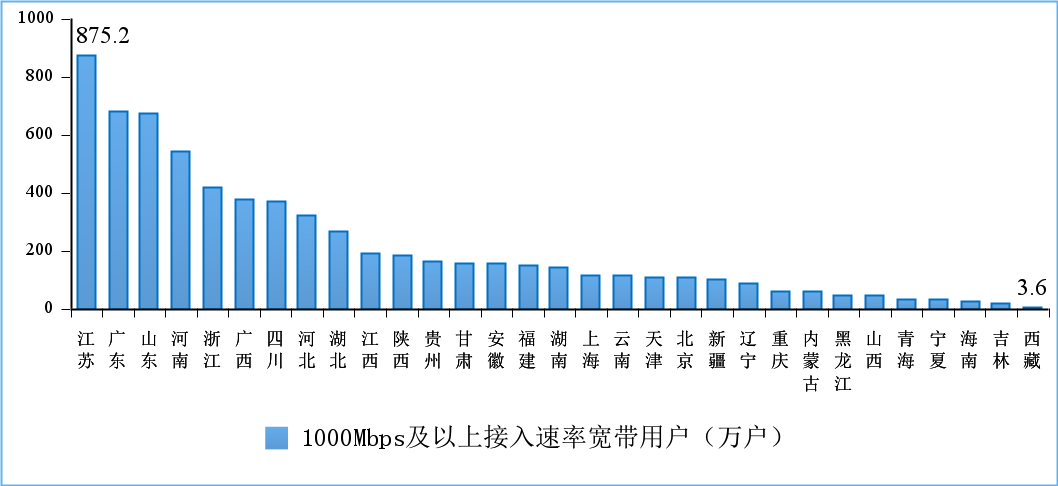
Fig. 9 Provinces of broadband access users with access rate of 1000Mbps and above in July 2022.
The proportion of 5G construction and users in the eastern region is leading.By the end of July, there were 946,000, 420,000, 479,000 and 123,000 3G base stations in the eastern, central, western and northeastern regions, respectively, accounting for 20.8%, 18.3%, 16.3% and 17.7% of the total mobile phone base stations in this region. The number of 5G mobile phone users reached 211.57 million, 110.18 million, 121.99 million and 30.91 million respectively, accounting for 29.1%, 28.6%, 27.6% and 26.1% of the total number of mobile phone users in this region respectively.
The growth rate of mobile internet access traffic in the central region is leading, and the DOU value of some western provinces ranks among the top in the country.1— In July, the mobile Internet access traffic in East, Central, West and Northeast China reached 62.21 billion GB, 33.06 billion GB, 43.46 billion GB and 7.55 billion GB respectively, up by 19.1%, 20.5%, 19.4% and 12.5% year-on-year. In Xizang, Qinghai, Xinjiang and Yunnan provinces, the average mobile Internet access flow (DOU) in July exceeded 20GB/ household month; The difference between the highest and lowest DOU values in each province is 15.8GB/ household month, which is 2.4GB/ household month higher than the same period of last year.
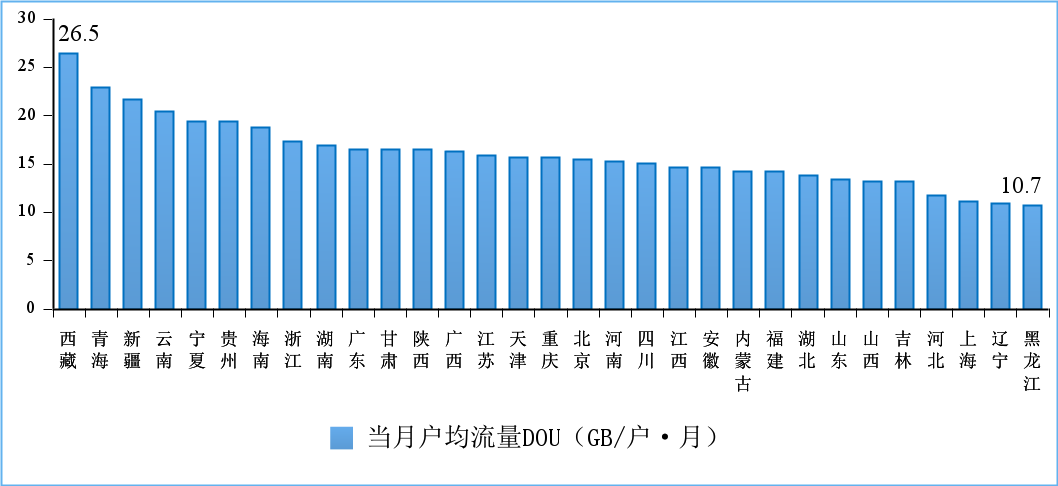
Fig. 10 Average mobile Internet traffic (DOU) by province in July 2022.