Outlook | Biological breeding is an important weapon to fight the seed industry.
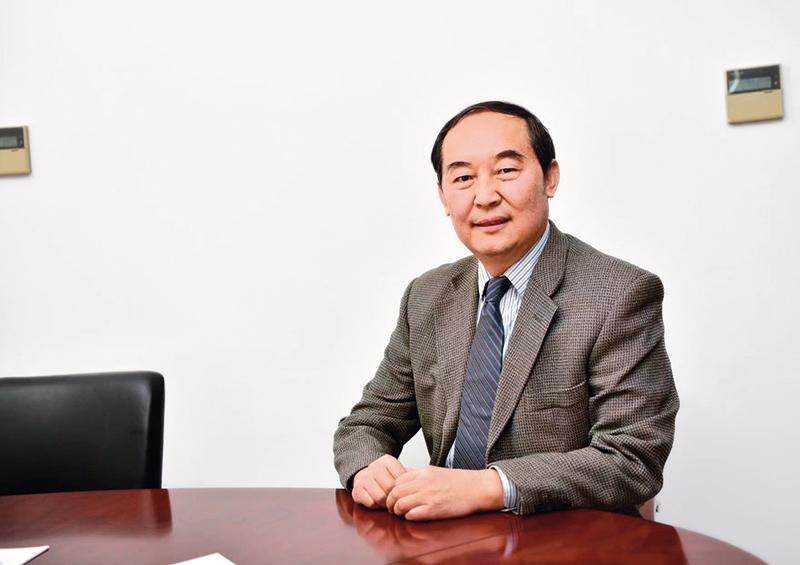
Zhong Kang, an academician of China Academy of Sciences
China has obvious advantages in rice molecular module design breeding technology, leading the development direction of international breeding.
By improving rice varieties through molecular design, they can survive at low temperature and keep the yield unaffected, which can not only solve the problem of stable rice production in existing production areas, but also plant rice in large areas in high latitudes, thus providing guarantee for solving the food security problem in China.
At present, only 619 new forage varieties in China have passed the examination and approval, of which two-thirds are imported varieties and improved varieties, and more than 80% of alfalfa used as the "king of forage" depends on imports. The design and creation of forage germplasm is a major strategic demand of the country.
With the help of the experience of rice basic biology and breeding research, our team focused on building the theoretical and technical system of forage complex genome function analysis and forage molecular design breeding, and promoted forage breeding to enter the era of design breeding as soon as possible.
Text | "Outlook" News Weekly reporter Hu Yongshun
Food security is an important foundation of national security. Chinese’s rice bowl must be firmly in his own hands at all times. China’s grain is mainly planted in China, and seeds can be said to be the "chip" of agriculture.
China’s per capita arable land area is less than 40% of the world average. In the case of limited arable land, it is necessary to vigorously promote the key agricultural technologies such as seed sources to ensure the stable grain output of more than 1.3 trillion Jin in 2022.
Advanced biological breeding technology is the cornerstone to support and promote the development of seed industry in China.
In recent years, China has made remarkable progress in the field of biological breeding technology, especially in rice molecular module design breeding technology, which has led the development direction of international breeding.
At the same time, we should also see that the foundation of seed industry development in China is still not solid. "At present, the industrialization of biological breeding technology is progressing slowly. It is urgent to promote the transformation of advanced breeding technology, formulate supporting laws and regulations that are conducive to advanced technologies such as biological breeding, promote the industrial application of biological breeding in an orderly manner, and realize the self-reliance and self-reliance of seed industry science and technology and the self-control of seed sources." Zhong Kang, an academician of the China Academy of Sciences and a researcher at the Institute of Botany of the Chinese Academy of Sciences, told the reporter of Outlook Newsweek.
Zhongkang and his team cultivated cold-tolerant rice varieties through molecular design, which provided guarantee for solving food security problems in China and even the world.
Recently, Zhong Kang accepted an exclusive interview with our reporter on the development status of biological breeding in China and how to arrange major biological breeding projects around the major strategic needs of the country.
Biological breeding promotes the leap-forward development of modern seed industry
Lookout:Why is intelligent molecular design breeding the future direction of breeding?
Sokang:Biological breeding is a process of cultivating new biological varieties by using methods and principles such as genetics, molecular biology and modern bioengineering technology. Broadly speaking, the development of biological breeding technology has gone through three main periods: original domestication and breeding (version 1.0), hybrid breeding (version 2.0) and molecular breeding (version 3.0). Intelligent molecular design breeding (version 4.0) is the future direction of breeding.
Since the 20th century, the development of biological breeding technology is closely related to the progress of basic research of life science. Based on the theoretical and technical development of genetics, molecular biology, genomics, computational biology and systems biology, researchers have developed techniques such as cross breeding of farm varieties, breeding of semi-dwarf new varieties, breeding of high-yield heterosis, molecular module and molecular precision design breeding.
There are many milestone events in crop breeding during this period. For example, the earliest hybrid was born-Marquis, a hybrid variety of spring wheat for production cultivated by Canadian scientists in 1904; The first commercial hybrid maize double cross was a great success in 1943, which promoted the development of commercial seed production industry. In 1950s, scientists discovered semi-dwarf genes in wheat, which triggered the "first green revolution" and cultivated new varieties of semi-dwarf wheat, rice and other crops with fertilizer tolerance, lodging resistance and high yield. Since the 1970s, breeding experts have cultivated a large number of hybrid rice and hybrid corn products by taking advantage of the biological phenomenon that hybrid offspring are superior to their parents in environmental adaptability, yield and resistance. At present, heterosis has been widely used in the breeding of rice, corn and other crops. Xiaoyan series wheat varieties obtained by Yuan Longping’s super hybrid rice and Academician Li Zhensheng’s team through distant hybridization is a model of heterosis breeding, which has made great contributions to crop yield increase and food security in China and the world.
However, the selection of agronomic traits in cross breeding mainly depends on the experience of breeding experts. Through large-scale field morphological screening, the workload is large, the efficiency is low and the cycle is long. Generally, it takes more than 10 years to cultivate a new variety. At the end of last century, the development and maturity of DNA molecular marker technology and transgenic technology promoted the arrival of molecular breeding (version 3.0) represented by molecular marker-assisted breeding and transgenic biotechnology breeding.
At present, the breeding technology of world-class seed companies is changing from molecular breeding (version 3.0) to intelligent molecular design breeding (version 4.0), while China is still in the transition stage from phenotypic selection (version 2.0) to molecular breeding (version 3.0). In terms of biological breeding technology, China is still catching up.
Lookout:In the field of rice biological breeding technology, where is China in the world?
Sokang:Biological breeding is one of the core technologies in agriculture. Although China is catching up in this field, rice biological breeding technology is in the forefront of the world. At present, China has obvious advantages in rice molecular module design breeding technology, leading the development direction of international breeding.
Because most agronomic (economic) traits are regulated by multiple genes and have the characteristics of "modularity". Therefore, we can comprehensively use genomics, computational biology, systematic biology, synthetic biology and other means to analyze the molecular modules of important agronomic (economic) traits such as high yield, stable yield, high quality and high efficiency, and reveal the law of systematic analysis and coupling of molecular modules, so as to cultivate new varieties through the assembly of multiple modules.
Li Jiayang, a researcher at the Institute of Genetics and Developmental Biology, Chinese Academy of Sciences, cultivated new japonica rice varieties such as Zhongke 804, which are symbolic varieties with molecular modules such as grain type, rice blast resistance, excellent rice quality and lodging resistance through precise design by using the concept and technology of molecular module design and breeding. Fu Xiangdong, a researcher at the Institute of Genetics and Developmental Biology, Chinese Academy of Sciences, used nitrogen efficient molecular modules to cultivate Zhongheyou No.1, which increased yield under the condition of reducing nitrogen fertilizer.
Aiming at the future, China Academy of Sciences has set up a strategic pilot science and technology project of seed precise design and creation, striving to achieve major theoretical and key technological breakthroughs in the field of seed science and technology and seize the commanding heights of seed innovation and technology.
Seed precision design and creation focuses on rice, wheat and fish. Through precise control of theory, precise design of technology and precise creation of products, we create new design varieties that can increase production, improve quality, reduce investment, improve efficiency, reduce losses and promote stability, and lead the leap of breeding technology from molecular breeding to precision design breeding. Based on the concept of precise design to create new crops, the team of Academician Li Jiayang accurately transformed the genes of the original wild rice, and successfully created new rice materials with reduced grain dropping, shorter awn length, lower plant height, longer grain length, thicker stems and shorter heading time, which shortened the domestication process of wild rice from thousands of years to more than ten years, providing a technical route for cultivating new rice crops in the future.
Advanced breeding technology is becoming an important support to promote the leap-forward development of modern seed industry in China.
Cultivate cold-resistant rice
Lookout:What have you achieved in molecular breeding research with important breeding value?
Sokang:I mainly carry out research work related to crop temperature perception. Indica rice and japonica rice are two subspecies of rice, and they are also the main cultivated rice varieties. Their cold tolerance mechanism and character improvement are the main goals of my research.
Temperature is the main limiting factor affecting the cultivation area of rice varieties. Japonica rice has strong tolerance to low temperature and is mainly distributed in the Yellow River Basin, Northeast China, North China and the middle and lower reaches of the Yangtze River in China. Northeast China is the main producing area of high-quality japonica rice in China. In the examination and approval of rice varieties in northeast China, whether it has cold tolerance is an agronomic trait that plays a veto role; Indica rice has weak tolerance to low temperature, which is mainly distributed in tropical South China and subtropical areas south of Huaihe River in China. However, the cold weather in the south often requires indica rice and super hybrid rice varieties to have cold tolerance.
One of my research focuses is to improve rice varieties through molecular design, so that they can survive at low temperature and keep the yield unaffected. This can not only solve the problem of stable rice production in existing production areas, but also plant rice in large areas in high latitudes, thus providing guarantee for solving China’s food security problems.
Our study found that there were obvious differences between indica and japonica rice in cold tolerance key gene COLD1, and the change of single nucleotide in COLD1 could obviously change the cold tolerance of rice. Academic journals such as Cell have repeatedly published special comments that the research results of COLD1 may provide a new way out for the food shortage caused by global environmental changes, and may also contribute to stabilizing staple food production and raising the global population.
In cooperation with Academician Qian Qian, based on the technical route of molecular module design, we assembled COLD1 molecular module to cultivate hybrid rice variety Jiaheyou 7, which has good cold tolerance, high yield, high quality and disease resistance. It has passed the national rice variety approval in 2020 and become a new variety that can be popularized in rice planting areas.
Our team will continue to deepen the basic theoretical research and technical mining of rice biological breeding. At present, the stress-tolerant molecular modules such as cold tolerance and salt tolerance of rice are systematically excavated, and the coupling mechanism between them and high-yield and high-quality modules is revealed. At the same time, cooperate with breeding experts to overcome the technical route of molecular design breeding of high-quality varieties with multi-module coupling and establish an efficient breeding system.
Pushing Forage Breeding into the Age of Design Breeding as soon as possible
Lookout:Why do you aim at forage breeding next?
Sokang:In recent years, people’s living standards have been continuously improved, and the proportion of protein foods such as meat, eggs and milk in the dietary structure has been increasing. According to relevant statistics, in China’s national food consumption structure, the proportion of grain consumption reached 41.09% in 2013, and by 2019, the proportion of grain consumption dropped to 35.12%. People’s demand for protein food is increasing gradually. Protein food comes from cattle and sheep that mainly eat forage, pigs, chickens and aquatic products that mainly feed on soybeans, corn and so on.
There is a great demand for forage in China’s aquaculture and animal husbandry, so it is very urgent to cultivate high-quality forage varieties. By the end of 2018, the number of cattle and sheep in China reached 750 million sheep units. Cattle and sheep are representatives of herbivorous livestock, which need 500 million tons of hay every year. The annual hay output of natural grassland in China is about 300 million tons, with an annual gap of more than 200 million tons.
The lack of excellent new forage varieties is the bottleneck problem that restricts the development of forage industry. The forage breeding industry in China started late, the research strength is scattered and weak, the breeding team group is small, the foundation of related disciplines is insufficient, and the biological breeding technology is relatively backward, which restricts the modernization process of forage seed industry in China.
At present, only 619 new forage varieties in China have passed the examination and approval, of which introduced varieties and improved varieties account for two-thirds, and there are more than 5,000 varieties in Europe and America in the same period. In addition, the quality, production performance and stress tolerance of forage varieties independently developed in China are also difficult to surpass those of imported varieties, which makes the provenance of commercial forage production in China mainly imported. For example, more than 80% of alfalfa used as the "king of forage" depends on imports.
From a global perspective, the forage breeding level is obviously behind the staple crops, and the forage breeding technology is still in the stage of cross breeding based on phenotype, with low efficiency and long cycle. Generally, it takes 12 to 15 years to select a forage variety. The basic biological problems of forage grass are still lack of systematic research, which also restricts the mining, analysis and utilization of key genes of important agronomic traits such as yield, stress tolerance and quality.
In recent years, the No.1 Document of the Central Committee has repeatedly emphasized accelerating the development of grass and animal husbandry. The design and creation of forage germplasm is a major strategic demand of the country. Our team adjusted the research direction according to the needs of the country, and with the help of the experience of rice basic biology and breeding research, focused on building the theoretical and technical system of forage complex genome function analysis and forage molecular design and breeding, promoting forage breeding to enter the era of design and breeding as soon as possible, and realizing the design and creation of excellent forage germplasm.
Lookout:What are the major scientific and technological projects of biological breeding that you suggest the country start first?
Sokang:It is hoped that the country can implement more scientific and technological innovation research projects of forage biological breeding. Start as soon as possible the mining, analysis and utilization of excellent forage germplasm resources, molecular module mining of crop adversity and variety design and other scientific and technological projects.
The specific research directions include constructing the core germplasm of alfalfa, Leymus chinensis and other important forage grasses, comprehensively analyzing the basic biological characteristics of forage grasses, establishing the technical system of forage genome analysis, whole genome scanning and molecular design breeding, and obtaining molecular modules that can be used for molecular design.
The improvement of forage supply capacity cannot compete with food rations for land, so it is necessary to consider the utilization of non-arable land resources such as saline-alkali land and land resources under photovoltaic power generation panels, which requires systematic analysis of forage stress tolerance mechanism and molecular network, and to explore molecular modules that can be used to design stress-tolerant forage.
In terms of forage germplasm innovation and variety cultivation platform construction, we should take the opportunity of restructuring the national key laboratory system to build a national strategic scientific and technological force for forage germplasm design. ■
Reporting/feedback