Friends circle setting "3 days visible" becomes normal. Social media privacy is no longer willful.

  "Without friends, friends can also see the latest 10 messages, but with friends, they can only see 3." Although it has been repeatedly criticized, since WeChat launched the new function of friends circle, "3 days visible" has gradually become the normal state of friends circle.

  "The circle of friends is visible for three days, which proves that the privacy of the circle of friends is no longer willful. Now that we have fully entered the era of social media, this change on WeChat actually shows that after an adjustment period, we are moving towards a more mature attitude towards social media." In this regard, Sun Jie, a lecturer at the School of Journalism and Communication at Huaqiao University, commented.

  Does social media bring freedom or bondage?

  On wechat, if you don’t agree with a word, you will fight for an expression pack; On Weibo, "Keyboard Man" spoke out when he encountered "injustice", which are our impressions of social media. However, according to Huang Zeng, a junior born in 1997, these impressions are somewhat specious. "It’s true that I like to fight with emoticons. I usually like to speak and comment on some social phenomena and network hotspots on Weibo, but if we only have these things on the Internet, I won’t recite this pot." Huang Zeng told reporters with a serious face.

  At present, most of the post-90s and post-00s are generations who have grown up with the development of the Internet and the update of social media. Due to the lack of generations with the same growth background and different thinking habits, it is difficult to understand the behavior of the new generation of young people who "soak" on their mobile phones all day. Therefore, every development of social media is faced with a critical and prudent social vision.

  "I didn’t feel free when I went to college. I think this is all thanks to WeChat. " Huang Zeng told reporters helplessly that in the past, in middle school, the class teacher would set up a parent group, and even the homework was posted on WeChat, and the results were also basked in the group. When you go to college, your actions will be supervised by your parents at any time. "When I go back to the dormitory later in the evening, I will be scolded by my mother in the video call."

  Yu Xiansheng, a post-80s white-collar worker, has a similar feeling with Huang Zeng. In his view, there is also a big question mark about whether the surname of social media is "private" or "public".

  "Weibo is a pit, and the pit of WeChat is even bigger!" Yu Xiansheng told reporters that during his college years, Weibo was just emerging. At that time, he often talked nonsense in Weibo. However, since his work, Weibo has become a "public place" for publishing work status, promoting company projects and interactive affairs.

  "Boss, colleagues all know your account, still dare to talk? Now I feel that Weibo has been bound to work and is an integral part of the work. " Yu Xiansheng went on to say that it was WeChat that bothered him more than Weibo. "Sometimes all kinds of things in more than a dozen groups are constantly swiping the screen, which makes me look big, and after coming home from work, I am particularly afraid that the boss will send WeChat to arrange work again. I began to envy the era when I couldn’t contact each other after work."

  Social media is still an extension of real life.

  The famous American scholar McLuhan once said: Media is an extension of human beings. This famous saying still has practical significance today.

  "The development of social media has been closely related to our lives and is affecting people’s behavior, but in the final analysis, it still has to conform to the rules of the real world, which is based on real social interaction." Sun Jie told reporters.

  "I think the function of being visible in a circle of friends for three days is a good choice, which allows the public to make choices according to their own needs." For the development of social media, Xu Xiao, a young cadre in charge of United front work in Xuhui District Committee of Shanghai, has his own unique views.

  "Nowadays, WeChat friends are as common as sending business cards. Many of them are just due to simple working relationships and friends, so it is a mature practice to selectively show what you want to share." In view of the mass test of cleaning up zombie friends who sell things in the circle of friends, bask in babies, ask for praise, and even often appear, Xu Wei believes that these are all the relationships between "public space" and "private space".

  In fact, in recent years, some "WeChat etiquette" has become popular on the Internet. For example, reply as soon as you see the information, send as few large voice messages as possible, and don’t pull groups without permission.

  "Now many people say that they have been kidnapped by friends. In fact, in the sense of social etiquette, this is a false proposition." Xu Xiao said that due to the nature of her work, she usually "unifies social software and offline life", "don’t do to others what you don’t want them to do to you" and "respect others’ choices".

  Instant messaging, sharing and interconnection, under the background of "technology explosion", the development of social media has obviously brought great changes to the traditional social ways, but this does not mean the lack of traditional social etiquette. How to develop a social view suitable for the characteristics of the media under the new media has become a more concerned issue.

  "In fact, the change of media can’t change people’s real communication style, so the characteristics of media will not obscure the basic rules of real social interaction." Xu Xiao said that although many immature ways of communication in online social interaction exist temporarily due to the rapid development of social media, what really matters is what kind of social views individuals hold.

  The real purpose of socializing is sincere emotional communication.

  "There is a beautiful flower in the world, and that is youth blooming." Recently, the popularity of the film "Fanghua" has caused many audiences of different ages to shed tears, which has also caused a nostalgic upsurge. Living together day and night in the army art troupe, living and dying together in the process of fighting, condensed into a generation of youth, youth passed away, but friendship lasts forever.

  "WeChat group is very convenient, but my comrades and I will get together regularly. The true feelings can’t be expressed by typing and talking online." Liu Lijun, a retired soldier, told reporters: "In the past, whether visiting relatives or socializing, it took a lot to maintain communication. It is too easy to communicate now, but I feel that I have nothing to say and my feelings are weak. "

  "Different times have different ways of communication, but we will not increase the total amount of emotions with the evolution of social media. The number of people who can maintain friendship, and the friends who can communicate with each other and continue to communicate will not increase with the convenience of social media. " For a series of developments of social media, Sun Jie pointed out that due to the lack of communication costs, social media can not play a substantial role in core interpersonal relationships. Instead, we should devote our limited energy to infinite real life and be wary of confusing the boundaries of privacy and private communication.

  "WeChat has actually been accepted by many people after the launch of the three-day visible function of friends circle, which is also in line with the international trend. For example, the Snapchat software in burn after reading abroad focuses on the current information and is unwilling to spend too much energy on online life. After all, in addition to business socialization and the nature of work, after experiencing a fresh online social sharing experience, everyone will still feel that real communication is the main source of our emotions. " Sun Wei concluded.

Eleven stories about coca-cola you don’t know

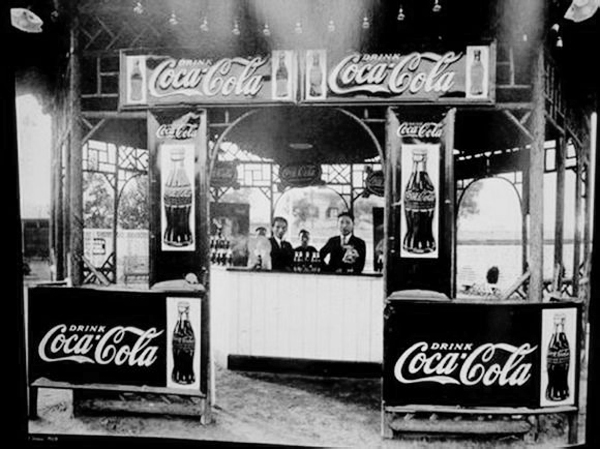
        Since the first batch of Coca-Cola arrived in Beijing and Guangzhou by train in 1979, Coca-Cola has developed in Chinese mainland for 35 years. In fact, before that, Coca-Cola entered the China market as early as 1927, but then withdrew in 1948. In China’s more than 50 years’ experience, Coca-Cola has also had many stories that outsiders don’t know.

        1. Coca-Cola was once called "Tadpoles chew wax"

        When I first entered China in 1927, the Chinese translation of "Coca-Cola" was "Tadpoles Eating Wax". Unique taste and strange name, product sales can be imagined. In the 1930s, Coca-Cola published a newspaper in Britain to collect Chinese translations with a prize of 350 pounds. Jiang Yi, a British scholar, applied for the job with the translated name "Coca-Cola" and was taken by the judges.

        The first production line in Beijing was dismantled from Shanghai.

        Before liberation, Coca-Cola set up a bottling plant in Shanghai, and it sold well. In 1948, the sales of Coca-Cola in Shanghai exceeded 1 million cases, making it the first city outside the United States to achieve such brilliant results. Subsequently, Coca-Cola completely withdrew from China. Under the instruction of Zhou Enlai, the Coca-Cola production line was dismantled and shipped to Beijing. It is said that this is the first soda production line in Beijing.

        3. Return to China under the name of BENETRADE.

        In 1973, Coca-Cola could not trade with China as an American company. Therefore, Coca-Cola has set up a trading company named BENETRADE in Hong Kong, which means’ beneficial trading’, and started the trade procurement of furniture and building materials with China through platforms such as Guangzhou Fair. At the Guangzhou Fair in 1974, Coca-Cola started to establish contact with China Grain and Oil Import and Export Corporation through BENETRADE.

        4. Shangfang Sword: Vice Premier’s calligraphy

        At the beginning of 1978, Chinese’s views on new things were still unclear. Zhang Jianhua, general manager of COFCO, urged Coca-Cola to be introduced to Chinese mainland. Although COFCO did not have a red tape from the central government, there was a handwritten note by Li Xiannian, then vice premier, which roughly meant that this work could be carried out. This handwritten note became a sword for COFCO to introduce Coca-Cola.

        5. It used to be a luxury exclusive to foreigners.

        In January 1979, the first batch of 3,000 cases of Coca-Cola set off from Hong Kong and went to Beijing and Guangzhou by train. According to the agreement signed between Coca-Cola and COFCO at that time, Coca-Cola can only supply foreign-related hotels and tourist shops, and its sales targets can only be foreigners, returned overseas Chinese and compatriots from Hong Kong and Macao who are working and traveling in China. The price of each bottle is four yuan (more than one US dollar), and it can only be purchased in foreign currency or foreign exchange certificates. In Chinese’s view at that time, Coca-Cola was a "symbol of capitalism".

        6. Shanghai was boycotted and forced to settle in Beijing Roast Duck Factory.

        When returning to Chinese mainland to choose the site of the first bottle factory, Coca-Cola first thought of Shanghai. However, when contacting the relevant departments, they met with strong resistance. Some units and individuals in Shanghai published articles in newspapers and magazines, accusing COFCO of introducing Coca-Cola as "traitorous" and "foreign slave philosophy". In the end, Coca-Cola had to give up its plan to settle in Shanghai and settle in an old factory of Beijing Roast Duck Factory under COFCO in Wulidian, Beijing.

        7. The first promotion ended in the following frame.

        On the weekend before Christmas in 1982, Coca-Cola promoted sales in Beijing’s major shopping malls-buying a bottle of Coca-Cola and giving a balloon or a pair of beautifully packaged chopsticks-which was the first store promotion activity in China’s contemporary market.

        The major media in Beijing reacted violently, criticizing that "drinking Coca-Cola is treason", and the Standing Committee of the Political Bureau instructed on the internal reference that "(Coca-Cola) is only allowed to be sold to foreigners". Overnight, all Coca-Cola was removed from the counter of the shopping mall. After more than half a year, the factory was in a state of semi-suspension.

        Later, COFCO reflected it in the form of "people’s letters" and sent it to the Central Committee through the Ministry of Foreign Trade and Economic Cooperation, which won the support of then Chairman Wan Li. COFCO then submitted an application to the State Council, hoping that the central authorities would approve the domestic sales, and finally it was approved.

        8. China people and coke are on the cover

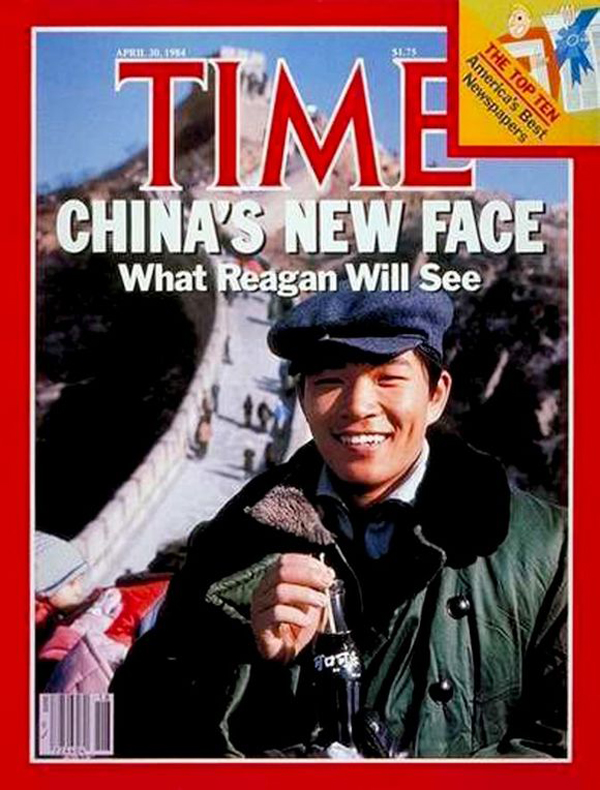
        On April 30, 1984, the cover of Time magazine in the United States was titled "The New Face of China, What Reagan Will See", and the cover photo showed a smiling ordinary Chinese standing in front of the Great Wall with a bottle of Coca-Cola. This picture directly shows that China is gradually opening up and people are starting a new life. This is the first time that ordinary people in China who are not government officials have appeared on the cover of Time Magazine.

        9. The Queen’s visit to China-the first Coca-Cola advertisement on CCTV

        In October 1986, the Queen of England visited China for the first time. The British Broadcasting Corporation (BBC) made a documentary for this purpose. CCTV wanted to buy the right to broadcast, so it found Coca-Cola, hoping to sponsor $200,000, provided that Coca-Cola advertisements were broadcast before and after the film was broadcast. One day in October, 1986, after the broadcast of News Network, CCTV and 18 national TV stations simultaneously sounded the melody of Coca-Cola advertisements, which was the first advertisement for foreign enterprises broadcast by CCTV after China’s reform and opening up.

        10. How was the wholly-owned concentrated solution factory built?

        In 1986, Coca-Cola wanted to establish a concentrated solution factory in China. As the Coca-Cola formula is a trade secret, it must be wholly owned by Coca-Cola. However, at that time, China’s policy did not allow wholly foreign-owned enterprises. Finally, China proposed a solution: Coca-Cola Company built two factories-a concentrated solution factory and a bottling factory, and gave the bottling factory to China for free. After that, the two factories formed a joint board of directors, and China and the United States each held 50% of the shares to form a cooperative enterprise. This became the first Sino-US cooperative enterprise in China.

        11. David Lu, the chairman of Greater China and South Korea, has also experienced studying agriculture.

        David Lu, who entered Coca-Cola in 1988, was a diplomat under former US President George H.W. Bush. From 1975 to 1977, after Sino-American relations broke the ice, David lived in Beijing with his parents for more than two years, and he became a rare western student in Beijing at that time. "I am studying in Beijing No.55 Middle School in Sanlitun. I am the only foreign child in the whole school. I am a’ post-60 s’ who has experienced studying as a worker, studying agriculture and learning Lei Feng; China and I do gymnastics with the People’s Liberation Army and do eye exercises. I rode my bike around Chang ‘an Avenue and was curious about everything around me. Middle school changed my life. "