"Trademark cybersquatting" leads to a heated discussion: How did my name become your trademark?

  Xinhua News Agency, Xiamen, August 8th Question: How did my name become your trademark? — — "Trademark cybersquatting" is a hot topic

  Xinhua News Agency "China Net" reporters Yan Zhihong, Joline and Tang Tao

  "My name is Jing Hanqing. I am 22 years old. The day before yesterday, I was told that I could not use my name." Recently, bilibili’s UP host (network anchor) Jing Hanqing spoke on various social platforms, which attracted the attention of netizens.

  In recent years, with the vigorous development of the media industry, some "interested people" have made the abacus of "grabbing trademarks". According to the investigation by the reporter of "China Netscape", the rights and interests of some media people have also been damaged.

  The "name defense war" of "Jing Hanqing"

  On August 3, an article titled "I was told that I couldn’t use my name for 22 years and asked me to change my name!" How do I defend my rights! The online video of "Jing Hanqing" attracted the attention of netizens on bilibili, and the video publisher was the UP owner.

  In the video, "Jing Hanqing" spits, and the name he has used for 22 years has been maliciously squatted by others. The other party also sent himself relevant certification materials, asking him to pay the trademark purchase fee of "Jing Hanqing" or stop using the name of "Jing Hanqing". By 10: 00 on the 6th, the number of related video views had exceeded 14 million, and nearly 200,000 netizens participated in online discussions.

  According to the reporter’s investigation, there are seven trademark owners of "Jing Hanqing", and this time, it was an "electronic product seller" from industrial and commercial registration in Wuhu, Anhui. In addition to "Jing Hanqing", the enterprise also owns or attempts to apply for 102 trademark rights.

  In an interview with reporters, Jing Hanqing said that he had submitted an application for trademark invalidation to the relevant departments and was collecting materials to accuse the other company of malicious cybersquatting.

  Coincidentally, WeChat WeChat official account’s "bad review" also sent a tweet, saying that it had encountered a "trademark cybersquatting" incident — — A company named Shenyang Xiaoermei Enterprise Management Co., Ltd. tried to register its trademark in the name of "Bad Review Jun" many times.

  “‘ Bad review jun ’ It is the IP of our company. We have applied for a registered trademark many times before, but due to ‘ Bad review ’ The word has a derogatory meaning, so it has never been applied for. " The person in charge of the WeChat official account said in an interview with reporters, "I didn’t expect that we were also ‘ Stare at ’ Yes. "

  According to insiders, there are many small companies that focus on "registered trademarks". With the rapid development of "online celebrity economy", these "people with heart" will hoard trademarks in order to "claim rights" from the popular media in the future.

  "Standby claim" has become a new sign of trademark preemption

  During the interview, the reporter learned that trademark squatters will use the public information on the Internet to register the names of self-media people and mobile apps in a "cast net" manner. Once the trademark counterparts in the "net" are "on fire", they will come to the door and ask them to pay a high trademark right use fee or force them to change their names.

  Lin Haihan, director of the Shanghai Trademark Review and Cooperation Center, said that at present, the registration cost and later maintenance cost of trademarks in China are very low, which has led some malicious registered companies to "arbitrarily register" and even reverse their trademarks many times after registration.

  According to the registered industrial and commercial information, the business scope of the registered enterprise is the wholesale and retail of electronic products, which is not directly related to online video production. However, among the 103 trademarks owned or attempted by the enterprise, there are 30 trademarks in the category of "education and entertainment" and 28 trademarks in the category of "scientific instruments" respectively. Most of these trademarks, like "Jing Hanqing", are self-media program names or related software application names.

  Lu Yang, a lawyer who has been engaged in commercial litigation for a long time, told reporters that some companies have become "professional cybersquatters" because trademark information is public, and they only need to check which famous projects or categories have not applied for registration, so they can register first.

  "It only takes one or two thousand yuan to register a trademark, but the income from transfer is dozens of times that of registration." In Lu Yang’s view, with the rapid development of the mobile Internet, malicious cybersquatting of trademarks has become increasingly frequent.

  Once caught by the other party, it is almost a "hit". The reporter consulted the trademark infringement rules of WeChat WeChat official account, which made it clear that if the name of WeChat official account infringes the trademark right, the trademark owner can provide a paper trademark certificate after successful registration to make a complaint. As long as the trademark scope is similar to the business content of the respondent’s account, the infringement fact can be established.

  How to curb the "rush to register" extending to the Internet economy?

  On the 5th, bilibili announced that a third-party company was found to have maliciously registered several UP owners with nicknames as trademarks. Due to the low cost of cybersquatting, high cost of safeguarding rights and long trial period, this behavior has caused great trouble to the UP main group. In this regard, bilibili will not ask the UP owner to modify the nickname because the nickname of the UP owner has been maliciously registered by other institutions.

  The relevant person in charge of bilibili told reporters on the 6th that at present, Bili Bili has assisted all UP owners who have signed the exclusive brokerage agreement to complete the trademark registration application of their nicknames. If necessary, other UP owners can entrust bilibili to assist in applying for nickname trademarks, and at the same time, there will be a special person to provide UP owners with help and guidance related to trademark rights protection.

  Bilibili said that once the UP owner found that the nickname was registered as a trademark by others, he could directly contact bilibili, and bilibili would provide a series of follow-up legal assistance according to the specific situation, including but not limited to trademark revocation application, invalid application and follow-up legal proceedings.

  The reporter learned that China National Intellectual Property Administration is studying and formulating "Several Provisions on Regulating Trademark Registration" and has publicly solicited opinions from the society. The provisions include the specific application situation and considerations of Article 4 of the Trademark Law, as well as the application situation and fine range of warning and fine for malicious registration.

  Lin Haihan suggested that China can learn from international practices to increase the cost of trademark registration, and at the same time, with the increase of trademark registration years, the annual maintenance fee will be increased year by year to protect the legitimate rights of trademark users.

Collect quickly! Blockchain is difficult to understand? Look here!

  Li Huohua and Shen Qihong

  Recently, a news has become the focus of attention. the Political Bureau of the Communist Party of China (CPC) Central Committee has made a collective study on the development status and trend of blockchain technology, emphasizing that blockchain should be regarded as an important breakthrough for independent innovation of core technology and accelerate the development of blockchain technology and industrial innovation.

  So what is blockchain technology? What is its development process and current situation? What application scenarios are there in the future? Let’s talk about it here.

  The Origin and Development of Blockchain Technology

  When it comes to blockchain, many people may think of Bitcoin. In fact, the two are not the same thing. Blockchain is the underlying technology of Bitcoin.

  In 2008, a self-proclaimed "Satoshi Nakamoto" published a white paper, hoping to build an electronic money system that won’t be spammed. In January 2009, Bitcoin was officially born, with a total limit of 21 million pieces. The distribution rules are transparent, and there is no central issuer, which is automatically executed by code. The code and operation of Bitcoin are maintained by the participants, and anyone in the world can participate in it.

  At first, Bitcoin was only circulated among computer geeks. Some people tried it as a new gadget, while others were attracted by its utopian ideal of not spamming and circulating freely. In 2010, there was even a story that a programmer exchanged 10,000 bitcoins for two pizzas. In any case, few people would have thought that bitcoin would have such a great influence later.

  With the passage of time, bitcoin gradually spread from the computer geek circle. As more and more people participate, capital speculation and speculation follow one after another, and the price of Bitcoin has also started the skyrocketing and plunging mode, which has attracted the attention and reports of some mainstream media and attracted more and more people to study Bitcoin.

  After studying the code of Bitcoin, people collectively refer to the underlying technology adopted by Bitcoin as blockchain technology, and Bitcoin is the first application of blockchain technology. If bitcoin is compared to bread, then the blockchain is flour. Flour can be made into bread, noodles, rolls, steamed bread and cakes. Similarly, you can use blockchain technology to create bitcoin, and you can also use blockchain technology to do many other things to benefit the whole society.

  Blockchain is a "trusted machine"

  As the name implies, blockchain is a combination of "block" and "chain", which is essentially a distributed account book. So, how does this account book keep accounts and how does it work? We might as well use an analogy to illustrate.

  At the beginning, a group of people first stood up and took a blank piece of paper for bookkeeping, and the system gave this bookkeeper a certain amount of reward (such as 50 bitcoins). After recording the bill, generate an anti-counterfeiting code from this page of bill through encryption algorithm, and copy the bill to all other people at the same time. Next, by calculating a difficult problem, the person who works out first can keep accounts and enjoy the rewards given to the bookkeeper by the system. When recording the bill on the second page, you need to write the anti-counterfeiting code of the bill on the first page at the beginning, and then make an account. After recording, you can also generate an anti-counterfeiting code of the bill on the second page through encryption algorithm, and then copy the bill to everyone else. Then, everyone will compete for the right to charge the bill on the third page by calculating the next difficult problem. This bill will also be marked with the security code of the bill on the first page, and after recording, it will also generate an security code and synchronize the bill to others, and so on. This page-by-page bill is turned into an increasingly thick general ledger through the binding line in sequence, and each participant has one copy.

  In the above analogy, the bill page by page is called a "block" and the binding line is a "chain". By binding the bill page by page in sequence into a general ledger, a "blockchain" is formed, and its essence is still an account book. Only this account book has one person, and there is no central person or organization. Everyone is equal, and everyone can compete for the right to keep accounts by calculating difficult problems. The whole account book is jointly maintained by all participants.

  Since there is no central person or organization, how can this jointly maintained account book prevent malicious people from making false accounts or tampering with account book records? Suppose Zhang San grabbed the right to charge the bill on page 100. His good friend Li Si had only 3,000 yuan in his account, but Zhang San helped him secretly change it to 30,000 yuan. After recording the account, he synchronized the account book to others. At this time, others will immediately find that there is something wrong with this account, because there is one account book, and the ins and outs of Li Si’s assets are recorded in the previous account book. Therefore, others will refuse to add the bill on page 100 with wrong records to the general ledger, and will choose another honest person to record the bill on page 100 through calculation problems.

  Therefore, we can see that blockchain technology has these characteristics: openness and transparency (everyone has one account book, everyone can check it), decentralization (there is no central person or organization), and it cannot be tampered with (because any tampering or false accounting will be discovered).

  In daily life, many people are used to paying with WeChat and Alipay, and WeChat and Alipay act as bookkeepers. We need to trust this bookkeeper not to misremember or falsify accounts. Blockchain is different. Hackers may attack and modify the account books in a computer, but if they want to really modify the blockchain data, they need to attack more than half of the account books in computers, which is very difficult, especially in a blockchain like Bitcoin. There are tens of thousands of accounting nodes, and one account book is distributed all over the world. Therefore, blockchain technology also has great advantages in security.

  Openness, transparency, decentralization and non-tampering … … Because of these advantages, the famous British financial magazine The Economist praised the blockchain as a "machine of trust".

  Blockchain empowers future social development.

  For more than a decade, blockchain technology has gone from the 1.0 era to the 2.0 era, and now it is moving towards the 3.0 era.

  In the 1.0 era of blockchain, Bitcoin is a typical representative, mainly recording transaction information simply, with very single function and limited application scenarios. In the 2.0 era of blockchain, the Ethereum project is a typical representative. Different from bitcoin with single function, Ethereum has added the function of "smart contract", which can be simply understood as a program that can be automatically executed. Because of this automatic program, the blockchain has been upgraded from a single-function account book to a world computer, on which people can develop various blockchain applications.

  As for the 3.0 era of blockchain, just like the 5G era, only after it really comes can people know what it looks like and what new business models and social impacts it will have. The blockchain we are talking about now empowers social development, mainly based on blockchain 2.0.

  So, in what ways will the blockchain empower social development?

  The first is the financial industry. The financial industry has to deal with all kinds of accounts every day. The blockchain is essentially a distributed ledger. Using the blockchain as a "trusted machine", it has obvious advantages to use blockchain technology to realize the work that needs multi-party information synchronization, such as bookkeeping, accounting, reimbursement, settlement and tax return. On August 10th last year, Shenzhen Taxation Bureau and Tencent Company launched the blockchain electronic invoice, which realized that the electronic invoice can’t be forged, the data can be inquired, the transaction can be invoiced, and the invoice can be reimbursed, which greatly simplified the traditional financial and taxation workflow.

  In addition, cross-border payment is also a major application of blockchain in the financial field. Using the advantages of blockchain technology, such as openness, transparency, non-tampering, and distrust of intermediaries, various cumbersome procedures between different banks can be reduced and the process can be accelerated in cross-border payment. On June 25th last year, Alipay launched the cross-border remittance service of e-wallet based on blockchain in Hong Kong. With the Hong Kong version of Alipay, cross-border remittance can be made to Philippine wallet Gcash through blockchain technology. At the press conference, the whole remittance process took only 3 seconds, while it took several days through the traditional cross-border transfer method.

  In addition to the financial sector, blockchain technology is also promising in business. JD.COM launched the JD.COM Zhizhen Chain a long time ago, using blockchain technology to build an anti-counterfeiting traceability platform, recording the important data of every link of goods from raw material procurement to after-sales, and jointly cracking down on counterfeiting with regulatory authorities, third-party institutions and brands. Last year’s Double Eleven, Tmall International Mall had more than 150 million cross-border goods, which made use of the traceability and non-tampering characteristics of blockchain technology to achieve permanent traceability, prevent false information and protect consumers’ rights and interests.

  In the field of people’s livelihood, the application prospect of blockchain technology is also very broad. For example, charity can use the openness and transparency of blockchain technology to monitor the flow of each charity fund and ensure that the money finally reaches the recipients.

  Blockchain technology can also simplify government affairs and realize the interconnection of various functional departments. On November 13th last year, Loudi City, Hunan Province issued the first real estate blockchain electronic certificate, which realized the interconnection between real estate registration and the data of government functional departments such as land, taxation and real estate.

  Storing data on the blockchain also has legal effect. On June 29 last year, the first case of blockchain deposit in China was pronounced in the first instance of Hangzhou Internet Court, which confirmed the legal effect of using blockchain technology to deposit electronic data and clarified the review and judgment methods of blockchain electronic deposit.

  For many people who pay attention to privacy protection, blockchain technology is a great boon. All kinds of usage data we leave on the Internet every day, including sensitive information such as identity, mobile phone number, hobbies, shopping records, location, etc., may be leaked directly or indirectly, which will bring great threats and troubles to our lives. Blockchain technology combines cryptography and encryption technology, which can realize the separation of user identity and data, encrypted storage and distributed storage, and make your own data completely in your own hands.

  The current blockchain technology is still in the early stage of development, just like the Internet around 2000. Although it is full of various possibilities, it is not mature, and there are very few successful large-scale applications, and it is also full of capital speculation and speculation. For this emerging technology, we can’t overestimate its short-term impact, nor can we ignore its long-term changes.

  (Zhan Rongrong, Lu Bufan, Ma Dan and Wu Jie also contributed to this article. Special "Vernacular Blockchain" contributed by WeChat official account)

Zhengzhou eπ 008 is on sale, the latest offer 188,600! Quantity is limited

[Autohome Zhengzhou Discount Promotion Channel] Recently, the much-watched electric vehicle launched an unprecedented price reduction promotion in the Zhengzhou market, with a maximum discount of 28,000 yuan and a minimum starting price of only 188,600 yuan. This activity has attracted the attention of many consumers. If you are interested in this model, you may wish to click "Check the car price" in the quotation form to strive for higher discounts.

郑州eπ008特价出售,最新报价18.86万!数量有限

The exterior design of the Eπ 008 attracts the eye with its unique front face design and dynamic lines. The front face adopts a stylish closed air intake grille, with sharp LED headlights, showing a strong sense of technology. The overall style is sporty and futuristic, with smooth body lines and a slippery back design on the roof, creating a dynamic visual effect.

eπ008的车身尺寸为5002mm*1972mm*1732mm,轴距达到了3025mm,前后轮距均为1650mm,车身线条流畅且富有运动感。搭配265/45 R21规格的轮胎,轮圈设计风格独特,进一步提升了整车的视觉冲击力。

郑州eπ008特价出售,最新报价18.86万!数量有限

eπ008的内饰设计以科技与舒适并重为理念,展现出独特的风格。其15.6英寸的中控屏幕是内饰的一大亮点,支持多媒体系统、导航、电话和空调的语音识别控制,为驾驶者提供便捷的操作体验。方向盘采用皮质包裹,具备手动上下和前后调节功能,确保驾驶员在不同情况下都能找到最舒适的驾驶姿势。座椅采用仿皮材质,主驾驶座椅具备加热、通风和头枕扬声器功能,副驾驶座椅也支持加热和通风,提供了卓越的乘坐舒适性。前排和后排座椅均配备电动记忆功能,方便用户快速调整座椅位置。第二排座椅支持前后调节、靠背调节和腿托调节,提升了后排乘客的舒适度。此外,车内还配备了多个USB和Type-C接口,以及前排手机无线充电功能,满足了现代驾驶者的多样化需求。

郑州eπ008特价出售,最新报价18.86万!数量有限

eπ008搭载了一台1.5T 147马力的L4发动机,其最大功率为108kW,最大扭矩达到210N·m,配合电动车单速变速箱,为车辆提供了强劲的动力输出和平顺的驾驶体验。

汽车之家车主在使用eπ008的过程中,虽然没有明显的不满之处,但还是指出了几处需要改进的地方。他表示,新车上路不久时车内存在些许异味,不过他并未过多在意,考虑后期使用空气清新剂进行处理。此外,他提到车辆的车漆较薄,担心不小心磕碰后难以修复。另外,高速行驶时的风噪声也让他觉得有些困扰,不过他通常会开大音响来减轻这种影响。总体来说,车主对于这款车的外观和车门设计都给予了肯定,认为这些方面表现得较为出色。

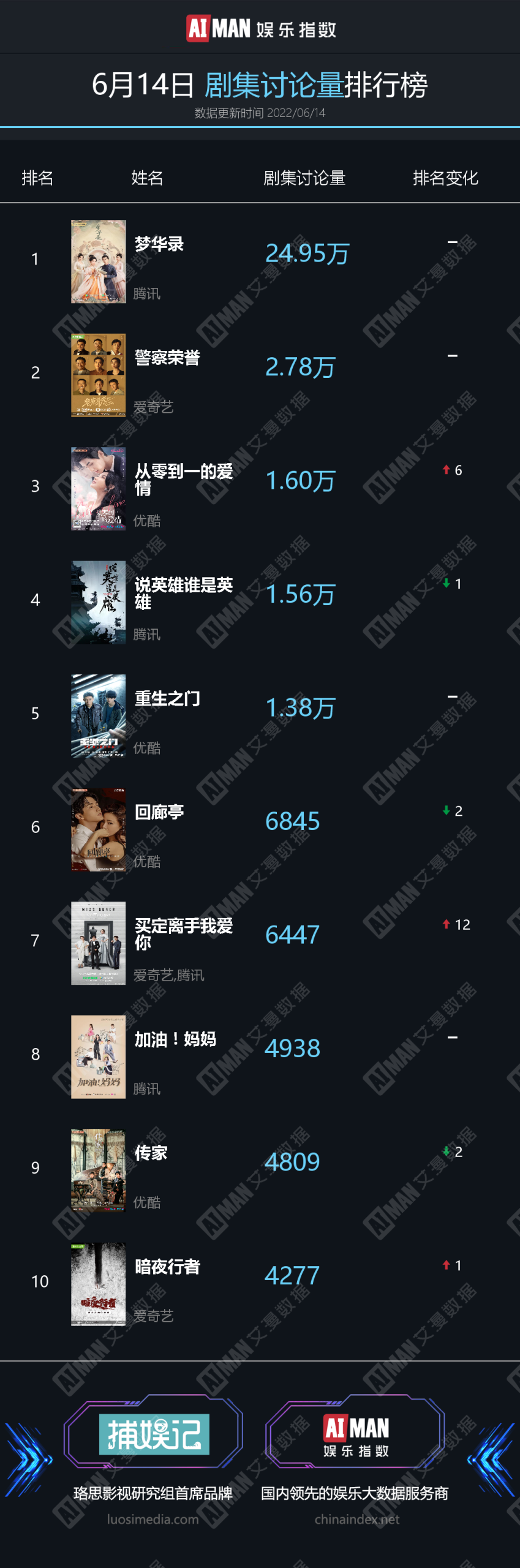
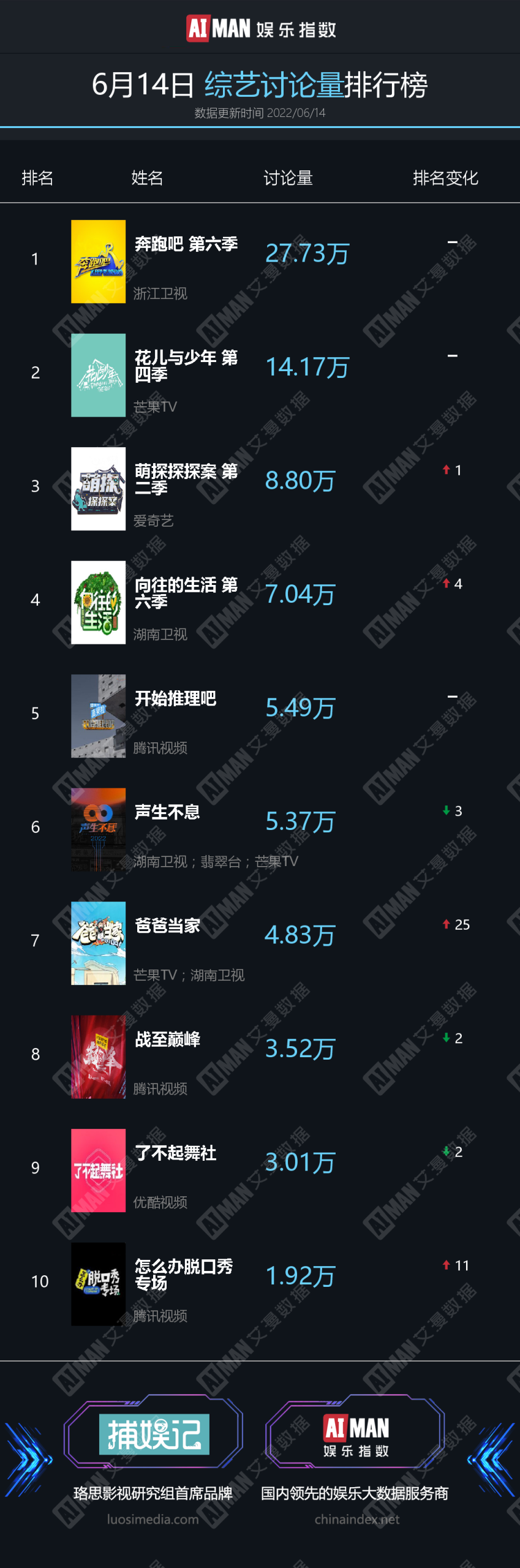
On June 14th, hot list | The Cloister Pavilion, The Algorithm of Justice and other new dramas came. What should I do? The talk show will be postponed

Roth Film and Television Research Group and Aiman Entertainment Index released the "Roth Hot List". Aiman data provides daily and weekly variety and film data, while Roth Film and Television Research Group provides short comments and interpretation, and express entertainment news.

Highlight analysis today’s information

1. Steven Zhang Deng Jiajia’s Cloister Pavilion unveiled the suspense.

The online drama "Cloister Pavilion" starring Deng Jiajia and Zhang Xincheng released a calendar of drama chasing. The play was launched on Youku at 18:00 on June 15th, and VIP members updated two episodes every Wednesday and one episode on Thursday and Friday. According to the drama calendar, the drama has 12 episodes and will end on July 1.

Cloister Pavilion is adapted from Keigo Higashino’s mystery novel Cloister Pavilion Killing, which is the only story told from a female perspective in Keigo Higashino’s more than 150 works. It mainly tells the story of a sudden fire in the cloister pavilion in the middle of the night, in which a man was buried in the sea of fire and Jiang Yuanxing (Deng Jiajia) was severely burned and disfigured. The sunny and handsome Cheng Cheng (Steven Zhang) appears in the life of Yuanxing, and their fate seems to be changed by this fire.

2. The legal light comedy "The Algorithm of Justice" was launched in bilibili.

Directed by Golden Bell Award director Fuxiang Xu, starring Chen Bailin and Puff Kuo, starring Lin Geyu, Yan Xi Hou, Ashi Yu-pin Lin and Chen Xue Zhen, the legal light comedy "The Algorithm of Justice" will be launched in bilibili on June 15th.

The Algorithm of Justice tells the story that Liu Lang (Chen Bailin), a handsome star lawyer, was forced to fight side by side with Lin Xiaoyan (Puff Kuo), a novice lawyer, to protect justice together in the daily life of the law firm. With wonderful cases and high-energy defense, they collided with each other in each case and took the audience to explore the truth, justice and truth together.

It is worth mentioning that, in order to experience the lawyer’s work, Chen Bailin and Puff Kuo both went to the court and law firm for practice and observation and did their homework before shooting.

3, "What to do! The recording of talk show was postponed.

On the 14th, the variety show "What to do! The talk show special issued a statement saying that "due to the epidemic prevention and control requirements, the recording of our special performance was postponed, and the workplace special needs to be postponed for two weeks to meet with you." At the same time, it is revealed that although the special recording is postponed, the editorial department will bring you special home planning to ensure happiness, and intimately expose a "calendar" to remind you of the date and content.

"What to do! The talk show special was launched on June 7th. Li Dan and eight talk show actors, including Yang Li, Yang Meng ‘en, Pang Bo, Xu Zhisheng, He Guangzhi, Cheng Lu, Hulan and Wang Jianguo, formed the "Easiest Screenplay Department in the Universe", focusing on all walks of life and showing the whole process from behind the scenes to the stage. The first issue welcomed Jackie Chan, Yang Mi and other guests.

4. Ryan’s 9 million shares were frozen.

According to the Enterprise Search APP, recently, Shanghai Cheetah Culture Media Co., Ltd. added the information of stock right freezing. The executor was Ryan, and the amount of stock right frozen was RMB 9 million. The implementation notice number was (2022) Shanghai Fazhi 0120 Minchuzi No.9525.

It is reported that Shanghai Cheetah Culture Media Co., Ltd. was established in 2016 with a registered capital of 10 million yuan, and its major shareholder and actual controller is Ryan.

5. Aquaman 2 will delete Amber’s play.

Aquaman 2 will delete the scene of Amber Hill, and the role of the heroine "Mae La" will be re-cast. According to informed sources, Warner made the decision after screening Aquaman 2, and Jason Moma and Nicole Kidman will also participate in the remake or remake. In this regard, Aimeibo responded that it was a rumor: "It is not accurate, it is indifferent, and it is ridiculous." Warner has not yet responded to this.

List description:


The Roth Film and Television Research Group has gathered a group of film and television enthusiasts, who are deeply engaged in business, good at thinking and penetrating feelings, and strive to be "sexy-minded observers of the entertainment industry".


Aiman Entertainment Index is a leading entertainment big data service provider in China.


Together, the two will create a hot drama variety video "Luosi Hot List", gain an insight into the daily communication power of the whole network from another angle, and launch monthly, quarterly, semi-annual and annual content industry analysis reports on an optional basis, so stay tuned.


Editor | factory director


The Emergency Management Department of the Office of the National Disaster Reduction Committee released the national natural disaster risk situation in July.

Recently, the Office of the National Disaster Reduction Committee and the Emergency Management Department, together with the Ministry of Natural Resources, the Ministry of Water Resources, the Ministry of Agriculture and Rural Affairs, the Meteorological Bureau, the Forestry and Grass Bureau and other departments and units, held a meeting.In July, the national natural disaster risk situation was discussed and judged.

Comprehensive analysis shows that the seven major river basins in China will enter the main flood season in an all-round way, and there are flood risks in the Yangtze River, Huaihe River, Taihu Lake and Songliao River basins. Strong convective weather is becoming more extreme, and wind and hail disasters may occur in many areas; have1-2 typhoons landed or obviously affected the south China or southeast coast of China; Zhejiang, Anhui, Jiangxi, Hubei, Yunnan and other local geological disasters have high risks; The forest fire risk rating in North China and Northeast China is relatively high. The details are as follows:

The first is the risk of flood disaster.The precipitation in the central and eastern part of Northeast China, the central and northern part of East China, the central and northern part of Central China, and the western part of Southwest China is more than normal. Regional storms and floods may occur in some rivers such as the upper reaches of the Yangtze River, the Huaihe River and Huainan tributaries, the Qiantang River in Taihu Lake Basin, and the Songhua River in Songliao Basin, and some rivers in the rainstorm area may exceed the police. In addition, extreme heavy rainfall may cause floods in small and medium-sized rivers, accidents in small and medium-sized reservoirs and hydropower stations, mountain torrents and urban waterlogging in the above areas.

The second is the risk of wind and hail disasters.With the further increase of temperature and abundant water vapor, strong convective weather such as short-term heavy precipitation, strong wind, thunderstorm and hail will increase in some areas such as Northeast China, East China, Central China and Southwest China, and the risk of wind and hail disasters will continue to be high. At the same time,July is a month with high incidence of tornadoes, and lightning deaths in rural areas are prominent, so it is necessary to strengthen prevention.

The third is the risk of typhoon disaster.The northwest Pacific and South China Sea have2-4 typhoons are generated, close to the same period of the year to less; Among them, 1-2 typhoons landed or obviously affected the south China or southeast coast of China. There may be 1-2 disastrous typhoon storm surge processes in the southeast coast of China, and 2-3 disastrous wave processes in the East China Sea and South China Sea.

The fourth is the risk of geological disasters.Some provinces (autonomous regions and municipalities) such as Beijing, Hebei, Jilin, Liaoning, Zhejiang, Anhui, Fujian, Jiangxi, Henan, Hubei, Hunan, Guangdong, Guangxi, Chongqing, Sichuan, Guizhou, Yunnan, Xizang, Shaanxi, Gansu, and Xinjiang have higher geological disaster risks, including western Zhejiang, southern Anhui, northwestern Jiangxi, eastern Hubei, and Yunnan.

The fifth is the risk of high temperature and drought.Since June, there have been four regional high temperature processes in China, which have aggravated the drought in southwest China and put pressure on water supply and power supply in some areas. In July, the temperature in most parts of the country was close to the same period of the previous year to high, with less precipitation and high temperature in central and eastern South China, southern East China, northern Northwest China, central and western Inner Mongolia, western Northeast China and northern North China. The risk of staged high-temperature heat wave and drought was high, the water supply and power supply situation was tight, and the task of drought resistance and seedling protection in some areas was heavy.

Sixth, the risk of forest fire.Affected by high temperature, little rain, thunder and strong winds and other strong convective weather factors, the forest fire risks in northern and western Beijing, northwestern Tianjin, northern Hebei, central and eastern Inner Mongolia, northwestern Heilongjiang, western Chongqing, northern Xinjiang and other places are relatively high, so it is necessary to focus on preventing forest fire risks caused by lightning strikes in forest areas in Northeast China and Inner Mongolia and high temperatures in North China.

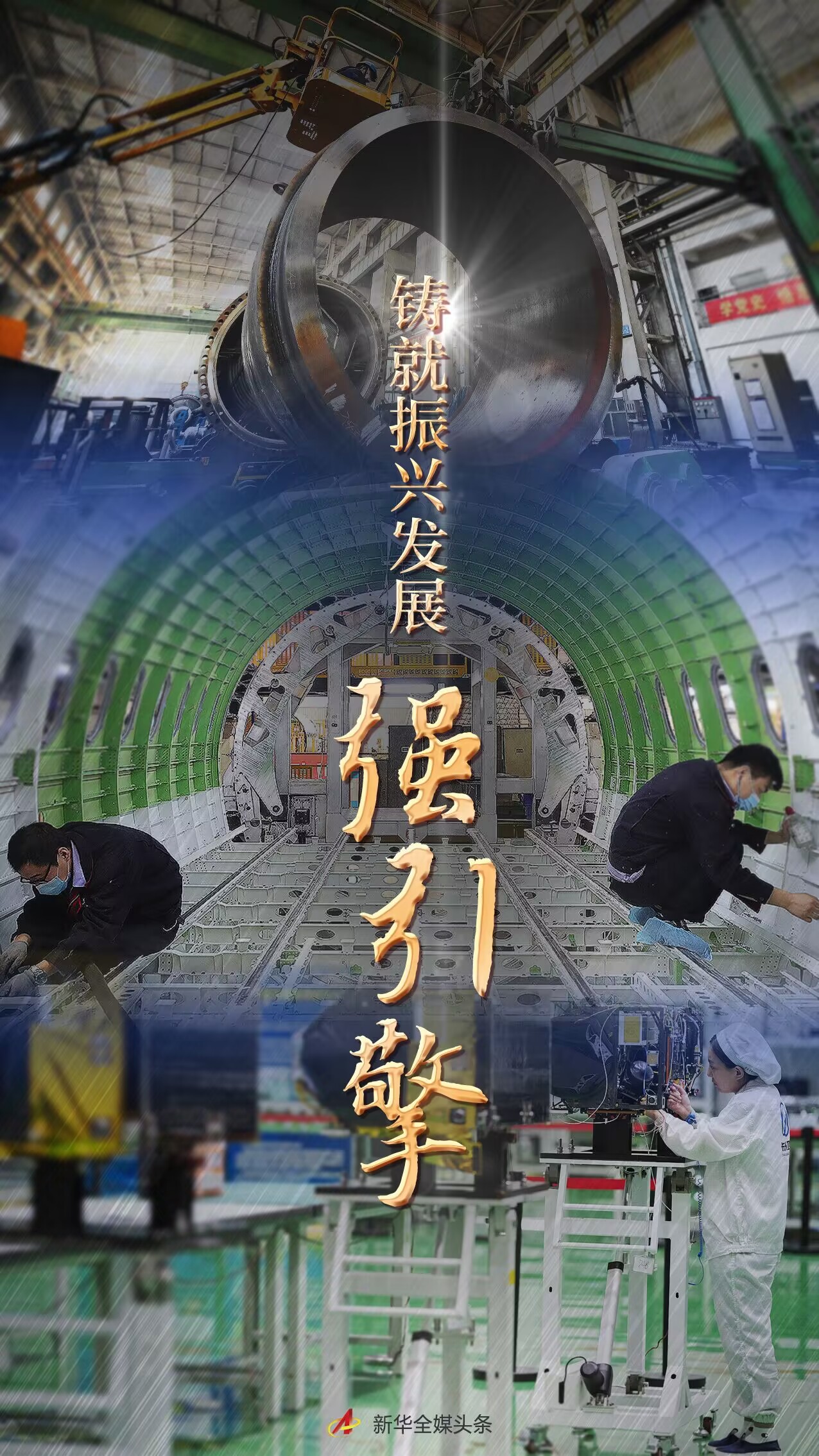
Strive for the future | The spirit of the 20th National Congress at the grassroots level casts a "strong engine" for revitalization and development-An observation on implementing the spirit of the 20t

  Xinhua News Agency, Beijing, November 18th Title: Create a "strong engine" for revitalization and development — — Implementing the spirit of the 20 th National Congress of the Communist Party of China and striving to achieve a new breakthrough in the all-round revitalization of Northeast China

  Xinhua news agency reporter

  General Secretary of the Supreme Leader proposed in the Party’s Report to the 20th CPC National Congress that a new breakthrough should be made in promoting the comprehensive revitalization of Northeast China.

  In the past few days, Xinhua News Agency reporters learned from the first-line interviews that the broad masses of cadres and masses in Northeast China resolutely implement the spirit of the 20th Party Congress, take accelerating the implementation of the innovation-driven development strategy as the only way to achieve a new breakthrough in the comprehensive revitalization of Northeast China, deepen reform and innovation in key areas, constantly create a good environment, drive high-quality development with innovation engines, and strive to write a new chapter in the era of comprehensive revitalization of Northeast China.

  Tamp the cornerstone of major equipment manufacturing

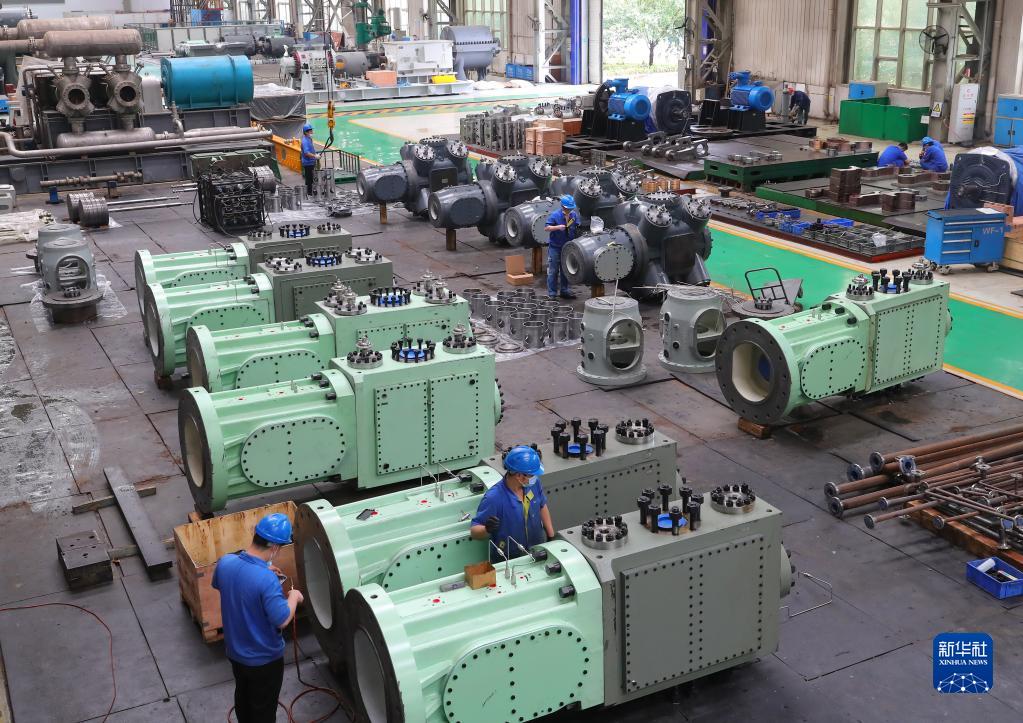
  Machine roar, forklift back and forth … … In Shengu Group, which has just celebrated its 70th birthday, delegates to 20th National Congress of the Communist Party of China (CPC) and Jiang Yan, deputy chief engineer of Shengu Group, are wearing helmets and shuttling between machines and equipment, leading the technical team to test the core components of compressors.

  Over the years, Shengu Group has successively broken the international monopoly in the compressor field, which is known as the "industrial heart". In the past 10 years, it has realized the "three consecutive jumps" of ethylene compressor units from 1 million tons, 1.2 million tons to 1.4 million tons. "The reason why Shen Gu can wrestle with international giants depends on continuous innovation." Jiang Yan said that at present, the Group is concentrating on manufacturing the 1.5 million-ton ethylene compressor, "challenging the next equipment magnitude limit."

  A number of cadres and workers of "time-honored" enterprises in Northeast China, such as Shengu Group and China Yizhong, have cheered up their spirits, accelerated the pace of transformation and upgrading, and further consolidated the cornerstone of national major equipment manufacturing.

  In Shengu Group, workers work in the assembly workshop (photo taken on June 13, 2022). Xinhua News Agency reporter Yang Qing photo

  Break through the "stuck neck" and stand up the backbone of the industry.

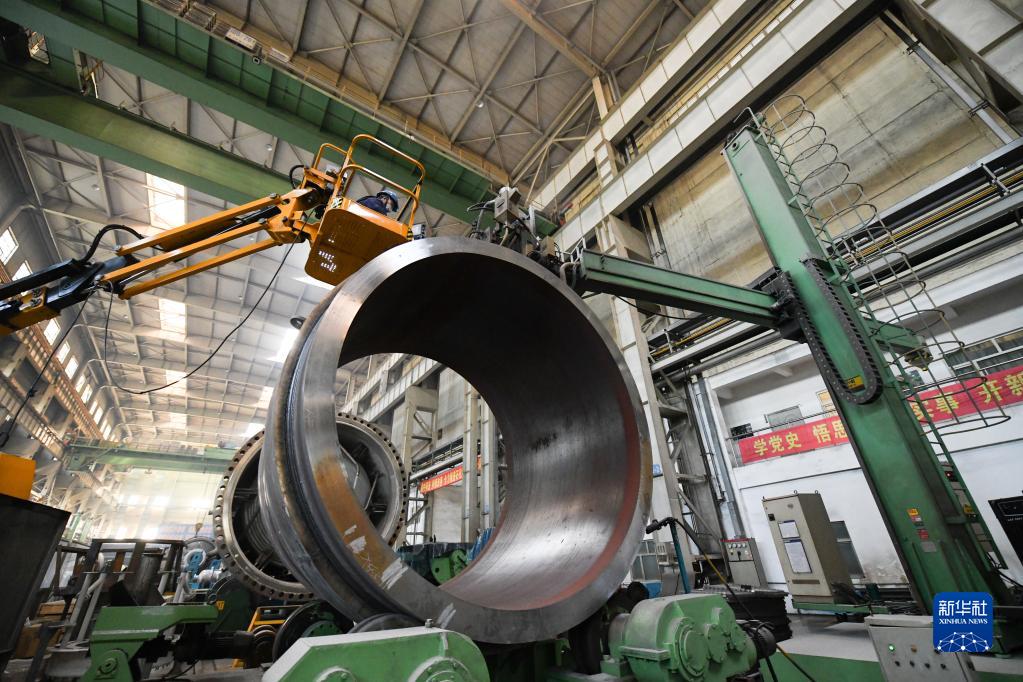
  47 degrees north latitude, Fulaerji District, Qiqihar, Heilongjiang. Although the temperature has dropped to below zero, the fire in the forging workshop of China Yizhong Group is booming. In recent years, this manufacturing central enterprise participated in the successful development of the first set of main equipment for nuclear power such as "Guohe No.1" and "Hualong No.1", and continued to fill the gap in the industry.

  "To support the backbone of China’s manufacturing industry, we must make our own contribution." Liu Mingzhong, chairman of delegates to 20th National Congress of the Communist Party of China (CPC) and China Yizhong Group, said that the company is planning to promote a new round of technological transformation and strategic collaborative R&D measures around the "accelerating the realization of high-level scientific and technological self-reliance" proposed by Report to the 20th CPC National Congress of the Party, and make efforts to supplement, strengthen and strengthen the industrial chain.

  Digital empowerment helps efficiency change with intelligence.

  In the intelligent demonstration workshop of Harbin Electric Machinery Factory of Harbin Electric Power Group, two huge robotic arms nearly 3 meters high moved around the disc according to the trajectory, and a Zhang Chong piece was accurately and neatly stacked, with a positioning accuracy deviation of less than 0.05 mm. Liu Xinxin, deputy general manager of the Group’s Innovation and Digitization Department, said that the accuracy and efficiency of this manual process have been greatly improved after digital transformation.

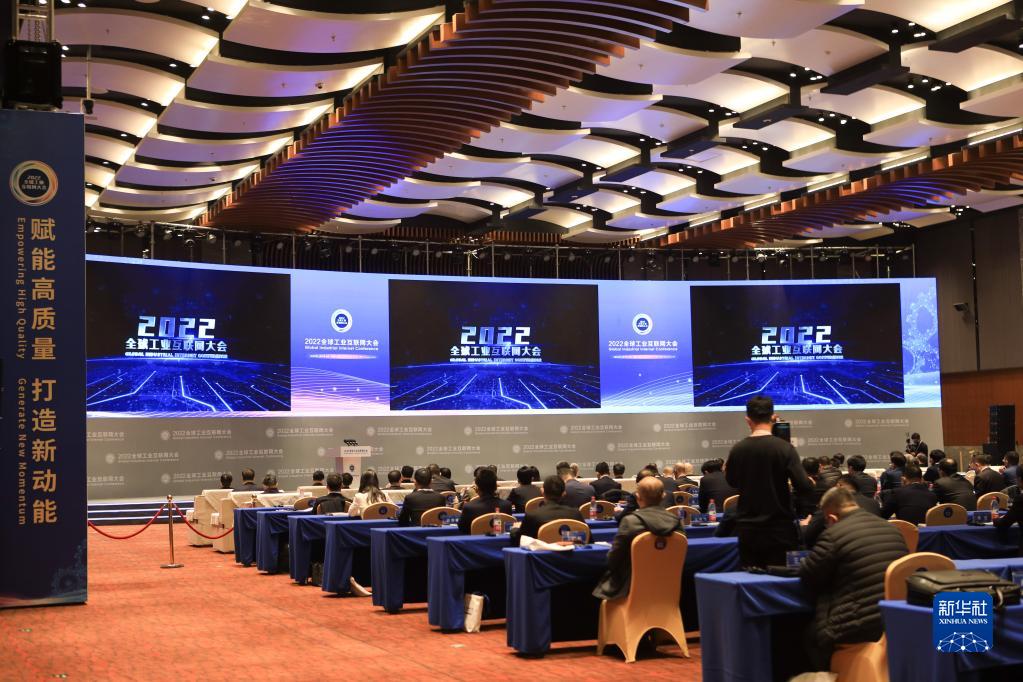
  On November 7, 2022 Global Industrial Internet Conference opened in Shenyang. Liaoning Province has successively released 1439 digital application scene resources to attract digital service providers to cooperate with manufacturing enterprises. Chen Hu, deputy director of the Liaoning Provincial Department of Industry and Information Technology, said that by the end of June this year, the numerical control rate of key processes in Liaoning Province had reached 56.2%, and the penetration rate of digital R&D design tools had reached 75.3%. "In the next few years, Liaoning will continue to promote the construction of digital workshops and smart factories, and crack the pain points of traditional industries such as equipment manufacturing, petrochemicals and metallurgy."

  Workers are working in the production workshop of Harbin Boiler Factory Co., Ltd. of Harbin Electric Power Group (photo taken on October 24, 2022). Xinhua News Agency reporter Wang Song photo

  Make efforts to low carbon and lead the manufacturing transformation with greening.

  Changchun FAW, new energy vehicle sales continue to heat up. In order to enhance its competitiveness in the new energy vehicle market, FAW Group, which has a long history, chose to open cooperation. At the end of February this year, a joint venture power battery project with BYD started construction, which can support nearly 600,000 electric vehicles every year after production.

  "According to the plan, by 2025, the proportion of new energy smart cars in FAW Group will reach 20%." Yang Yi, an expert from FAW Group’s New Energy Development Institute, said that in Report to the 20th CPC National Congress, where a new generation of information technology and new energy have been written into the Party as "new growth engines", FAW will enhance the technological innovation capability of new energy vehicles, and contribute to the promotion of China’s automobile industry to the middle and high end and the world.

  New energy vehicles exhibited by FAW-Volkswagen at the 19th China (Changchun) International Automobile Expo (photo taken on July 15th, 2022). Xinhua News Agency reporter Zhang Nanshe

  Let "specialization and novelty" gather great energy

  "One pillar of industry with a single structure" was once a chronic disease that restricted the revitalization of Northeast China.

  "We must rely on innovation to make the real economy real, strong and excellent, adhere to the phoenix nirvana and change birds, actively support the accelerated development of emerging industries, and form an industrial development pattern with multi-support and diversified development as soon as possible." In September 2018, General Secretary of the Supreme Leader put forward ardent expectations when he inspected and presided over a symposium to further promote the revitalization of Northeast China in three northeastern provinces.

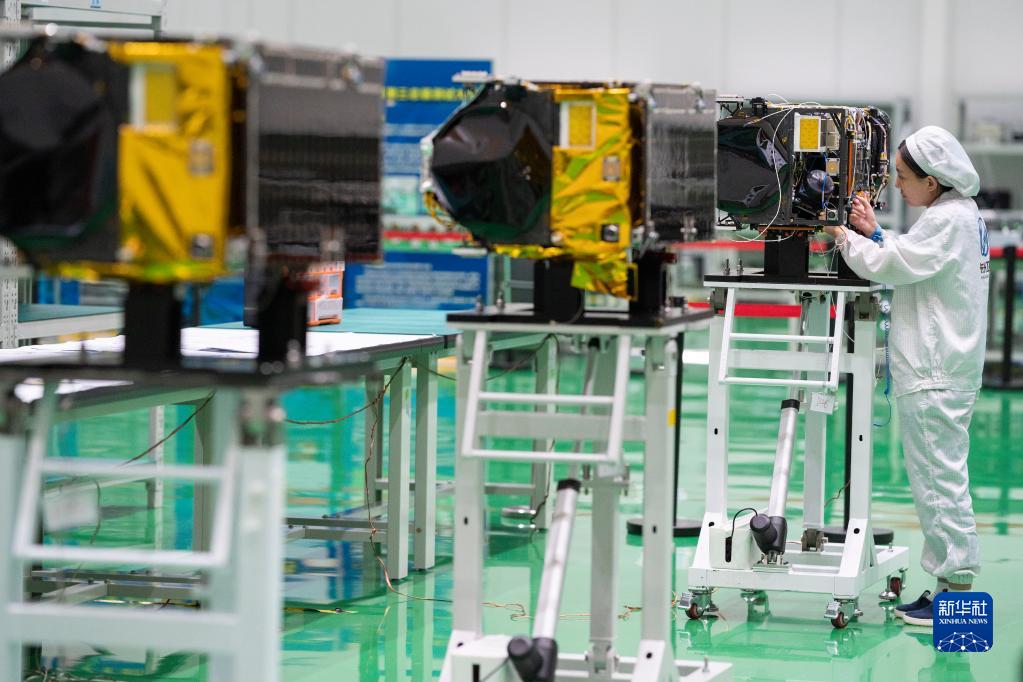
  In the factory building of Changguang Satellite Technology Co., Ltd. in Changchun, Jilin Province, researchers have been leaving early and returning late for several days, and are conducting the final test for the launch mission at the end of the year. "Enterprises independently develop and operate ‘ Jilin No.1 ’ There are 70 satellites in orbit, forming the largest commercial remote sensing satellite constellation in China. " Jia Hongguang, party secretary and deputy general manager of the company, said excitedly that more "Jilin No.1" will be sent into space to further enhance global coverage and service capabilities.

  Relying on the transformation of scientific and technological achievements of the Chinese Academy of Sciences, Changguang Satellite is one of the representatives of the new industrial forces in Northeast China. Report to the 20th CPC National Congress of the Communist Party of China put forward the idea of "opening up new fields and new tracks for development, and constantly shaping new kinetic energy and new advantages for development". All parts of Northeast China give full play to the advantages of rich scientific and educational resources and intensive scientific research institutes, vigorously promote strategic emerging industries, vigorously incubate high-tech industries, and speed up the layout of future industries.

  — — Build a new platform and consolidate the "thickness" of innovation.

  On November 9th, Shenyang Aviation Equipment Demand Release and Investment Promotion Conference was released at Zhuhai Airshow News Center, and 36 enterprises joined the "big family" of Shenyang aviation industry. Not long ago, Shenyang Aviation Industry Group and Shen Fei Industry Group just signed a contract for a large-scale aircraft machine plus structural parts project.

  Building an aerospace city in Shenbei New District and a science and technology city in Hunnan … … Focus on cultivating new kinetic energy, and accelerate the construction of a series of new platforms and new carriers. Wu Jun, secretary of Shenyang Shenbei New District Party Committee, said that there are 40 R&D institutions in Shenbei, including 626 AVIC and 47 CLP. The enterprises that have settled in Shenbei will gain the moon by being close to the water, and the cooperation with more scientific research institutions will achieve a new leap in technical level.

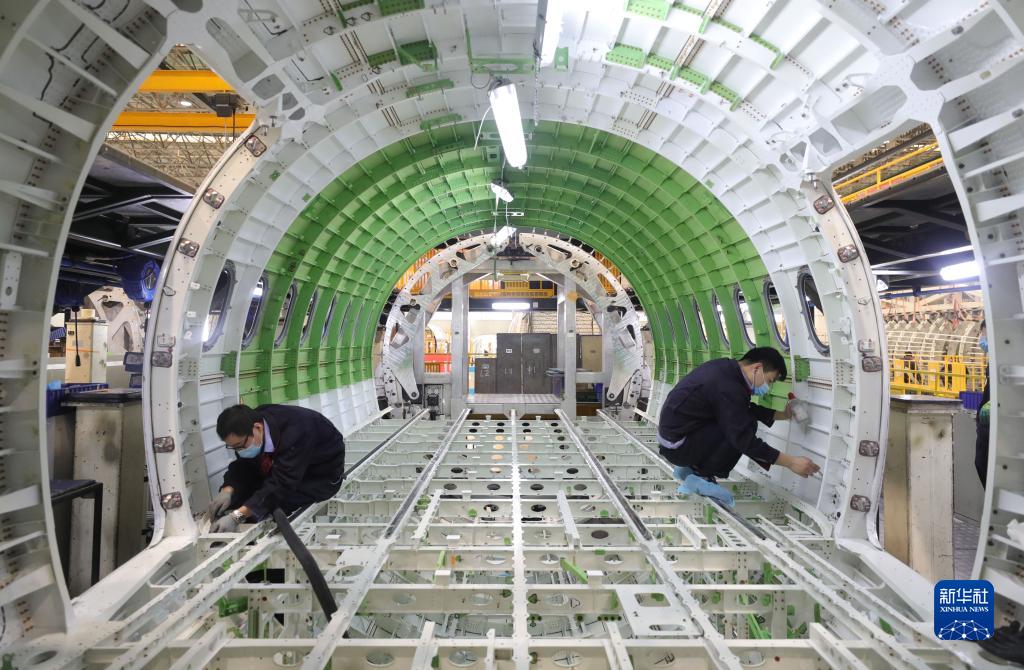
  In the workshop of Airbus A220 project of AVIC Shen Fei Civil Aircraft Co., Ltd., workers are producing aircraft (photo taken on March 6, 2020). Xinhua News Agency reporter Yang Qing photo

  — — Cultivate new echelons and improve the "concentration" of innovation.

  On October 15th, Changchun New District issued the "Small and Medium-sized Enterprise Cultivation Plan", connecting resources from financing guarantee, technical research, listing and brand building, and cultivating the national "specialized and innovative" small giants, provincial "specialized and innovative" and municipal "specialized and innovative" enterprises in stages and at different levels.

  "The party’s Report to the 20th CPC National Congress put forward ‘ Support the development of specialized and special new enterprises ’ . We are more confident in carrying out this work. " Wang Dongsheng, director of the Bureau of Industry and Information Technology of Changchun New Area, said that in about three years, the new area will strive to make more than 750 "specialized and innovative" enterprises at all levels, form a growth echelon of "new brand name" and build a hard power for high-quality development of the new area.

  — — Gather new clusters and speed up innovation.

  Since the beginning of this year, Shenyang Tuojing Technology and Fuchuang Precision have been listed in science and technology innovation board successively, and the newly-built R&D and production base of high-end wafer processing equipment of Shenyang Xinyuan Microelectronics Equipment Co., Ltd. has been fully completed … … Shenyang has accumulated a lot in the field of integrated circuit equipment.

  "In the first three quarters of this year, the added value of high-tech manufacturing in Liaoning Province increased by 18.7% year-on-year, and the investment in high-tech service industry increased by 35.6%." Zhuo Wang, deputy director of the Liaoning Provincial Development and Reform Commission, said that Report to the 20th CPC National Congress of the Party proposed to "promote the deep integration of the capital chain and talent chain in innovation chain’s industrial chain", and Liaoning will link upstream and downstream resources in the fields of new materials, fine chemicals, high-end equipment manufacturing, semiconductor chip manufacturing equipment and industrial basic software, "Jean ‘ New font size ’ Cluster development, running out of acceleration. "

  This is the opening ceremony of the 2022 Global Industrial Internet Conference held in Shenyang on November 7, 2022. Xinhua News Agency reporter Wang Yijie photo

  Want motivation from reform, environment and talents.

  In September 2018, the General Secretary of the Supreme Leader visited the three northeastern provinces and hosted a symposium in Shenyang to further promote the revitalization of the Northeast, clearly pointing out that "the revitalization of the Northeast in the new era is a comprehensive revitalization and all-round revitalization." On the vast black land, the broad masses of cadres and people need motivation from reform, environment and talents, and strive to plant fertile soil for revitalization and development.

  Focus on high-quality development and stimulate the vitality of reform with institutional innovation — —

  Further improve the system of laws and regulations, create a convenient business environment, speed up the construction of public legal service system, and provide legal services and legal protection for the free trade pilot zone & HELIP; … Just after the 20th National Congress of the Communist Party of China was closed, a series of measures to promote the reform and development of the judicial administrative system in Heilongjiang Province were quickly introduced, which aroused great concern in Longjiang.

  "We use institutional innovation to stimulate the vitality of reform in order to cut down the shackles and add momentum to the construction and development of the Pilot Free Trade Zone." Cui Yonghong, secretary of the Party Committee and director of the Justice Department of Heilongjiang Province, said that by implementing the spirit of the 20th National Congress and focusing on high-quality economic and social development, Heilongjiang will continue to deepen the reform in the field of the rule of law, gnaw hard bones and enter deep water areas.

  On August 3, 2022, in the third assembly test hall of Changguang Satellite Technology Co., Ltd., Chang Li, a member of Chen Maosheng’s team and tester, was checking the connection of the stand-alone connector of "Jilin No.1" Gaofen 03 satellite. Xinhua News Agency reporter Cai Yang photo

  Create a better environment for innovation and build new advantages for development — —

  Dalian Wazhou Group, which has produced the first set of industrial bearings in New China, has recently improved its enterprise vitality by building a dynamic compensation mechanism linking performance and personal performance. Six projects won the "Science and Technology Award for Machinery Industry" this year. Liu Jun, chairman of Wazhou Group, said that enterprises will continue to "activate" the system and mechanism, improve the "microclimate" of innovation and build new development advantages.

  In Changchun New District, there are 740 high-tech enterprises in 499 square kilometers of land, accounting for 25% of the total in the province.

  "Formulate" Several Opinions on Supporting the Construction of Changchun National Independent Innovation Demonstration Zone "and encourage the new district to explore the construction of a demonstration zone for comprehensive innovation and entrepreneurship of small and micro enterprises & HELIP; … Behind the agglomeration of high-tech enterprises is a strong policy environment support. " Yan Li, director of the Science and Technology Department of Jilin Province, said that Jilin Province will implement the spirit of the 20th Party Congress, enter small and medium-sized science and technology enterprises, accurately meet the demand, come up with a genuine "policy package", and use the arrival rate of policies and environmental suitability to enhance the regional innovation index.

  This is a partial (drone photo) of Suifenhe area in China (Heilongjiang) Pilot Free Trade Zone, which was taken on June 8, 2022. Xinhua News Agency reporter Wang Jianwei photo

  Release the innovative vitality of talents and empower them to revitalize development — —

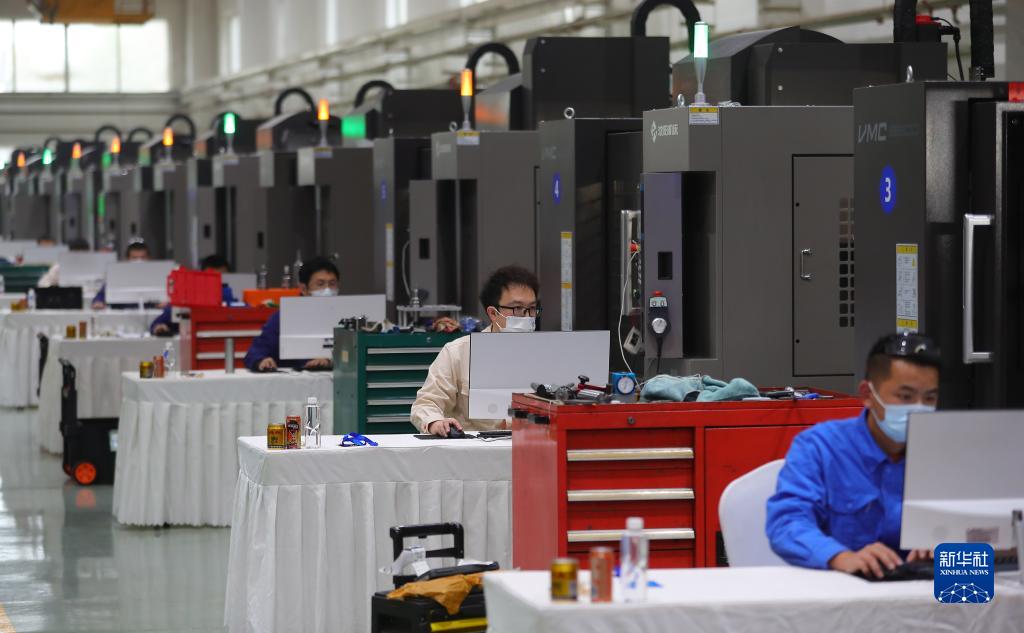
  On October 27th, the first vocational skills competition in Liaoning Province was held in Shenyang with the theme of "Developing Liaoning with Strong Skills and Creating the Future". On November 10th, 2022 "One Belt, One Road" and BRICS Skills Development and Technological Innovation Competition was held in General Technology Shenyang Machine Tool … … Liaoning province focuses on industrial workers and craftsmen from big countries, so that people have a stage and craftsmen have a position.

  "In the final analysis, building an innovative country depends on high-level human resources." Wu Xiujun, deputy director of the Liaoning Provincial Department of Human Resources and Social Security, said that as a big industrial province, Liaoning will continue to work hard on platform construction, rank promotion and skills training, and carefully train more "great country craftsmen".

  "60 Talents Revitalization in Longjiang", "Talents Revitalization Plan in Liaoning" and "New Deal for Talents in Jilin Version 3.0" have been issued one after another … … A heroic post has been issued, and a new platform has been built with all its strength, and an innovative environment is taking shape.

  On November 10th, the contestants competed in the NC multi-axis machining competition. On the same day, the 2022 "Belt and Road" and the "General Technology Cup" of BRICS skill development and technological innovation started in Shenyang Machine Tool, General Technology Group. Xinhua News Agency reporter Yang Qing photo

  General Secretary of the Supreme Leader has high hopes for the revitalization of Northeast China: "We are full of confidence and expectation for the revitalization of Northeast China".

  In accordance with the important arrangements made by the 20th National Congress of the Communist Party of China, the sons and daughters of Northeast China keep in mind the entrustment, concentrate on revitalization, and make great efforts to open up a new situation, and are striding forward on the new road of comprehensive revitalization. (Reporter Niu Jiwei, Wang Bingkun, Yang Siqi, Meng Hanqi, Guo Xiang, Wang Xiaolin)

Shanghai cracked a smuggling case of spare parts worth 100 million yuan, and three sets of prices for one kind of goods.

  [Xinmin Evening News Xinmin.com] Yesterday, Shanghai Customs announced that it had cracked a smuggling case of textile machinery spare parts. By registering a domestic company and acting as an exclusive agent for foreign brands, the criminal suspect smuggled imported textile machinery spare parts at an understatement rate of 90%, with a case value of 100 million yuan. A few days ago, the City No.3 Intermediate People’s Court made a judgment and sentenced the enterprise involved in the case, Shanghai Shisheng International Trade Co., Ltd., to a fine of 50 million yuan. The defendant Ma was sentenced to 8 years in prison and the defendant Zong was sentenced to 3 years in prison with a suspended sentence. The illegal income from smuggling crimes was recovered.

  Leading the niche industry to open the "invisible" mode

  Top comb and other items are very important accessories in textile industry. The evenness and smoothness of top comb needles are directly related to the effect of combing process, and the wear rate is very high and the demand is large. Because of its complicated precision requirements, China relies partly on foreign imports.

  In January 2015, the anti-smuggling police of Shanghai Customs found that the declared price of the top comb imported from a German company by Shanghai Shisheng International Trade Company was obviously low, and the declared price of the top comb after complicated processing technology was basically close to that of ordinary steel products. This is obviously unreasonable.

  With a question mark, after further investigation, the customs anti-smuggling police found that this enterprise is the exclusive agent of German brands in China, and its import volume accounts for 90% of China’s textile machinery parts imports, which is in a leading position in the industry. In an industry with a small market like this, one or very few enterprises often occupy an absolute share of the industry. It is difficult for customs to obtain accurate price information of similar products of domestic parallel enterprises, and there is no reference to make judgments.

  Three sets of invoices are connected in series to build a "routine" of false price reporting

  In January 2015, the anti-smuggling police of Shanghai Customs went to the warehouse of Shisheng Company in Changde Road, Shanghai to search. Three sets of invoices were retrieved from the mailbox of the company’s staff, namely: imported price invoices, forged understated price invoices and real settlement invoices.

  After investigation, since March 2009, the suspect Ma has put forward suggestions on smuggling for profit to Ms. S, a foreigner who was then the domestic agent of German brands. After listening to Ma’s suggestion, Ms. S transferred the enterprise to Ma’s operation. She went abroad to avoid the legal risks brought by smuggling, and only settled the payment afterwards, and she handed it over to the German brand. Ma adopted the mode of forging invoices and underreporting payment for goods. Among them, the price invoice imported from foreign countries is higher than the real sales price, which is used to show customers when doing marketing to promote sales; Forged under-reported price invoices are lower than the real sales price and used for tax evasion when reporting to the customs; The settlement invoice is the real sales price and is used for settlement with the company.

  Smuggling costs a lot. Law-abiding management is the right way.

  According to the data, the import volume of the enterprise involved accounts for 90% of the import volume of textile machinery parts in China. Without a large number of market competitors, if it operates legally, the annual turnover of its products is about RMB 30 million, and the profit is objective. However, under the temptation of greater interests, the criminal suspect Ma chose to take risks. With the increasing profits, there is a sense of luck, and he weaves another lie for one lie. After this case happened, the companies and personnel involved were punished by law.

  It is worth mentioning that after the enterprises involved were seized, faced with the blank market demand for the textile accessories, the employees of the former Shisheng Company took over the integration of the original suppliers and customers, re-represented the brand and standardized the import and marketing channels.

  "It turned out that the company was on the road of no return because of smuggling, but the product it represented was actually a good project with high customer recognition, so I decided to take over the project and continue to cooperate with German brands." Liu Jie, the manager of the new company, is very optimistic about the future development prospects. Since 2016, Liu Jie’s company has occupied 30% of the top comb market, and the value of imported goods is 21 million yuan, up 20% year-on-year. (Xinmin Evening News reporter Guo Jianwei)

Revealing the smuggling network of terrorists on the southwest border: incited by foreign forces

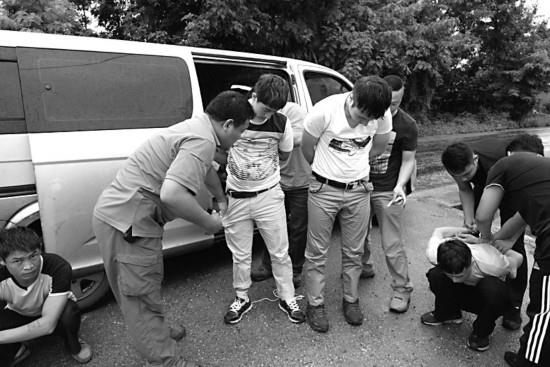
  Somewhere on the border between China and Myanmar, at night, a group of more than ten people approached the border in the dark, and there were women and children inside. They swam across a shoal in front of them, and they could reach Myanmar on the other side, where someone met them. When these people approached the China-Myanmar border, they were captured by China public security personnel who had already ambushed them. In recent years, this kind of domestic and foreign "snakeheads" collude with each other to organize smuggling activities, which continue to occur frequently in the southwest China-Vietnam and China-Myanmar border areas. The Global Times reporter learned from the Ministry of Public Security that most of the stowaways in the southwest border had participated in underground lectures or had been exposed to propaganda materials on terrorism. They paid tens of thousands of yuan and traveled from Xinjiang to the southwest border under the "one-stop" arrangement. The ultimate goal was to participate in the "jihad" in the Middle East. It is reported that such smuggling activities are mainly conducted behind the scenes by the overseas "East Iraqi Movement" organization, which encourages stowaways to carry out "jihad" on the spot if they are blocked from leaving the country.

  People who are blocked from smuggling create a terrorist case in Kunming.

  On the night of March 1, 2014, a group of thugs rushed into Kunming Railway Station with weapons, and cut everyone they saw, killing 31 innocent people and injuring 141 others. A person in charge of the Criminal Investigation Bureau of the Ministry of Public Security told the Global Times reporter that this was a typical case in which a person tempted by extreme thoughts tried to sneak out of the country and was blocked, and instead launched a "jihad" on the spot in China. "In recent years, foreign forces have used religious extreme thoughts to confuse people and incite domestic people to participate in the’ migration jihad’. If the bewitched person is blocked in the process of smuggling out of the country, he will not hesitate to launch terrorist activities on the spot, causing great harm to innocent people. "

  Shortly after the terrorism case in Kunming, there was another case of stowaways assaulting a police officer at the Sino-Vietnamese border crossing in Guangxi. The two victims in the case were Vietnamese military police.

  On April 18, 2014, just after noon, there was a sudden shout of killing in the joint inspection building of Beifengsheng Port in Vietnam. At that time, Vietnamese military and police personnel escorted 16 China stowaways, preparing to repatriate them. Among the 16 people, there were 10 adult men who plotted to launch a "jihad" on the spot while being repatriated. According to the division of labor, a leading man was elected as the "Emir (Chief)". He found a toilet in the border inspection building as an excuse and opened a guard. Then he approached another guard and suddenly hugged each other, shouting slogans. The rest quickly smashed the wooden chairs around them, attacked the guards with wooden bars, grabbed submachine guns and fired. Vietnam quickly mobilized a large number of military police to arrive at the scene, and eight stowaways were killed in the crossfire.

  It was later found that all 16 people were from Xinjiang. During the trial, the stowaway was deeply bewitched by extreme thoughts and indifferent to his family and children, which shocked China public security personnel. One of the women, Gulizina Abdul Rexi, was eight months pregnant. A few months ago, she and her husband sold all their possessions and took the 16-year-old daughter from Hotan to Urumqi by bus. After staying for three days, she took the train to Guangzhou, stayed in a small hotel with daily rent in 40 yuan, and waited for the "snakehead" to arrange for smuggling out of the country. Abdurejsi’s husband was killed by the Vietnamese police in the "4 18" case. She and her daughter did not shed a tear when they learned of his death.

  In the case, Ayisha Mu Abdullah, the mother of three children, came to Guangzhou with two children. Before going to the Sino-Vietnamese border, the "snakehead" said that there were not enough seats in the car and she could only take one child, so she left her eldest son and let the next group of strangers take him out of the country.

  According to Gui Baodong, the detachment leader of the Criminal Investigation Detachment of Fangchenggang Public Security Bureau in Guangxi, who was involved in handling the case, Vietnamese police finally surrounded a smuggling man and persuaded him to surrender, but the latter committed suicide by jumping off a building. Such crazy resisting arrest behavior is different from ordinary people.

  Extra-large cross-border smuggling network surfaced

  The background of two consecutive vicious incidents in March and April last year is that organized smuggling activities in the southwest border areas of China have increased in recent years, especially the collusion between "snakeheads" at home and abroad. In April last year, the Ministry of Public Security set up a "4 29" task force. Since May, police in Henan, Guangdong, Guangxi, Sichuan, Yunnan, Xinjiang and other places have jointly cracked down on illegal immigration activities in the southwest border, and several working groups have been stationed in the front line. As a result, a complex and tight smuggling network surfaced.

  This "one-stop" interest chain includes overseas command, domestic organization, transit, border guide and overseas "snakeheads". The Global Times reporter learned that among the more than 30 transnational smuggling criminal gangs destroyed by the "4 29" project, only the mega-gang headed by Guangxi "snakehead" Wei Hai organized more than 300 people to sneak out of the country from January to April 2014.

  After Wei Hai was arrested, he confessed that every time he sneaked into the country, Eric Ahmad (nicknamed "A Le"), a foreigner, would give him instructions to pick him up. Wei Hai sent "Ma Zi" to hire a black car to pick up a group of stowaways, went near the border line, waited for an opportunity to cross the border at night and handed it over to the Vietnamese "snakehead". Vietnamese "snakeheads" hired cars to transport stowaways from the border to Hanoi, and then "A Le" organized stowaways to leave Vietnam.

  Liu Huaming, deputy detachment leader of the Criminal Investigation Detachment of Fangchenggang Public Security Bureau in Guangxi, said that A Le paid Wei Hai 2,000 yuan for each stowaway who left the country. For stowaways, this 2000 yuan is only a short passage from the mainland to the border. Liu Huaming said, from leaving home to the border areas and then to overseas destinations, stowaways pay 30,000-50,000 yuan per capita. "The crackdown on public security in China has intensified, and the cost of smuggling has also risen. Recently, it has risen to 80,000-100,000 yuan per capita."

  In response to China’s intensive crackdown, the "snakeheads" have racked their brains. The relevant person in charge of the Criminal Investigation Bureau of the Ministry of Public Security told the Global Times reporter that among a group of stowaways, "snakeheads" often have to arrange several leaders, and the jargon is called "patients". The so-called "patient" is a person who has a criminal record in China or is chased by the public security organs online. Once the smuggling process is blocked, he will lead others to "jihad" on the spot.

  On August 30, 2014, the Fangchenggang police in Guangxi stopped a CMB near the Sino-Vietnamese border and asked the people on board to get off for questioning. The third middle-aged man suddenly took out a sharp knife from his waist and stabbed the nearest special police officer. Another special police officer decisively shot and wounded him. Afterwards, it was found out that the stowaway’s name was Aimeti Jiang Turgon, a native of Kashgar, Xinjiang. At the moment when the police stopped the car, he was responsible for inciting the fellow passengers to "jihad" on the spot. "We have more than a dozen special police officers and policemen present, armed with submachine guns and short guns. In this case, he still attacked with a knife, which shows that he has completely lost his mind," Liu Huaming said.

  Police officer Alimu told reporters that in order to avoid inspection and crackdown, stowaways carefully designed and disguised. "Almost all the stowaways in each group are women and children, and this combination is easily mistaken for business or tourism. When they sneak out of Guangxi, they generally don’t go directly from Xinjiang to the border of Guangxi, but bypass other provinces and cities, and then hire’ black cars’ to get close to the border. "

  Religious extreme thought is the root.

  Since the "4 29" project was launched for more than eight months, the high incidence of illegal immigration has been curbed. The reporter of Global Times was informed that the public security frontier departments in Guangxi and Yunnan seized 166 illegal immigrants from January to April last year. After the operation, 34 people were seized from May to June, and only one person was seized by the Yunnan frontier department in July.

  A domestic security official told the Global Times reporter on the 18th that the causes of organized smuggling in southwest border areas are complicated, and various factors at home and abroad are intertwined. The overseas "East Iraqi Movement" organization is behind the smuggling activities, and religious extreme thoughts are the root cause of the smuggling activities, with the aim of inciting domestic ethnic minorities to leave the country to engage in "jihad" activities in Middle East and Syria. Under the influence of comprehensive factors such as the manipulation and command of the "East Iraqi Movement" abroad and the propaganda and incitement of religious extreme thoughts, some religious extremists seek to leave the country to participate in terrorist organizations and "jihad", and some people are deceived and threatened.

  The behind-the-scenes role of foreign forces was exposed in the smuggling case on the southwest border. According to police officer Alimu, three Chinese who tried to cross the mountain and cross the border were arrested recently. They started from a border county in Guangxi, but they got lost and turned back and were captured by the police. "The mobile phone communication of one of them showed that the stowaway kept taking photos with his mobile phone while climbing the mountain, and passed them on to overseas organizers. The organizers marked the specific smuggling route in Uighur on the returned photos, and marked the location of border checkpoints, police stations and boundary pillars, guiding the stowaway to leave the country illegally." Alimu said that these three people actually crossed the boundary pillar, but they mistakenly thought that they were still in China and had no choice but to return to Guangxi county. "Afterwards, they confessed that the organizer was in Turkey."

  The police found from the cracked smuggling cases in the southwest border that most of the people involved had participated in underground lectures or watched violent videos. These audio and video videos of terror are basically wrapped in religious cloaks, and are "packaged" by Islamic hadith and sacred religious chanting. The content is completely opposite to the "doing good and stopping evil" advocated by Islam, openly clamoring for killing and suicide, and spreading the fallacy of "jihad martyrdom into heaven". It is precisely under the brainwashing and bewitching of the extreme religious thought of "jihad and martyrdom into heaven" that these stowaways lose their rationality and do whatever it takes to get into heaven, and regard the death of themselves and others as their passport to get into heaven.

  Sun Xiaoying, a researcher at Guangxi Academy of Social Sciences, said that stowaways bewitched by religious extreme thoughts must pass through many countries to reach their destinations, and they may be investigated and punished in any place and repatriated according to international law. Some people eventually become international refugees because they throw away their identity documents. The above-mentioned domestic security officials said that from the current situation, some people who have sneaked out of the country from the southwest border have gone to the Middle East to participate in the "jihad" through some countries in Southeast Asia.

  The head of the Criminal Investigation Bureau of the Ministry of Public Security told the Global Times reporter that at present, the "4 29" task force has identified a group of behind-the-scenes organizers hiding abroad and the "snakeheads" of Southeast Asian countries, and issued a red wanted order to key criminal suspects through Interpol. "The next step is to strengthen cooperation with the police in Southeast Asian countries, rely on bilateral and multilateral cooperation mechanisms, jointly carry out transnational arrest work, and resolutely arrest the leaders and backbones of smuggling criminal gangs." (Liu Chang)                                           

Primary school management regulations

(Decree No.26 of the State Education Commission on March 9, 1996)

Chapter I General Principles

  Article 1 This Regulation is formulated in accordance with the Education Law of the People’s Republic of China and other relevant education laws and regulations in order to strengthen the standardized management of primary school contents, comprehensively implement the education policy and comprehensively improve the quality of education.

  Article 2 The primary schools referred to in these Regulations are institutions established by the government, enterprises, institutions, social organizations, other social organizations and individual citizens to carry out general primary education for children.

  Article 3 Primary schools shall implement compulsory primary education.

  The length of schooling in primary schools isSix or five years. Provinces, autonomous regions and municipalities directly under the Central Government may, according to the actual situation, determine the length of schooling for primary schools within their respective administrative areas.

  Article 4 Primary schools should implement the policy that education must serve the socialist modernization, and must be combined with productive labor to train builders and successors of the socialist cause with moral, intellectual and physical development.

  Article 5 Primary education should be connected with pre-school education and junior high school education. On the basis of school education, education and teaching activities should be implemented to make the educated lively and actively develop and lay the foundation for junior high school education.

  Article 6 The training objectives of primary schools are:

  Initially, he has the thoughts and feelings of loving the motherland, people, labor, science and socialism; Abide by social morality, collective consciousness and civilized behavior habits; Good will, character and lively and cheerful personality; Self-management and ability to distinguish right from wrong.

  Have the basic knowledge and skills of reading, writing, expressing and calculating, know some common sense of life, nature and society, have the ability of initial observation, thinking, hands-on operation and learning, and develop good study habits. Learn the methods of reasonable exercise and physical maintenance, form the habit of paying attention to hygiene, and have a healthy body and initial environmental adaptability. Has a wide range of interests and a healthy interest in beauty.

  Article 7 The basic teaching language in primary schools is Chinese. Schools should promote the use of Putonghua and standardized characters.

  Schools that mainly recruit minority students can use the spoken and written languages commonly used by their own ethnic groups or local ethnic groups for teaching, and should offer Chinese language courses at appropriate grades according to the actual situation.

  Eighth primary schools implement the principal responsibility system, and the principal is fully responsible for the school administration.

  In rural areas, the principal responsibility system of central primary schools can be implemented according to the situation.

  Ninth primary schools in accordance with the principle of "hierarchical management, division of responsibilities", the implementation of education under the leadership of the local people’s government.

Chapter II Admission and Student Status Management 

  Tenth primary school enrollment has reached the age of ten.Children who are 6 years old can be postponed to 7 years old in areas where conditions are not available. Primary schools start in autumn.

  Primary schools should, in accordance with the provisions of the Compulsory Education Law and its detailed rules for implementation, organize school-age children in service areas to enter the school on time and without examination under the leadership of the local government. The service area of primary schools shall be determined by the competent administrative department of education.

  Eleventh primary schools adopt the class teaching system, and the organizational form of classes should be single, and those who do not have the conditions can also adopt double. The number of places in teaching classes shall not exceed45 people is appropriate.

  The school scale should be conducive to education and teaching, to students’ physical and mental health, to management and to improving the efficiency of running a school.

  Twelfth primary school students who are unable to continue their studies due to illness (must have the certificate of designated medical units) may be allowed to suspend their studies after being approved by the relevant departments. Students who have been out of school for more than three months can be enrolled in the corresponding grades according to their actual academic level and after consulting their parents or other guardians.

  Primary schools that apply for transfer due to the change of household registration and are approved by the relevant education administrative departments to meet the requirements shall be properly placed in time and shall not refuse without reason.

  Primary school students who apply for schooling in the place where they are not registered for any reason may be allowed to borrow if they meet the requirements after examination by the relevant departments, and may charge a borrowing fee according to the relevant provisions.

  Thirteenth primary schools should comprehensively evaluate students from moral, intellectual and physical aspects. We should do a good job in counseling students with learning difficulties and actively create conditions to gradually abolish the repetition system. Where the repetition system is still implemented at this stage, it is necessary to create conditions to gradually reduce the proportion of students who repeat grades and reduce the number of times they repeat grades.

  Primary schools will issue graduation certificates to those who have completed the prescribed courses and passed the grades; Those who fail will be issued with a certificate of completion, and the graduation grade will not be repeated. For those who have not completed the primary school curriculum, but have completed the compulsory education period stipulated by the local government, an associate degree certificate will be issued.

  Fourteenth primary school students with excellent academic performance who have reached the academic level of higher grades in advance may be allowed to advance to the corresponding grades and report to the competent education department for the record.

  Article 15 Primary schools shall commend students with excellent academic performance, criticize and educate students who have made mistakes, and give warnings, serious warnings and demerits to a few students who have made serious mistakes.

  Primary schools may not expel students.

  Sixteenth primary schools should prevent students who have not finished compulsory education for a specified number of years from dropping out of school. If they find that students have dropped out of school, they should immediately report to the competent authorities and cooperate with relevant departments to resume their studies according to law and do a good job.

  Seventeenth specific measures for the management of primary school student status shall be formulated by the provincial education administrative department.

Chapter III Education and Teaching Work

  Article 18 The main task of primary schools is education and teaching. All other work should be based on the principle of being conducive to the development of education and teaching.

  Nineteenth primary schools should carry out education and teaching in accordance with the curriculum plan and syllabus issued by the national or provincial education administrative departments.

  In the teaching work of primary schools, we should give full play to the overall functions of subject courses and activity courses, and provide students with moral, intellectual, physical, aesthetic and labor education to lay the foundation for their all-round development.

  Twentieth primary schools should actively carry out education and teaching research, use educational theory to guide education and teaching activities, and actively promote scientific research achievements and successful experiences.

  Twenty-first primary schools should put moral education in an important position, the principal is responsible, the teaching staff participate, teach and educate people, manage and educate people.

  School education should be combined with family education and social education.

  Twenty-second primary schools should set up a class teacher in each class, who is responsible for managing and guiding the class work. Teachers in charge of class should keep close contact with teachers in all subjects and parents of students, understand the situation of students’ thoughts, morality, behavior and studies, and coordinate and cooperate with students in implementing education.

  The head teacher should write comments according to the students’ behavior every semester.

  Twenty-third primary schools should give priority to positive education for students, affirm achievements and progress, point out shortcomings and deficiencies, and must not be sarcastic and rude, and corporal punishment and disguised corporal punishment are strictly prohibited.

  Twenty-fourth primary school teaching should be oriented to all students, adhere to the principle of aptitude, and give full play to the main role of students; We should attach importance to basic knowledge teaching and basic skills training, stimulate interest in learning, and cultivate correct learning methods and habits.

  Twenty-fifth primary schools should arrange school work in accordance with the school calendar promulgated by the administrative department of education. Primary schools are not allowed to suspend classes at will. If it is necessary to suspend classes under special circumstances, it shall be decided by the principal within one day and reported to the county education administrative department for the record. One day or more and three days or less shall be approved by the people’s government at the county level.

  Primary schools may not organize students to participate in commercial celebrations, performances and other activities, and participation in other social activities should not affect the teaching order and the normal work of schools.

  Twenty-sixth primary schools should arrange their schedules reasonably. Students spend no more than five or six years in school for education and teaching activities every day.6 hours, other grades should be reduced appropriately. Students are not allowed to make up classes or take new classes after class, at night and on holidays.

  The content of homework after class should be carefully selected, the difficulty should be moderate, the quantity should be appropriate, and the relevant regulations should be strictly implemented to ensure the students’ academic burden is appropriate.

  Twenty-seventh textbooks used in primary schools must be approved by the state or the provincial textbook approval department authorized by the state. Experimental teaching materials and local teaching materials must be approved by the relevant education administrative departments before they can be used.

  Primary schools shall not require or uniformly organize students to purchase all kinds of learning guidance materials. It is necessary to strengthen guidance for students to use learning tools.

  Twenty-eighth primary schools should evaluate the teaching quality in various forms according to the requirements of curriculum plan and syllabus. At the end of the semester, the examination subjects are Chinese and mathematics, and other subjects pass the usual examination to evaluate their grades.

  The primary school graduation examination is made by the school (in rural areas, it is made by the township central primary school under the guidance of the county-level education administrative department), and the examination subjects are Chinese and mathematics.

  Schools should establish scientific standards for comprehensively evaluating the quality of education morally, intellectually and physically, and should not rank classes and students by examination results, and take them as the only standards for measuring teaching quality and evaluating teachers’ teaching work.

  Twenty-ninth primary schools should pay attention to physical education and aesthetic education.

  Schools should strictly implement the laws and regulations on school physical education promulgated by the state, and enhance students’ physique through physical education class and other forms of physical activities. Schools should ensure that students have one hour of physical activity every day.

  Primary schools should give good music and art lessons, and other disciplines should also give play to the function of aesthetic education from the characteristics of their own disciplines. Aesthetic education should combine students’ daily life, put forward aesthetic requirements such as dress, appearance, language and behavior, and cultivate healthy aesthetic taste.

  Thirtieth primary schools should strengthen labor education for students, cultivate students’ thoughts of loving labor, loving the working people and cherishing the fruits of labor, cultivate their ability to engage in self-service, housework, public welfare labor and simple productive labor, and form working habits.

  Article 31 Primary schools should strengthen the guidance of students’ extracurricular activities, pay attention to contact with students’ families, children’s palaces (homes, stations) and youth science and technology museums (stations) and other extracurricular activities, carry out beneficial activities, and arrange students’ extracurricular activities in accordance with the relevant provisions of the education administrative department.

Chapter IV Personnel Work 

  Thirty-second primary schools can set up principals, vice principals, directors, teachers and other personnel according to the establishment.

  Article 33 The principal of a primary school is the person in charge of school administration. The headmaster should have the qualifications stipulated by the state and be appointed or employed by the higher authorities of the school setters or setters; The vice president and the director of teaching (general affairs) are nominated by the principal and appointed or employed according to the relevant provisions and procedures. Primary school principals set up by non-government should be reported to the competent education administrative department for the record.

  Principals should strengthen the study of educational policies, regulations and educational theories, strengthen their self-cultivation, improve their management level and manage the school according to law. Its main responsibilities are: 

  (a) to implement the national education policy, implement the education laws and regulations and the instructions and regulations of the education administrative department, follow the laws of education, and improve the quality of education;

  (B) to formulate the development of the school

  (three) follow the relevant laws and policies of the state, pay attention to the construction of teaching staff. Relying on teaching staff to run the school well and safeguard their legitimate rights and interests;

  (4) Give full play to the leading role of school education, and strive to promote the coordination of school education, family education and social education, and cooperate with each other to form a good educational environment.

  Thirty-fourth primary school principals should fully respect the democratic rights of teaching staff and listen to their opinions and suggestions on school work; Teaching staff should obey the leadership of the principal and conscientiously complete their own work.

  Teachers’ opinions and suggestions on school work can be directly reflected to the competent authorities when necessary, and no organization or individual may obstruct them.

  Thirty-fifth primary school teachers should have the qualifications prescribed by the state, enjoy and perform the rights and obligations prescribed by law, abide by professional ethics, and complete the education and teaching work.

  Thirty-sixth primary schools should strengthen the management of teachers, implement the system of teacher qualification, position and appointment according to the relevant provisions of the state, and establish and improve the professional assessment files. It is necessary to strengthen teachers’ ideological and political education and professional ethics education, and establish professionalism. Excellent teachers who conscientiously perform their duties should be rewarded.

  Thirty-seventh primary schools should attach importance to teachers’ continuing education, formulate teachers’ further education plans, and actively create conditions for teachers’ further education. Teachers’ further education should be based on the needs of school work, focusing on on-the-job, self-study and teaching subjects.

  Thirty-eighth other primary school personnel should have the corresponding political and professional qualities, and their specific qualifications and responsibilities shall be formulated by the education administrative department or school according to the relevant provisions of the state.

Chapter V Administrative Work 

  Thirty-ninth primary schools can set up institutions or personnel in charge of educational affairs, general affairs, etc. according to the scale, to assist the principals in doing the relevant work (grade groups can also be set up in larger schools), and their specific responsibilities shall be formulated by the schools.

  Article 40 If a primary school is large in scale, a school affairs committee convened by the principal and attended by the heads of various departments may be established to study and decide on major issues of the school.

  Forty-first primary schools should establish a staff (representative) assembly system, and strengthen democratic management and supervision. The general assembly can be held regularly, without a permanent body.

  Article 42 the Communist Party of China (CPC) plays a political core role in the organization of primary schools. Principals should rely on the Party’s school (local) grass-roots organizations and give full play to the role of trade unions, the Communist Youth League, the Young Pioneers and other organizations in school work.

  Forty-third primary schools should establish and improve educational research, business files, financial management, safety work, learning, meetings and other systems.

  Schools should establish a roster of staff, students and other statistical tables, and report them to the education administrative department of the competent department on a regular basis.

  Forty-fourth primary schools should accept the inspection, supervision and guidance of the administrative department of education or the competent department at a higher level, and truthfully report their work and reflect the situation.

  At the end of the school year, the school should report to the education administrative department or the superior competent department, and major issues should be reported at any time. 

Chapter VI School Buildings, Equipment and Funds

  Article 45 The conditions and funds for running a primary school shall be provided by the school sponsors. Its standards are formulated by the provincial people’s government.

  Primary schools should have school buildings, venues, facilities, teaching instruments and books and materials that meet the prescribed standards.

  Forty-sixth primary schools should comply with the relevant provisions of the management and use of school buildings, venues, etc., without the approval of the competent authorities, shall not change their use.

  It is necessary to carry out regular repairs and maintenance of school buildings, and immediately stop using dangerous buildings when they are found, and report them to the higher authorities. For the act of encroaching on school buildings and sites, the school can report to the higher authorities of the infringer according to law until it brings a lawsuit to the people’s court.

  Primary schools should do a good job in campus construction planning, purification and greening, beautify the campus, do a good job in campus culture construction, and form a good educational environment.

  Forty-seventh primary schools should strengthen the management of teaching instruments, equipment, books, recreational and sports equipment and health facilities, establish and improve the system, and improve the efficiency of use.

  Forty-eighth public primary schools are free of tuition fees, and can appropriately collect miscellaneous fees. Primary school fees should be strictly in accordance with the charging items formulated by the provincial people’s government and the standards and measures formulated by the people’s governments at or above the county level.

  Forty-ninth primary schools can hold school-run industries according to relevant regulations, and organize teachers and students to work and study from the actual situation of the school. It is strictly forbidden to apportion money and materials to students instead of work-study programs.

  Primary schools can accept social donations according to the relevant provisions of the state.

  Article 50 Primary schools should scientifically manage and rationally use school funds, improve the efficiency of use, establish and improve the fund management system, and submit the budget and final accounts to the school affairs committee or the staff congress for deliberation, and accept the supervision of the financial and auditing departments at higher levels. 

Chapter VII Health Care and Safety

  Fifty-first primary schools should conscientiously implement the relevant state regulations and policies on school health work, and establish and improve the school health work system. There should be a special person in charge of this work (schools with conditions should set up a school doctor’s office), and students’ health cards should be established to experience regularly or irregularly according to conditions.

  Fifty-second primary school environment, school buildings, facilities, books, equipment, etc. should be conducive to the physical and mental health of students, and the arrangement of education and teaching activities should conform to the physiological and psychological characteristics of students.

  It is necessary to continuously improve the school environmental sanitation and teaching hygiene conditions, carry out health education, cultivate students’ good hygiene habits, and prevent infectious diseases, common diseases and food poisoning.

  Fifty-third primary schools should strengthen school safety work, carry out safety education according to local conditions, and cultivate teachers and students’ self-help and self-care ability. Where students are organized to participate in cultural and sports activities, social practice, outings and labor, proper preventive measures should be taken to ensure the safety of teachers and students.

Chapter VIII School, Family and Society 

  Fifty-fourth primary schools should establish community education organizations with streets, villagers’ committees and nearby organs, organizations, troops, enterprises and institutions, mobilize all sectors of society to support school work, and optimize the educational environment. Primary schools should also give full play to their own advantages and serve the spiritual civilization construction of the community.

  Fifty-fifth primary schools should take the initiative to establish contact with students’ families, and use parents’ schools and other forms to guide and help parents to create a good family education environment.

  Parents’ committees can be set up in primary schools to make them understand the school work, help schools solve the difficulties encountered in running schools, and reflect the opinions and suggestions of parents of students.

  The parents’ committee works under the guidance of the headmaster.

Chapter 9 Other things

  Fifty-sixth rural central primary schools should play the role of school demonstration, teaching and research center and further education base under the guidance of the county education department, and promote the overall improvement of the quality of local primary education.

  Fifty-seventh primary schools that undertake the task of education and teaching reform may, after being approved by the relevant departments, adjust some requirements in this regulation according to actual needs.

Chapter X Supplementary Provisions 

  Article 58 A primary school shall, in accordance with the Education Law of the People’s Republic of China and these regulations, formulate its articles of association in light of its actual situation.

  Fifty-ninth this regulation is mainly applicable to urban primary schools, rural primary schools and above, and other types of primary schools and institutions that implement primary education can refer to it.

  The education administrative departments of all provinces, autonomous regions and municipalities directly under the Central Government may formulate implementation measures according to this regulation.

  Article 60 These Rules shall come into force as of the date of promulgation.

  

Pay attention to the growth of youth "blue pleated skirt" "falling" version of the preview exposure

1905 movie network news The trailer of "Falling" version of the Youth Growth Film was released on December 23rd, centering on the falling of the film’s main character, Lanter, showing two completely different campus lives. The first half is the painful past of campus bullying, and the second half is a completely different life experience after meeting new friends in a new school. The film was written and directed by Rong Zhuo and starred by Wang Fang, Shu Yao, Xie Jia, Yan Jingyao and Chen Jialin.

The film tells the story of a group of young students who dare to love and hate in the Millennium. The fate between Lanter and Zhou Yang, which began with misunderstanding, makes each other an indelible color in life, and explains the love concept of millennials.


Pay attention to bullying on campus. High school girls are bullied.

As a youth growth film focusing on the Millennium, The Blue Pleated Skirt confronts the hot topic of campus bullying. In the trailer, the heroine, Lanter, was teased by classmates, with abusive notes in the book, attacked by classmates with basketball on the basketball court, and even stained Lanter’s clothes with chewing gum on the seat. All kinds of events have brought more gloom to Lanter, whose family is incomplete, and her face is more sad than a smile.

Lanteer (Rong Zhuo) divorced her parents and remarried her mother when she was a child, and then she was fostered in menstruation’s home. Her special experience made her withdrawn and shy. She was teased by her classmate Zhou Yang (Wang Fang) at school and dropped out of high school and transferred to an art school. In a brand-new environment, she made new friends. Zhou Yang, who had teased her before, regretted it and turned around to find Lanter’s new school. This ignorant emotion and sincere friendship with new friends have changed Lanter’s student days.


Start a new life, grow up young, warm winter

Youth is not always full of scars. Meeting the right person at the right time is not only about love, but also about friendship. This can be seen in the trailer. When Lanter came to the brand-new campus, she made friends with distinctive personalities such as Xiang Wenfei, and gave Wen Fei short hair. Whenever Lanter was in a bad mood, she would ride a bike to take her for fun, and even climb on the guardrail of the dormitory to overlook. The seemingly absurd behavior is a true portrayal of youth, and a group of characters take the audience back to their youth.

In addition to his close friends, the change in the relationship between Lanter and his sweetheart Zhou Yang is another bright sunshine in the film. In the trailer, Zhou Yang plays "The Little White Boat" on the harmonica. This well-known nursery rhyme has been sung all over the streets since it was translated into Chinese in the 1950s, and the slightly sad melody connects Lanter and Zhou Yang’s unhappy childhood. It is precisely because of the same experience that they have gained a better understanding of each other, and a sincere and pure love story began to be written.