Always on the Road —— The CPC Central Committee with the Supreme Leader as the core leads the comprehensive and strict administration of the Party to advance in depth.
To govern the country, we must first govern the party, and only when the party is prosperous can we strengthen the country.
In the new era, the CPC Central Committee with the Supreme Leader as the core has promoted the comprehensive and strict administration of the party with unprecedented courage and determination, opened up a new realm of the century-old party’s self-revolution, and explored a successful path of relying on the party’s self-revolution to jump out of the historical cycle rate.
Embarking on a new journey, promoting the construction of a strong country and the great cause of national rejuvenation, General Secretary of the Supreme Leader issued a call to the whole party — —
"We must stand at the height of the party’s long-term governance, the country’s long-term stability and the people’s happiness and well-being, regard the comprehensive and strict management of the party as the party’s long-term strategy and eternal topic, always adhere to the problem orientation, maintain strategic strength, carry forward the thorough spirit of self-revolution, and always blow the bugle, stick to the strict tone, strict measures and strict atmosphere for a long time, and carry out the party’s great self-revolution to the end."
The way to win — — "Only by being brave in self-revolution can we win the historical initiative"
At the end of 2023, Huairentang, Zhongnanhai, Beijing.
For two days in a row, the Political Bureau of the Communist Party of China (CPC) Central Committee held a special democratic life meeting to study and implement the theme education of Supreme Leader Socialism with Chinese characteristics Thought in the new era, summed up the achievements, checked the shortcomings, conducted party spirit analysis, and carried out criticism and self-criticism.
"Being brave in self-revolution is the most distinctive character and greatest advantage of our party. Comrades in the Political Bureau of the Central Committee should always be strict with themselves according to the standards of Marxist politicians, and set a benchmark and set an example for the whole party in leading an honest and clean life. The important speech made by the General Secretary of the Supreme Leader at the meeting reflects the clear requirement of continuously promoting the party’s self-revolution under the above rate.
Become a body and the world becomes, and rule the body and the world.
The key to building a socialist modern country in an all-round way and promoting the great rejuvenation of the Chinese nation lies in the party. The great cause opens a new chapter, and the great project needs to open a new situation.
Uphold the consciousness of "the party’s self-revolution is always on the road" and alert the whole party to keep sober and firm in solving the unique problems of the big party at all times — —
On October 27th, 2022, less than a week after the 20th National Congress of the Communist Party of China closed, General Secretary of the Supreme Leader led the 20th CPC The Politburo Standing Committee (PSC) to Yan ‘an, the "starting point of victory" of the China Revolution.
In the former residence of Comrade Mao Zedong in Yang Jialing, a yellowed photo attracted the attention of the Supreme Leader General Secretary. It was in early July, 1945 that Comrade Mao Zedong greeted Huang Yanpei and his party at the airport.
At that time, in the caves in Yan ‘an, Huang Yanpei put forward the question of how to jump out of the historical cycle rate of "its prosperity is also rich, and its death is also sudden". Comrade Mao Zedong gave the first answer, that is, "let the people supervise the government".
Now, the Party Central Committee with the Supreme Leader as the core has given the second answer in the great practice of strictly administering the Party in an all-round way in the new era, which is self-revolution.
During this trip to Yan ‘an, the General Secretary of the Supreme Leader once again stressed: "Be brave in advancing the party’s self-revolution, unswervingly promote the comprehensive and strict administration of the party, always maintain the party’s advanced nature and purity, and ensure that the party will always be the strong leadership core of Socialism with Chinese characteristics’s cause."
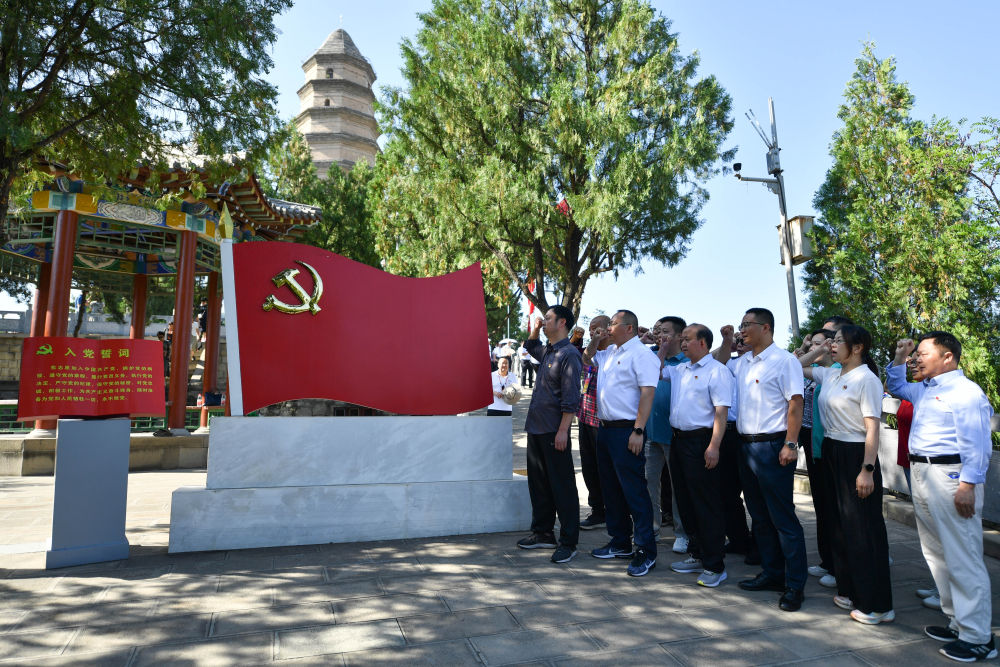
On June 30, 2023, party member cadres who visited Baota shan, Yan ‘an, Shaanxi, revisited the oath of joining the Party. Xinhua News Agency reporter Zhang Bowen photo
Since the 18th National Congress of the Communist Party of China, strictly administering the Party in an all-round way is an important part of the great changes in the new era and an important political guarantee, which has had an all-round and deep-seated impact.
In the face of the historic and pioneering achievements of comprehensively and strictly administering the party in the new era, the General Secretary of the Supreme Leader has always been calm and sober.
On October 12, 2022, at the Seventh Plenary Session of the 19th CPC Central Committee, General Secretary of the Supreme Leader said earnestly: "A big party and a big country is not only our advantage in doing great things and building great achievements, but also makes us face many unique problems in managing the party and the country."
A few days later, at the 20th National Congress of the Communist Party of China, General Secretary of the Supreme Leader put forward a major conclusion to the whole party: "As the largest Marxist ruling party in the world, our party must always win the support of the people and consolidate its long-term ruling position, and must always remain sober and firm in solving the unique problems of the big party."
What is the unique problem of the big party?
"How to always Do not forget your initiative mind, keep in mind the mission, how to always unify thoughts, unified will and unified actions, how to always have a strong ruling ability and leadership level, how to always maintain the entrepreneurial spirit of officials, how to always find and solve their own problems in time, and how to always maintain a clean and honest political ecology are all unique problems that our big party must solve." In January, 2023, at the Second Plenary Session of the 20th Central Commission for Discipline Inspection, General Secretary of the Supreme Leader made a profound analysis with "Six How to Always".
At the critical juncture of history, the Communist Party of China (CPC) people always have worries and are prepared for danger in times of peace. They examine themselves with a thorough spirit of self-revolution, showing their strong historical consciousness and mission.
Knowing that "a powerful political party is forged in self-revolution", we should constantly deepen our understanding of the regularity of managing the party and the party on the basis of practice — —
On the afternoon of June 30th, 2023, on the eve of the Party’s birthday, the Political Bureau of the Communist Party of China (CPC) Central Committee conducted the sixth collective study on opening up a new realm of Marxism in China.
When it comes to theoretical innovation, it is necessary to answer the new topics of the times in a timely and scientific manner. The Supreme Leader’s General Secretary clearly requires: deepen the regular understanding of the party’s self-revolutionary strategic thinking in the comparison of the fate of Marxist political parties in the world and the realistic test faced by our party in its long-term governance.
From clearly proposing "self-revolution" in the field of party building to emphasizing that being brave in self-revolution "is the most distinctive character of our party"; From putting forward the important exposition of "two revolutions leading the great social revolution with great self-revolution" to highlighting the decisive role of the new great project of party building in the "four greats" … …
In the new era, the CPC Central Committee with the Supreme Leader as the core profoundly summed up the historical experience of the Party, especially the fresh experience since the 18th National Congress of the Communist Party of China, put forward the important conclusion of the Party’s self-revolution and formed strategic thinking.
In the Party’s Report to the 20th CPC National Congress, the requirement of "improving the system of strictly administering the Party in an all-round way" is particularly striking. This is the first time that this expression was put forward in the report of the Party’s National Congress.
How to promote this "overall and groundbreaking work"?
"To improve this system, we need to adhere to the system of governing the party and governing the party according to regulations, highlight the organic connection, linkage integration and coordination of all aspects of party building, highlight the perfection of institutional mechanisms and the scientific and effective laws and regulations, and highlight the use of governance concepts, systematic concepts and dialectical thinking to manage the party and build the party." General Secretary of the Supreme Leader indicates the path requirements.
Practice continues to expand and understanding continues to deepen.
The national organizational work conference held in June 2023 put forward "the important thought of the supreme leader general secretary on party building" and systematically summarized it with "thirteen persistences".
General Secretary of the Supreme Leader’s important thought on party building greatly enriched and developed the Marxist theory of party building with a series of original achievements, which marked that our party’s understanding of the laws governing the construction of the Marxist ruling party reached a new height.
Keep in mind the fundamental question of "what is the Communist Party of China (CPC) and what to do" and ensure that the Party will never deteriorate, change color and taste by relying on self-revolution — —
In winter, the sun shines in the Memorial Hall of the New Fourth Army on Jianjun East Road, Yancheng City, Jiangsu Province. On the morning of December 3, 2023, General Secretary of the Supreme Leader made a special trip here on his way back to Beijing from his inspection tour in Shanghai.
The ballad engraved on the wall of the exhibition hall, "Eat cabbage, be a soldier, be a new fourth army", records the Song Gong monument & HELIP, which tells the story of the joint efforts of the army and the people to build a seawall during the Anti-Japanese War. … The general secretary said with emotion: "The people’s hearts are determined by the historical choice. Jiangshan is the people and the people are the mountains."
He who wins the hearts of the people wins the world.
General Secretary of the Supreme Leader profoundly pointed out: "To carry out self-revolution, we should also pay attention to relying on the people and relying on the support and help of the people to solve our own problems."
Because "communist party is a party that serves the people", there is no fear of people’s supervision; Because "there is no special interest of its own", it dares to make self-revolution. The two answers that jump out of the historical cycle rate reflect the irrefutable truth — — "People’s hearts are related to the life and death of the party."
Only "I would like to be selfless and determined to devote myself to serving the Chinese people and China’s development" can have the fearless courage to "offend thousands of people and live up to 1.4 billion". Always regard the people as the fundamental starting point and foothold of building, rejuvenating and strengthening the party, which is the courage, confidence and motivation to carry out the party’s self-revolution to the end.
Treat both the symptoms and the root causes — — "Play a set of self-revolutionary ‘ Combination boxing ’ "
During the 20th National Congress of the Communist Party of China, General Secretary of the Supreme Leader came to the Guangxi delegation to discuss the Party’s Report to the 20th CPC National Congress.
Looking back on the magnificent course of strictly administering the Party in an all-round way, General Secretary of the Supreme Leader said with emotion:
"Since the 18th National Congress of the Communist Party of China, the CPC Central Committee has taken ‘ Sharpen a sword in ten years ’ The determination to promote the comprehensive and strict management of the party, with ‘ If you offend thousands of people, you will not bear 1.4 billion ’ Our mission is to advance the unprecedented anti-corruption struggle. " "Especially after ten years, our self-revolutionary ‘ Combination boxing ’ It goes down in history. "
The Party’s Report to the 20th CPC National Congress has drawn a grand blueprint for building a strong country and national rejuvenation. The last chapter is "Unswervingly administering the Party strictly in an all-round way and deepening the new great project of Party building in the new era", which shows the determination and courage of a big party to face the future and continue its self-revolution.
Maintain a high-pressure situation and persist in strict tone, strict measures and strict atmosphere for a long time — —
"Li Pengxin, former deputy secretary of the Party Committee of Xinjiang Uygur Autonomous Region, is suspected of serious violation of the law and is currently undergoing disciplinary review and supervision investigation by the State Commission for Discipline Inspection of the Central Commission for Discipline Inspection."
On December 11, 2023, with the release of the "one-sentence news" on the website of the State Supervision Commission of the Central Commission for Discipline Inspection, the number of middle-ranking cadres who were publicly released by the website in 2023 has reached 45.
Anti-corruption is the most thorough self-revolution. The intensive release of the "tiger-fighting" information shows the firm will to comprehensively and strictly manage the party to the end.
From insisting on fighting corruption and punishing evil with a zero tolerance attitude, to strictly investigating key issues, keeping a close eye on key targets, systematically rectifying key areas, and then insisting on bribery and bribery, punishing new corruption and hidden corruption, and continuing to exert strength in a protracted battle;
From the strict investigation of the "four winds" issue, to the key rectification of formalism and bureaucracy, to the insistence on party spirit, party style and party discipline, and the promotion of normalization and long-term work style construction, the "golden business card" is getting brighter and brighter;
From focusing on the "big country" to strengthening political supervision, to the first and second rounds of the 20th Central Committee to complete the full coverage of the enterprises in charge, and then to carry out the education and rectification of the national discipline inspection and supervision cadres, all kinds of supervision are multi-pronged;
… …
Since the 20th National Congress of the Communist Party of China, the party has been strictly managed in an all-round way, with the same rhythm, strength and scale, and the sword is always hanging high and shocking.
Tightening the "fence" of the system and perfecting the party’s self-revolutionary system — —
On December 27th, 2023, the revised "Regulations on Disciplinary Actions in the Communist Party of China (CPC)" was published in full, which was the third revision of this regulation by the CPC Central Committee since the 18th CPC National Congress.
Strict political discipline and rules, continuous efforts in full coverage of the whole chain, encouragement and guidance of party member cadres, and promotion of discipline and law enforcement … …
As a basic law to regulate the behavior of Party organizations and party member, the revision of the Regulations on Disciplinary Actions of Party Discipline has released a strong signal that the discipline will become stricter in the future.
Xiao Zhi governs affairs, and great wisdom governs the system.
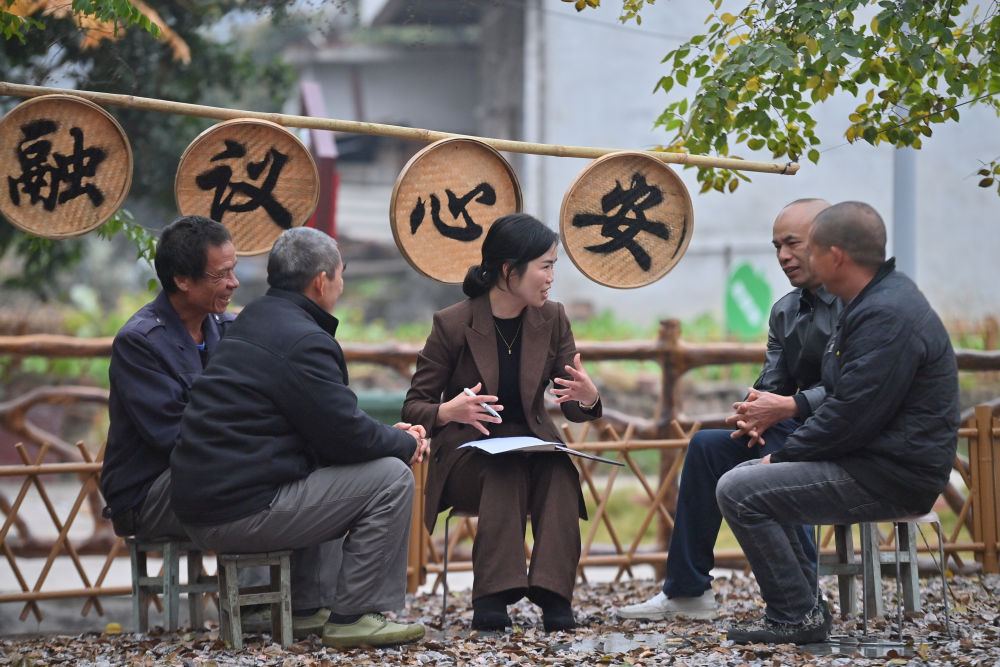
On January 5, 2024, in the theme square of discussion and consultation in Liuliao Village, Fushi Town, Rong ‘an County, Guangxi, the town, village cadres and villagers were discussing. Xinhua News Agency reporter Huang Xiaobang photo
From perfecting the system of discipline inspection and supervision laws and regulations, promoting the inner-party laws and regulations to keep pace with the times, to continuously deepening the reform of discipline inspection and supervision system, promoting the standardization, rule of law and regularization of discipline inspection and supervision work, and then continuously improving the supervision system of the party and the state in accordance with the requirements of unified leadership, comprehensive coverage, authority and efficiency of the party … …
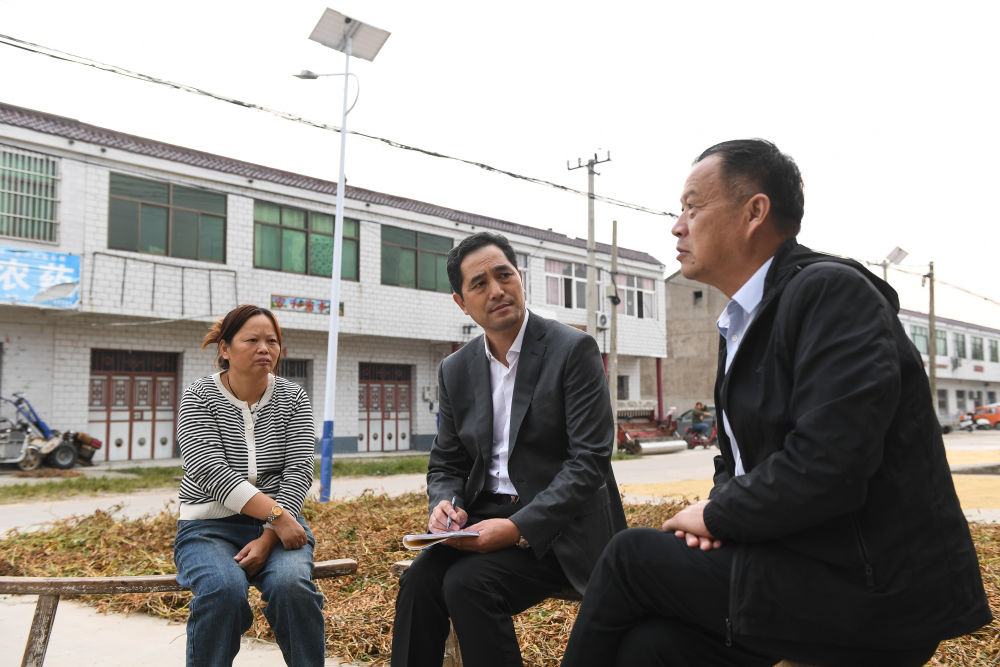
On October 11, 2023, in Jinsha Village, Hongyao Town, Lianshui County, Huai ‘an City, Jiangsu Province, Zhang Jinchun (middle), a representative of Lianshui County People’s Congress, listened to the opinions and suggestions of party member people on village-level development. Xinhua News Agency reporter Ji Chunpeng photo
Since the 20th National Congress of the Communist Party of China, the Party has been strictly managed in an all-round way, the system construction has been steadily advanced, and the system of self-purification, self-improvement, self-innovation and self-improvement has been further improved, providing a solid guarantee for the great self-revolution of the Party.
Build a solid ideological foundation and lead the action consciousness with a high degree of ideological consciousness — —
In 2023, a "new learning competition" for the Communist Party of China (CPC) people in a new era — — Study and implement the theme education of Socialism with Chinese characteristics Thought of the Supreme Leader in the new era, and carry it out in-depth throughout the Party.
After the theme education was launched, General Secretary of the Supreme Leader went to Beijing for investigation and came to Guangdong. In four days, I traveled thousands of miles from west to east across the land of western Guangdong, went deep into enterprises, ports and rural areas, had cordial exchanges with workers, farmers, entrepreneurs and scientific and technological personnel, and set an example for the whole party with extensive and in-depth research.
During the inspection, General Secretary of the Supreme Leader pointed out: "Developing theme education is a major task of party building this year. Party organizations at all levels must resolutely implement the work arrangements of the CPC Central Committee, and educate and guide party member and cadres to work hard to build their souls, enhance their wisdom, correct their habits and promote their work. "
What kind of inner-party political life there is, what kind of party style and political style there is.
The Party’s mass line education and practice activities, the special education of "three strictness and three realities", the study and education of "two studies and one doing", the theme education of "Do not forget your initiative mind, bearing in mind the mission", the study and education of Party history, and the theme education of studying and implementing the Supreme Leader’s Socialism with Chinese characteristics Thought in the new era … … Centralized education and regular education within the Party have been carried out in succession, which will supplement calcium and strengthen bones for the cadres in party member.
From carrying out warning education, doing a good job in promoting the correction of the "second half of the article" by cases, to strengthening the construction of a clean culture, strengthening the consciousness of not wanting to rot by self-cultivation, and then strengthening the education of ideals and beliefs to stand up the spiritual backbone of communist party people … … Since the 20th National Congress of the Communist Party of China, the Party has been strictly managed in an all-round way, and a series of measures have been taken to strengthen the foundation and build the soul, constantly refining the sharp ideological weapons of self-revolution.
Evergreen way, you win by yourself.
As General Secretary of the Supreme Leader pointed out: "Looking around the world, no political party can take its own construction seriously like the Communist Party of China (CPC), and promote its self-revolution in a scientific and systematic way with such a high degree of consciousness. This is the remarkable advantage of our party and the winning way to lead the times."
In the new era, the Communist Party of China (CPC) people are conscientious and persistent, pushing forward the practical innovation, theoretical innovation and system innovation of managing the party, and pushing the century-old Party to be quenched into steel in revolutionary forging, which gives more vitality and forms the unique advantages of the rule of the Communist Party of China (CPC) and the rule of China.
Start a new journey — — "The only way to take a new road to catch the exam"
On December 26th, 2023, the Central Committee of the Communist Party of China held a symposium to commemorate the 130th anniversary of Comrade Mao Zedong’s birth in the Great Hall of the People.
"Chinese-style modernization is a socialist modernization led by the Communist Party of China (CPC). Only by always being sober and firm in solving the unique problems of the big party and building the party stronger can we ensure that Chinese-style modernization will be stable and far-reaching." The important speech of the General Secretary of the Supreme Leader shows the far-reaching significance of consistently promoting the comprehensive and strict administration of the party on the new journey.
Chinese-style modernization is the largest modernization in human history and an unprecedented great cause. The arduous and heavy system engineering can never be realized easily and with gongs and drums.
On the way forward, there are both infinite scenery and flying clouds.
Looking around the country, economic recovery faces heavy tasks, cyclical and structural contradictions overlap, and there are still many deep-seated contradictions in reform, development and stability;
Looking around the world, the changes of the world, the times and the history are unfolding in an unprecedented way, and the world has entered a new period of turbulence and change;
Looking at ourselves, the Party’s construction, especially the building of a clean and honest party style and the struggle against corruption, faces many intractable and frequent problems, and the "four major tests" and "four dangers" the Party faces will exist for a long time … …
He who hits the hardest iron must be an iron man. Strictly administering the party in an all-round way is the only way for the party to maintain its vitality and take a good new road to catch the exam.
To continue to promote the Party’s self-revolution in the new journey, we must always adhere to the fundamental political direction, uphold and strengthen the Party’s overall leadership, persist in taking the Party’s political construction as the guide, and push the whole Party to more deeply understand the decisive significance of the "two establishments", strengthen the "four consciousnesses", strengthen the "four self-confidences" and achieve the "two safeguards", and unite into a "hard steel" under the banner of the Party, with one heart and one mind.
Strictly administering the party in an all-round way and starting a new course, giving full play to the role of political guidance and political guarantee — —
"We will continue to intensify the punishment of corruption in the field of grain purchase and sale, and carry out a bottom-cleaning type for clues about grain-related problems ‘ Look back ’ " "Investigate deeply ‘ Shadow shareholder ’ ‘ Shadow company ’ ‘ National skin and people’s bones ’ And related party transactions, withdrawal of funds, transfer of benefits and other cases "… …
In the beginning of 2023, the State Supervision Commission of the Central Commission for Discipline Inspection issued the "Opinions on Deepening the Special Remediation of Corruption in the Field of Grain Purchase and Sale" to mobilize and redeploy the special rectification of corruption in the field of grain purchase and sale.
Since 2023, from the financial system and state-owned enterprises to sports and medical care, anti-corruption in key areas and key links has been deepened, escorting high-quality economic and social development.
To continue to promote the Party’s self-revolution in the new journey, we must closely focus on the biggest politics of promoting Chinese modernization, closely focus on the primary task of high-quality development, focus on the outstanding problems that restrict high-quality development, focus on the modernization of the national governance system and governance capacity, improve the supervision system, and promote new progress and breakthroughs in Chinese modernization with the new atmosphere and new actions of managing the party.
Strictly administering the party in an all-round way and starting a new course, inspiring the struggle force of seeking truth and being pragmatic and taking responsibility — —
"We must implement it to the letter and ensure that the final effect conforms to the decision-making intention of the CPC Central Committee. We must resolutely implement it and make overall plans to grasp the timeliness and effectiveness. We must be realistic and pragmatic, and resolutely correct formalism and bureaucracy. We must dare to do good deeds, adhere to the correct orientation of employing people, and give full play to the enthusiasm, initiative and creativity of leading cadres at all levels. " At the Central Economic Work Conference in 2023, General Secretary of the Supreme Leader emphasized the "Four Grasps to Implement" hit the floor.
The key to the success of China lies in the Party and the people.
From the accurate use of "four forms", adhere to "three distinctions", better stimulate the enthusiasm, initiative and creativity of the broad masses of party member cadres; We will continue to rectify formalism and bureaucracy, severely correct problems such as Wenshan meeting the sea, overweight at different levels, and excessive traces, so as to reduce the burden on the grassroots; Then adhere to the correct orientation of employing people, do a good job in the selection and training of outstanding young cadres, and strive to build a high-quality cadre team worthy of the heavy responsibility of national rejuvenation … …
To continue to promote the Party’s self-revolution in the new journey, we must adhere to the combination of strict management and love, and pay equal attention to encouragement and restraint, and push the broad masses of party member cadres to take an active role with more firm ideals and beliefs, more excellent ability and quality, more strict discipline style and more full spirit, and constantly form a strong atmosphere and vivid situation for forging ahead in a new journey and building a new era.
Strictly administering the party in an all-round way and starting a new course, and always standing firm on the fundamental position of taking the people as the center — —
"In the first half of this year, the country investigated and dealt with more than 36,000 unhealthy practices and corruption problems in the field of people’s livelihood, and criticized education to help and deal with more than 52,000 people." In August 2023, this data published on the website of the State Supervision Commission of the Central Commission for Discipline Inspection aroused widespread concern in society.
"The times are the writers, we are the respondents, and the people are the reviewers."
From severely punishing the "flies and ants" who eat the interests of the masses, resolutely investigate and deal with corruption problems around the masses in the fields of employment and entrepreneurship, education and medical care, and old-age social security; Go to the Central Office and the State Council to issue the "Implementation Measures for the Responsibility System for Rural Revitalization", and compact the five-level secretary to grasp the responsibility for rural revitalization. The Central Commission for Discipline Inspection issued an opinion requesting to vigorously rectify unhealthy practices and corruption in the field of rural revitalization; Then, to promote the implementation of grass-roots supervision, smooth the channels of mass supervision, and standardize the operation of grass-roots power … …
To continue to promote the Party’s self-revolution in the new journey, we must conform to the thoughts, worries and hopes of the masses, constantly win the trust of the people with the new achievements of strictly administering the Party in an all-round way, build the ruling foundation of the Party, and ensure that the Party always wins the historical initiative of maintaining flesh-and-blood ties with the people and the people’s wholehearted support, which has always become the most reliable backbone of all people.
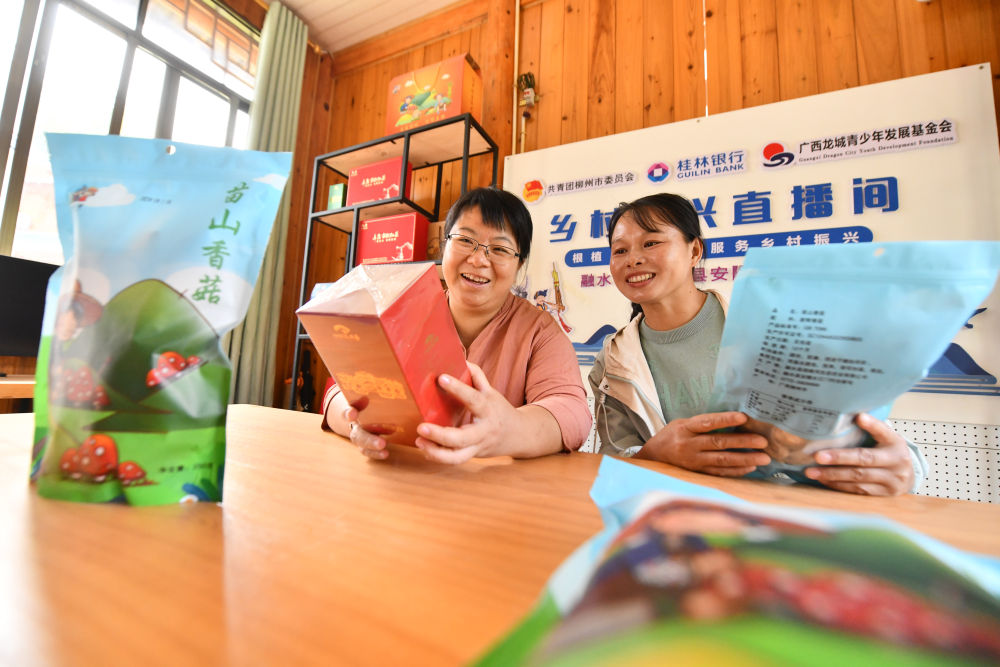
On October 8, 2023, in Jiangmen Village, Anhuang Township, Rongshui Miao Autonomous County, Liuzhou City, Guangxi Province, Yang Ning (left), secretary of the General Party Branch of Jiangmen Village and director of the village committee, and his colleagues were preparing for the live broadcast in the rural revitalization live broadcast room. Xinhua News Agency reporter Huang Xiaobang photo
Wind and rain travel hard to catch the test road, and beat the drums to urge the levy to start again.
Under the strong leadership of the CPC Central Committee with the Supreme Leader as the core, we will constantly push forward the comprehensive and strict administration of the party, deepen the new great project of party building in the new era, persist in leading the great social revolution with great self-revolution, and promote the great self-revolution with great social revolution. In the new era, the Communist Party of China (CPC) people will surely hand over new and more excellent papers on the road of catching the exam!
Text reporters: Zhu Jichai, Sun Shaolong, Gao Lei