What are the characteristics of Delta mutant strain? How to prevent and control? Expert answers →
At present, Delta mutant strain has become the most important epidemic strain in COVID-19 in the world, and the recent outbreaks in many places in China are also closely related to this mutant strain. What are the characteristics of Delta mutant strain? What is its communication ability? Recently, the authoritative experts of the National Health and Wellness Commission gave an answer.
Delta mutant strain was first found in COVID-19 cases reported by Indian in September, 2020. On May 10th this year, the World Health Organization announced that Delta mutant strain would be included in Covid-19 mutant strain that needs global attention. At present, the mutant strain has been prevalent in more than 130 countries and regions, and it has become the main strain in the global COVID-19 pandemic. Delta mutant strain has the characteristics of fast transmission, fast replication in vivo and long negative conversion time.

Feng Zijian, a researcher at the China Center for Disease Control and Prevention, said that the Delta mutant strain did not lead to subversive changes in the biological characteristics of Covid-19, and it was still spread through respiratory droplets and contact with pollutants. In addition, indoor and poorly ventilated narrow spaces can also form air transmission, or aerosol transmission. Fine particles of respiratory secretions can hover in the air, and inhalation by others can cause infection. Even if the person who discharges the virus leaves this space, there will still be viruses in the air for a certain period of time.
The existing epidemic prevention and control measures, including wearing masks, washing hands frequently, keeping social distance and avoiding crowd gathering, are still effective for Delta mutant strain. However, due to its increasing infectivity, these measures should be implemented more strictly and seriously. The existing vaccines still have good preventive and protective effects, which can reduce the risk of virus transmission in the population, reduce the transmission power of infected people, and effectively reduce the incidence of severe illness and mortality after infection.
Personal epidemic prevention and control, do a good job of one prevention, two reductions and three reports.
Everyone should be the first person responsible for health, especially in the event of an epidemic, we should further improve our awareness of prevention and protect our health. Let’s take a look at the experts’ suggestions on personal epidemic prevention and control.
He Qinghua, a first-class inspector of National Health Commission CDC, said that the public should report one prevention, two reductions and three reductions in response to epidemic prevention and control.
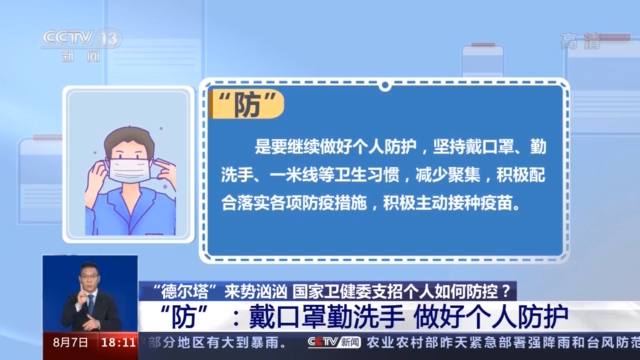
"Prevention" means to continue to do personal protection, adhere to hygiene habits such as wearing masks, washing hands frequently, and eating rice noodles, reduce gathering, actively cooperate with the implementation of various epidemic prevention measures, and take the initiative to vaccinate.
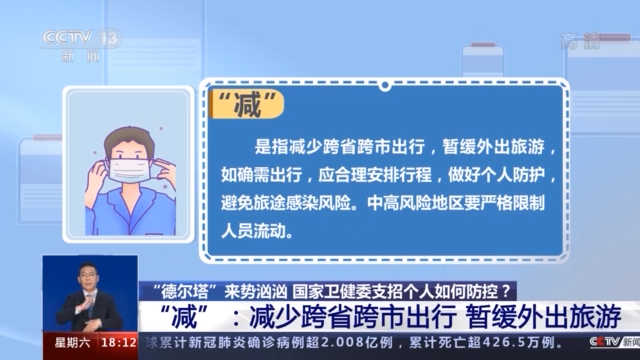
"Reduction" refers to reducing cross-provincial and cross-city travel and suspending travel. If it is really necessary to travel, you should arrange your trip reasonably and do personal protection to avoid the risk of travel infection. In high-risk areas, personnel flow should be strictly restricted.
"Report" refers to timely reporting of abnormal situations, actively paying attention to the information of epidemic risk areas and risk places, and information released by the government and local governments, involving people who have been investigated or who have been to high-risk areas, and actively reporting suspicious contact history and residence history to the local villages, communities, units and hotels.
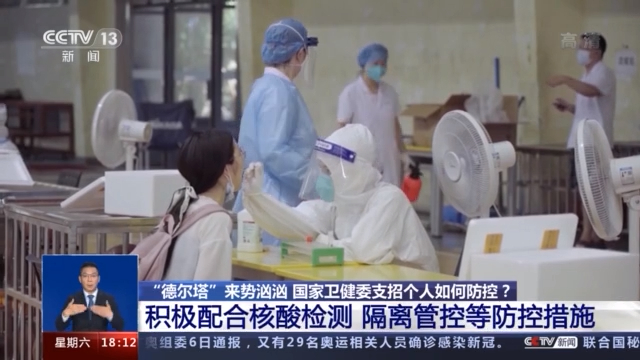
In addition, we should actively cooperate with the prevention and control measures such as nucleic acid detection, isolation control and health monitoring. If you have symptoms such as cough, fever, sore throat, fatigue, diarrhea, etc., you should go to the fever clinic for screening and diagnosis immediately under the condition of personal protection. During the treatment, don’t take public transportation, and don’t get together in crowded places.
Community prevention and control should be classified management.
With the resurgence of epidemics in various parts of China, some areas where epidemics have occurred have taken stricter community prevention and control measures. How can community prevention and control play the role of the first line of defense and control the risk increment? The expert gave advice.
He Qinghua, the first-class inspector of National Health Commission CDC, said that community prevention and control should be classified, and closed management should be implemented immediately for communities with positive cases, and infected people should be immediately transferred to designated medical institutions for centralized treatment. Close contacts, secondary close contacts and all personnel in the unit where positive cases are located should take centralized isolation measures and do a good job in disinfection evaluation of the environment.
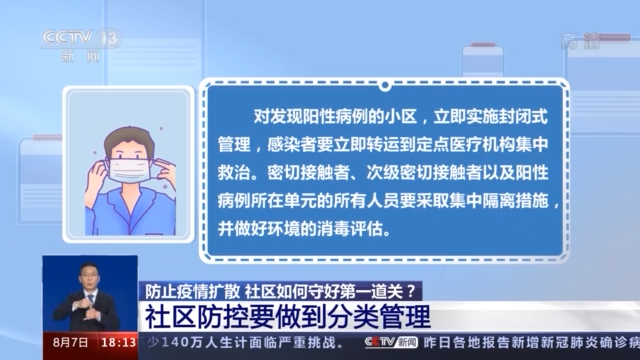
All residents in the closed community should stay indoors, be isolated at home, do a good job in life service guarantee, implement health monitoring, nucleic acid detection and medical service guarantee, and strictly do a good job in the recovery and transshipment of domestic garbage.
For the non-closed communities where the epidemic occurred, it is necessary to strengthen the control of foreign personnel, and implement measures to prevent and control the normalized epidemic, such as temperature measurement, code inspection and wearing masks.
For patients who go to primary medical institutions, it is necessary to standardize the pre-examination and triage, and strengthen the investigation of high-risk positions and the history of residence in high-risk areas. (CCTV reporter Wang Chen)