CPC Central Commission for Discipline Inspection first reported that the typical problems of environmental accountability involved harsh wording in six provinces and cities.

  Not long ago, the Central Commission for Discipline Inspection informed and exposed six typical problems of accountability for ecological environmental damage, involving six provinces and cities of Tianjin, Hebei, Jiangsu, Anhui, Chongqing and Gansu, and the number of people notified reached more than 40. It is worth noting that this is the first time that the Central Commission for Discipline Inspection has reported on typical issues of accountability in this field.

  "The main leaders of local party committees and governments at all levels are the first responsible persons for ecological environmental protection in their respective administrative areas. All relevant departments should fulfill their responsibilities for ecological environmental protection, so that all departments have the responsibility to defend the soil, do their duty, and work together and work together." "For those leading cadres who damage the ecological environment, we must really pursue responsibility, dare to pursue responsibility, and strictly pursue responsibility, so as to achieve lifelong accountability." In May this year, General Secretary of the Supreme Leader stressed at the National Ecological Environmental Protection Conference that we should resolutely fight the tough battle of pollution prevention and control, and pointed out that leading cadres who damaged the ecological environment should be seriously held accountable.

  Supervise discipline and accountability, and guard green mountains and green hills. Since the 18th National Congress of the Communist Party of China, the CPC Central Committee with the Supreme Leader as the core has attached great importance to ecological environmental protection, all relevant departments have cooperated to promote ecological environmental protection work, and the central and discipline inspection and supervision organs at all levels have strengthened supervision and accountability, providing a strong disciplinary guarantee for implementing the decision-making arrangements of the CPC Central Committee and promoting ecological environmental protection work.

  Form political consciousness and strengthen re-supervision of supervision

  In the circular, the Central Commission for Discipline Inspection sternly pointed out that the responsible comrades in these places and units have low political stance, lax and untrue work style, weak awareness of ecological environmental protection, erroneous views on political achievements that attach importance to economic benefits and neglect environmental protection, and prominent problems of formalism and bureaucracy, which have led to the long-term failure to effectively solve the environmental pollution problem strongly reflected by the masses, and the ineffective investigation and punishment of violations of ecological environmental protection policies and regulations, seriously deviating from the central decision-making and deployment, infringing on the vital interests of the masses and restricting the sustainable development of the economy and society.

  Why do environmental protection problems reflect the low political position and untrue style of leading cadres? "The General Secretary of the Supreme Leader emphasized at the National Ecological Environmental Protection Conference that the ecological environment is a major political issue related to the mission and purpose of the party and a major social issue related to people’s livelihood." Cai Zhiqiang, deputy secretary of the Party Committee and secretary of the Discipline Inspection Commission of China Institute of Discipline Inspection and Supervision, analyzed, "Eco-environmental protection is not a simple business issue, but a major strategic deployment of the CPC Central Committee. Leading cadres at all levels should improve their political positions and whether they perform their duties and responsibilities for environmental protection work is directly related to whether they conscientiously implement the decision-making arrangements of the CPC Central Committee."

  At the same time, the circular also pointed out that it is a major political task for discipline inspection and supervision organs at all levels at present and in the future to implement the spirit of the important speech of the Supreme Leader General Secretary and provide strong discipline guarantee for fighting the tough battle against pollution.

  Party construction experts believe that this is the faithful performance of the duties entrusted by party constitution by the discipline inspection and supervision organs. “‘ Lucid waters and lush mountains are invaluable assets ’ The concept was written in party constitution, and party constitution made it clear that the main tasks of the party’s discipline inspection organs are to safeguard the party’s constitution and other internal party laws and regulations, check the implementation of the party’s line, principles, policies and resolutions, and assist the party’s committees in promoting comprehensive and strict governance of the party, strengthening party style construction, and organizing and coordinating anti-corruption work. " Cai Zhiqiang said, "The accountability of the discipline inspection and supervision organs for supervision and discipline in the field of ecological and environmental protection can be said to be checking the implementation of the party’s principles and policies, and also assisting the party Committee to promote the comprehensive and strict management of the party."

  In practice, the discipline inspection and supervision organs are stepping up the accountability of supervision and discipline in the field of ecological environmental protection to protect the construction of ecological civilization. On the one hand, since the central environmental protection inspector was launched, discipline inspection and supervision organs at all levels have cooperated with the inspectors of the central environmental protection inspector group to keep a close eye on violations of laws and regulations in the environmental protection field; On the other hand, various localities have also introduced policies and measures to further clarify the responsibilities and working methods of discipline inspection and supervision organs in the field of ecological and environmental protection. For example, the Supervision Committee of the Beijing Municipal Commission for Discipline Inspection incorporated the key work of environmental governance into the important content of two-level inspections in urban areas; If the Supervision Committee of Hainan Provincial Commission for Discipline Inspection has investigated and verified the ecological and environmental protection department and required accountability according to the regulations, it is required to intervene at the first time.

  "Here, it is necessary to distinguish the responsibilities of the discipline inspection and supervision organs and the environmental protection departments. The environmental protection departments conduct business inspections on ecological and environmental issues in the front line, while the discipline inspection and supervision organs supervise and inspect the performance of relevant departments in environmental protection, which is the re-supervision of supervision." Party construction expert analysis.

  Strictly investigate corruption cases and strengthen supervision over key areas and key links of environmental protection.

  What areas of environmental protection system are prone to corruption? A notice can be seen in a glimpse: In February 2015, the former Ministry of Environmental Protection notified 13 cases of violations of laws and regulations by environmental protection personnel in 6 provinces, and many leading cadres were jailed for using their positions to make profits and accept bribes. By analyzing these 13 cases, it can be found that key areas such as environmental assessment approval, law enforcement supervision, solid waste management, environmental monitoring, and approval of special funds declaration have become prone to corruption.

  The relevant person in charge of the Discipline Inspection and Supervision Team of the State Supervision Commission of the Central Commission for Discipline Inspection in the Ministry of Ecology and Environment said in an interview with the website of the State Supervision Commission of the Central Commission for Discipline Inspection that there are three main characteristics of corruption cases investigated and dealt with in the country in recent years: First, major corruption cases mainly occur in important business areas such as environmental approval, project fund allocation, environmental law enforcement, environmental monitoring and solid waste management; Second, the amount involved is relatively large. Since the 18th National Congress of the Communist Party of China, cases involving more than 10 million yuan have occurred from time to time, which has a bad social impact. Third, there are many cases in the local environmental protection system, and there are many cases of group corruption, some of which have worsened the political ecology of one party.

  Judging from the trend analysis, the person in charge believes that, on the one hand, with the comprehensive and strict administration of the party, serious corruption cases are generally declining. Taking 2017 as an example, the number of people in environmental protection departments suspected of committing crimes transferred to judicial organs decreased by 40% compared with 2016, and the national environmental protection system has achieved remarkable results in comprehensively administering the party strictly; On the other hand, problems such as "micro-corruption" and "four winds" are still outstanding. During the disciplinary review, the discipline inspection and supervision organs found that "micro-corruption" problems, such as human supervision, human law enforcement, profit from supervision and assessment, and eating and taking cards, private use of buses, accepting banquets and other hidden violations of the spirit of the eight central regulations and inaction are still outstanding. Since the 18th National Congress of the Communist Party of China, the number of people in environmental protection departments who have been lightly punished by Party discipline has been increasing year by year, with an average annual increase of 61%.

  "The investment in eco-environmental engineering construction will continue to increase, and the risk of clean government in law enforcement and engineering will be significantly improved." The person in charge stressed that we must attach great importance to this, adhere to both the symptoms and the root causes, effectively reduce the stock of corruption, and resolutely curb the increase of corruption.

  Party construction experts said that in view of the characteristics of corruption cases in the environmental protection system in recent years, the discipline inspection and supervision organs should strengthen supervision over key areas and key links, and form a shock to hell to pay, who violates discipline and law; Relevant departments should also improve the loopholes in the system and further reduce the space for corruption in the fields of environmental examination and approval, project fund allocation and environmental protection law enforcement.

  Strong accountability and hard accountability, and promote the responsibility of ecological environmental protection.

  "The ecological environment has obviously improved, and the determination, strength and effectiveness of promoting ecological civilization construction have never been greater. The prevention and control actions of air, water and soil pollution have achieved remarkable results." The Central Economic Work Conference held in December 2017 summed up the ecological and environmental protection work in the past five years. In the joint effort to achieve such results, serious accountability is indispensable.

  In March this year, the second batch of seven provinces and cities, including Beijing, Shanghai and Hubei, which accepted the central environmental protection supervision, made public the accountability of the cases handed over by the inspector group, with a total of 1048 people accountable. Liu Youbin, spokesperson of the Ministry of Ecology and Environment, said that seven provinces and cities paid attention to investigating leadership responsibility, management responsibility and supervision responsibility, especially highlighting leadership responsibility, which played an important role in continuously strengthening the awareness of environmental protection responsibility of local party committees and governments.

  Practice has proved that the key to whether the responsibility of ecological environmental protection can be implemented lies in leading cadres. Behind some major ecological and environmental incidents, there are often problems of irresponsible inaction of leading cadres, problems of weak environmental awareness, inadequate performance of duties and lax enforcement, and problems of inadequate enforcement and supervision of environmental protection departments.

  With the continuous improvement of the central government’s requirements for the construction of ecological civilization, the improvement of environmental protection laws and regulations and the enhancement of people’s awareness of environmental protection, the responsibility for damage to the ecological environment has also been continuously strengthened: in March, 221 people in Hubei Province were seriously held accountable for damage to the ecological environment; In May, Changchun reported six typical cases of accountability in the field of environmental protection; In May, Chengdu reported five typical cases of accountability in the field of ecological environmental protection … …

  At the same time, the system construction has been continuously improved: in August 2015, the Central Office and the State Council issued the "Measures for Investigating the Responsibility of Party and Government Leading Cadres for Ecological Environment Damage (Trial)", which used the system to guide and standardize the use rights of leading cadres and drew a red line of responsibility for leading cadres in the field of ecological environment; In December 2016, the General Office of the CPC Central Committee and the General Office of the State Council issued the "Measures for Evaluation and Assessment of Ecological Civilization Construction Goals", clarifying that if the evaluation and assessment results are distorted due to malpractice for personal gain, false reporting, tampering with data, and falsification of information, the discipline inspection and supervision organs and organizations (personnel) departments shall seriously investigate the responsibilities of relevant units and personnel in accordance with relevant regulations.

  Various localities have also introduced measures to strengthen the accountability of discipline inspection and supervision organs in the field of environmental protection, such as Hunan’s new regulations on the responsibility of environmental protection and the measures for investigating the responsibility of major environmental problems (incidents); Sichuan has made clear the system of "lifelong investigation" of the responsibility for ecological environmental damage, and strengthened the responsibility of the party and government for ecological environmental protection.

  "The vitality of the system lies in its implementation, which is inseparable from the great attention of party committees and governments at all levels. Discipline inspection and supervision organs, organization (personnel) departments and relevant regulatory departments do their respective duties, form joint efforts, and pursue responsibility to the end." Cai Zhiqiang said.

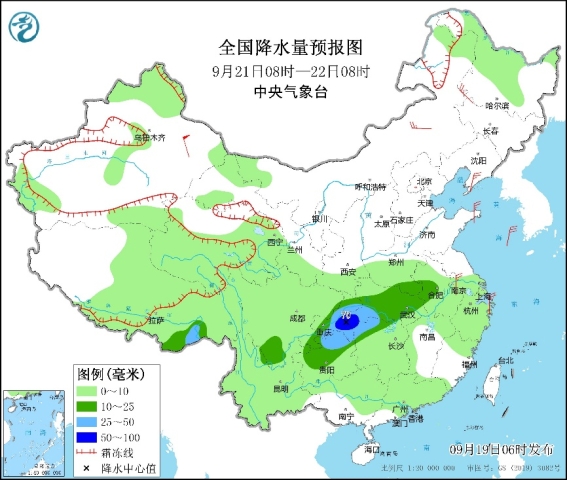
Central Meteorological Observatory: There will be heavy rainfall in Jiangsu, Anhui and Lu Yu, so we should be alert to the hazards of heavy rain and strong convective weather.

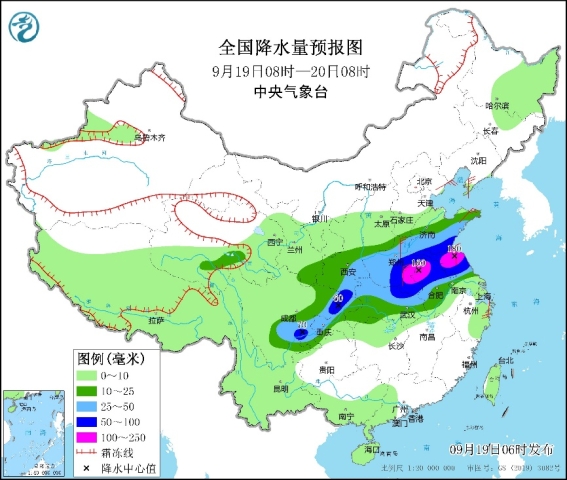
  Cctv newsAccording to the website of the Central Meteorological Observatory, meteorological monitoring showed that in the past day, rainfall was mainly concentrated in Sichuan, Shaanxi, Hubei and Henan, and there were heavy rains in Guangyuan, Bazhong, Nanchong, Dazhou, Chengkou, Kaizhou, Wuxi, Xiangyang, Jingmen, Hubei, Zhumadian, Henan and Taian, Shandong. In addition, strong convective weather such as 8 ~ 10 thunderstorms or hail occurred in central and eastern Inner Mongolia, southwestern Heilongjiang, Jilin, northern Liaoning and western Shandong.

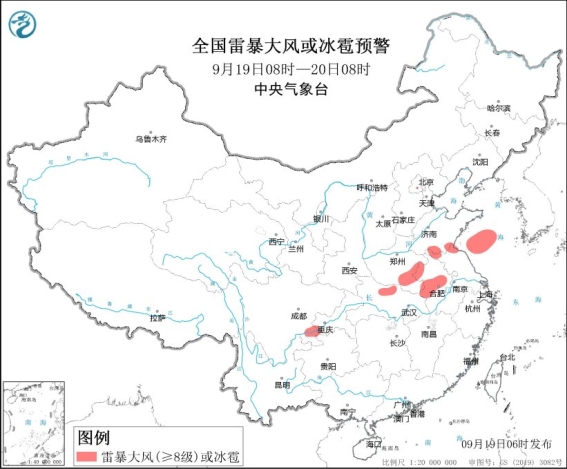
  On the morning of the 19th, the Central Meteorological Observatory continued to issue a yellow rainstorm warning and a blue severe convective weather warning: from day to night, there were heavy rainstorms in southern and eastern Sichuan Basin, southeastern Shaanxi, northern Hubei, most of Henan, south-central Shandong, north-central Anhui, and north-central Jiangsu, and heavy rainstorms (100-180 mm) occurred in parts of southeastern Henan, northern Anhui, and northern Jiangsu. Some of the above areas are accompanied by short-term heavy rainfall (the maximum hourly rainfall is 30 ~ 50 mm, and the local area can exceed 60 mm). Some areas in southern Shandong, eastern and southern Henan, central and northern Anhui, northern Jiangsu, northern Hubei and southeastern Sichuan will have 8-10 thunderstorms or hail weather.

  Meteorologists reminded that today is the strongest period of this round of heavy rainfall, with strong rain in Sichuan, Shaanxi, Jiangsu, Anhui, Lu Yu and other places, and some areas are accompanied by strong convective weather such as thunderstorms, strong winds and hail. It is suggested that the public pay close attention to the forecast and early warning information in the near period to prevent secondary disasters caused by heavy rain, and avoid going out during the period of concentrated strong convective weather, stay away from temporary structures such as billboards and scaffolding, and close doors and windows indoors.

  From tomorrow to the day after tomorrow, there will be heavy rainfall in Sichuan Basin, southern Shaanxi and western Hubei. On the 20 th, there was heavy rain or heavy rain in northeastern Sichuan, southwestern Shaanxi and central and northern Chongqing; On the 21st, there were heavy rains in central and eastern Chongqing, southwestern Hubei, northwestern Hunan and northeastern Guizhou. The public should be alert to flash floods, geological disasters and floods in small and medium-sized rivers that may be caused by continuous rainfall, and avoid going to areas prone to geological disasters.

  In addition, today and tomorrow, some areas in Inner Mongolia, North China, Northeast China and other places will be affected by cold air and there will be strong winds and cool weather. It is recommended that the public take cold and warm measures; The first frost will appear in parts of Northeast China from the night of 19th to the early morning of 20th.

The e-commerce "double 11" continues to play black technology, which one will impress you?

  BEIJING, Beijing, November 4 (Wu Tao) The annual "double 11" is a shopping festival for consumers and a competition for e-commerce technology marketing strength. A number of novelty items will emerge. What "black technologies" will double 11 bring us this year? Zhongxin. com has combed this.

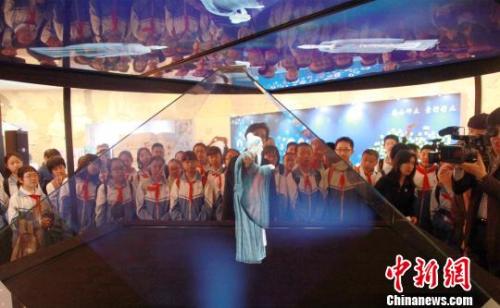
  On April 4, 2017, many ancient and modern cultural celebrities "appeared" at the China Millennium Monument by means of holographic projection technology. Photo courtesy of China Millennium Monument

  Magic holographic projection

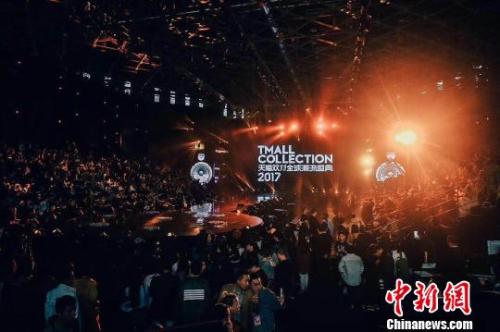
  It is reported that during Tmall’s "double 11", five large containers will appear in the landmark location of China’s first tier cities, and space scenes with different themes will be built inside the containers, and the outdoor holographic projection show will be used for the first time — — There will be 5-6 different life scenes on the facade of the container, which will bring unparalleled visual experience and the impact of a brand-new lifestyle to the citizens.

  The so-called holographic projection, also known as virtual imaging technology, is a technology that records and reproduces the real three-dimensional image of an object by using the principles of interference and diffraction. Holographic projection technology can not only produce three-dimensional illusion in the air, but also make the illusion interact with the performers to complete the performance together, resulting in shocking performance effects.

  "Eye-catching" shopping card

  During the "double 11" period, a smart shopping sign with "insight" appeared in the convenience store in JD.COM, which was put into operation. After you walked over, "the snacks you like are new, and the favorite drinks are on sale". In short, what appears is either what you need or what you like, and it has achieved thousands of people, and different people have different effects.

  It is understood that this "billboard" has done a lot of homework in advance — — The user’s gender, age and other information are sensed through the camera, and the preferences of consumers are found out by combining with the big data of JD.COM consumption information, and then recommendations are made according to preferences.

  AR fitting is more normal.

  Presumably, everyone is familiar with the original AR (Augmented Reality Technology) grabbing red envelopes, and this year’s "double 11", AR games and AR trials will be more normal. According to foreign media reports, it is estimated that tens of millions of people will participate in China’s "double 11" through AR fitting every year. In addition, the reporter noted that this year AR perspective technology will also join the "double 11" queue.

  What is AR perspective? According to Tmall’s example, take a photo of a certain sofa and receive the goods into your mobile phone. When you get home, hold your mobile phone to the area where your sofa wants to be laid out. Through the projection of the screen, you can see whether the sofa is placed in this area, whether its style is the same as you want, and whether its size is appropriate. If it is suitable, you can buy it directly.

  You can also recognize cars by taking pictures.

  Lexus is recognized as Chery, Honda as Hyundai, and Cadillac as Emgrand. It is really difficult for car white to accurately identify the brand of the car. This year’s "double 11", Easy Car launched an activity with its "AI car recognition" function. Users can take photos of cars at will, and after uploading photos of cars from any angle, they can accurately match and analyze the specific car brands and models.

  During the "double 11" period, users will also get a red envelope when they scan the logo, which will help users to identify the car models quickly and accurately, create more diversified car buying scenes, and also help car manufacturers to realize innovative marketing with cross-scene, multi-platform and zero distance.

  "unmanned" technology popularizes logistics chain

  This year’s "double 11", there are also many unmanned technology series. JD.COM has launched a number of products in one breath, including unmanned warehouses, unmanned trucks, unmanned supermarkets, unmanned convenience stores and intelligent supply chain open platforms.

  It is worth mentioning that JD.COM unmanned warehouse "double 11" will be put into use in Shanghai. The whole process of unmanned warehouse has realized the whole process from warehousing, storage, packaging and sorting, and the whole system is intelligent and unmanned, with the ability to handle 200 thousand orders a day. Suning also said that its robot warehouse group has been officially built in Fengxian, Shanghai, covering an area of more than 200,000 square meters, and it is basically operated by unmanned warehouses.

  [More stories]

  "I hope not to drink this year ‘ Red Bull ’ Drink ‘ Red wine ’ "

  This year’s "double 11" black technology is a portrayal of e-commerce technology upgrading. According to media reports, Hu Xi, vice president and chief technical architect of Ant Financial, said that in 2010, "double 11", Alipay and even Taobao were only four seconds away from the collapse, and the technology was too busy, and a lot of "Red Bull" was prepared to refresh themselves. "But now it’s getting easier and easier. I hope I won’t drink ‘ Red Bull ’ Can drink red wine slowly. "

  "AI application, semi-artificial intelligence for traffic monitoring"

  Wang Xiaozhong, Senior Director of R&D of JD.COM Mall, said that the biggest difference of JD.COM double 11 this year is the application of AI technology. "Taking online traffic monitoring as an example, semi-artificial intelligence based on detailed monitoring data has been realized this year, and it is expected that next year ‘ JD.COM 618’ With ‘ Double 11’ It can achieve a large degree of full artificial intelligence. " (End)

The development of disease control in China has reached a new level.

The State Council Press Office held a regular briefing on the State Council policy at 2 pm on Thursday, December 28th, 2023. Wang Hesheng, deputy director of the National Health and Wellness Commission and director of the National Bureau of Disease Control and Prevention, Zhuang Ning, deputy director of the Department of Physical Reform of the National Health and Wellness Commission, Zhang Guoxin, director of the Comprehensive Department of the National Bureau of Disease Control and Prevention, and Li Zhengmao, director of the Planning, Finance and Regulation Department of the National Bureau of Disease Control and Prevention, were invited to introduce the Guiding Opinions on Promoting the High-quality Development of Disease Control and Prevention, and answer reporters.

[CCTV reporter from Central Radio and Television General Station]

Disease control is closely related to people’s health and well-being. What remarkable achievements have China made in disease control in recent years? What important role has this played in promoting people’s health? thank you

[Wang Hesheng, Deputy Director of the National Health and Wellness Commission and Director of the National Bureau of Disease Control]

Thank you for your question. Let me answer this question. Since the 18th National Congress of the Communist Party of China, under the strong leadership of the CPC Central Committee with the Supreme Leader as the core, we have always adhered to the people-centered concept, improved the multi-sectoral cooperation mechanism, improved the ability of disease prevention and control, implemented comprehensive prevention and control measures for infectious diseases, and the development of disease control has reached a new level.

First, increase investment and improve the service conditions of the disease control system. The central and local governments have continuously improved the stable input mechanism for disease control. Since the "Fourteenth Five-Year Plan", the National Development and Reform Commission has actively optimized the investment structure in the central budget and arranged a total of 13.1 billion yuan to support the construction of disease control systems at the national, provincial, municipal and county levels. In 2023, the central government allocated 17.687 billion yuan for disease control projects through transfer payment for the prevention and control of major infectious diseases and endemic diseases.

Second, multiple measures have been taken simultaneously, and the quality and efficiency of disease prevention and treatment services have increased. The average reporting time of China’s infectious disease network direct reporting system has been shortened from 5 days to 4 hours. At the national level, a technical system for rapid identification of 300 pathogens within 72 hours has been established, and 100% provincial and 90% municipal CDC have the ability to detect nucleic acids and isolate viruses. The national health emergency team covers all provinces. The vaccination rate of immunization program has been maintained at over 90%, and the accessibility and convenience of vaccination services have been continuously improved through reasonable distribution, online appointment and on-site service.

The third is to make concerted efforts to lay a solid foundation for the disease control system. Party committees and governments at all levels attach great importance to the prevention and control of infectious diseases. The relevant departments have a clear division of labor, their respective responsibilities, and joint prevention and control. The people’s awareness of health and disease prevention has been greatly improved, and the concept of "everyone is the first responsible person for their own health" has been deeply rooted in the hearts of the people.

The prevention and control of infectious diseases in China has achieved remarkable results, and the public health protection network has been further strengthened. In the prevention and control of emerging infectious diseases, COVID-19 has achieved a decisive victory. Infectious diseases such as human avian influenza, plague and Middle East respiratory syndrome have been effectively dealt with, and no major epidemics have been achieved after major natural disasters. In the prevention and control of major infectious diseases, the rapid rise of AIDS epidemic in key areas has been effectively curbed and generally controlled at a low epidemic level; The incidence of tuberculosis decreased from 65/100,000 in 2015 to 52/100,000 in 2022, and the mortality rate remained at a low level; All endemic counties of schistosomiasis have reached the standard of transmission control. An environmental health monitoring system covering the whole country has been established, and the level of prevention and control of endemic diseases has been continuously consolidated and improved. Certified by the World Health Organization to eliminate malaria. Measles, Japanese encephalitis, meningitis and other vaccines can prevent the incidence of infectious diseases from falling to the lowest level in history.

Shenzhen explores a new way to apply big data to prevent and control the risks of clean government.

  In recent years, Shenzhen attaches great importance to the prevention and control of clean government risks. The Shenzhen Municipal Commission for Discipline Inspection has conducted special research on this work for many times and deployed relevant pilots.

  At the end of 2016, Zhang Zixing, member of the Standing Committee of Shenzhen Municipal Committee and secretary of the Municipal Commission for Discipline Inspection, went to Shenzhen Local Taxation Bureau for investigation and pointed out that the bureau should take risk management as the core, promote the deep integration of tax collection and management reform with the prevention and control of clean government risks and the construction of a clean and honest government, and explore new measures to prevent corruption that are highly integrated with business construction.

  Under the guidance of the Shenzhen Municipal Commission for Discipline Inspection, Shenzhen Local Taxation Bureau, in combination with its business characteristics, has built a "five-catch" working mechanism, embarked on a new way of using big data to prevent and control the risks of clean government, and achieved gratifying initial results.

  Grasp the subject and establish a "three-dimensional" responsibility system

  Shenzhen Local Taxation Bureau has 21 grass-roots bureaus and 430 windows, which manage more than 16 million legal and natural taxpayers, and the annual tax revenue exceeds 200 billion. Many points, many lines, and a wide range of work directly involve economic interests, which not only means that there are more risks in clean government, but also urgently needs to compact responsibilities at different levels.

  To this end, the party group of Shenzhen Local Taxation Bureau put pressure on the implementation of the main responsibility, and took the initiative to reform the tax management system, focusing on how to solve the problem in the power operation and supervision mechanism.

  "The party group of the bureau plans the direction and key points of the reform, the grassroots practice, the solidification and promotion of the municipal bureau, and gradually establishes a management system that effectively prevents corruption." Qianyong, Party Secretary and Director of Shenzhen Local Taxation Bureau, said that the members of the Party Committee of Shenzhen Local Taxation Bureau insisted on going to the front-line posts to experience practice every year, and learned about the implementation and excellent work style at the grassroots level on the spot, looking for problems and promoting reform.

  Twenty-one grass-roots bureaus are striving to fulfill their responsibilities in their work practice, actively implementing the decision-making arrangements of the bureau party group, and combining with the actual risk of clean government, carrying out process transformation, information system construction and performance management exploration according to local conditions.

  First-line departments should do their duty to play the role of fighting fortress. In the pilot reform, some departments have to work twice as much as the legal working hours, and some have to rely on data analysis instead of "calling" and "going to households".

  The discipline inspection and supervision departments take the initiative to play their duties. Under the guidance of the Corruption Prevention Office and the stationed team of the Municipal Commission for Discipline Inspection, they will strengthen the integration of supervision and accountability with tax business, closely focus on tax business platforms and business data, build supervision platforms and functional modules, and embed clean government supervision into the information workflow.

  Grasp the object and establish a "data-based" management mode

  The tax system generally implements the "contracted" household management mode in which taxpayers are divided according to districts or industries and assigned to tax administrators according to households. However, the rights and responsibilities of tax administrators are generally expressed, which brings hidden dangers of clean government, such as centralized power, unclear boundaries of rights and responsibilities and difficult supervision.

  In the reform, according to the decomposition process of "power-matter-data", Shenzhen Local Taxation Bureau combed the object of power into a data carrier with fine granularity and quantitative analysis, and established a data management model.

  Deeply sort out the object of power and realize "clarifying power by things" In view of the problem that power and things are often coupled together, the tax law enforcement power and administrative management power are sorted into 130 categories, and the four basic elements of the operation content, output, process and standard of the matter are defined, giving the matter a clearer connotation, thus clarifying the boundary and connotation of power.

  Take matters as the starting point of management unit and power balance, and realize "matching between matters and posts" Taking "whether the taxpayer’s tax interests are involved or not, whether the tax personnel make subjective judgment and approval" as the standard, the power matters and non-power matters are clearly divided, so that the risk points of clean government in management matters are clear. For matters that embody power, power is decomposed and restricted in the workflow, and traces are left in all links in the information system.

  Carry out data transformation on matters and realize data transformation of matters. Tax collection and management is the logical application of policy basis, financial data and factual evidence. According to the principle of "from easy to difficult", the Municipal Local Taxation Bureau began to transform all kinds of matters into data from 2012, so that the contents, outputs, processes and standards of matters can be incorporated into the information system, laying the foundation for quantitative statistics, data recording and trace management.

  Grasp the platform and establish an information system competent for "big data management"

  In the past, tax management mainly relied on manual work and old experience. Even if there was an information system, it only copied the original process into the computer. The prevention and control of integrity risks mainly relied on traditional practices such as "man-to-man" and warning education.

  In the reform, Shenzhen Local Taxation Bureau put the information system construction at a strategic height, changed the "ecology" of power operation by using informatization, and fundamentally changed the ways and means of tax management and clean government supervision.

  "Go into the system" instead of "find someone to do it" to prevent cardiopulmonary bypass. In recent years, Shenzhen Local Taxation Bureau has successively established five platforms, namely, collection, management, service, inspection and administration, to achieve full coverage of local taxation functions, and all tax management and administrative matters need to be handled through the information system.

  "Intelligent management" replaces "manual management", which reduces human interference. Twenty-four types of tax source management matters with small risks and large transactions, such as tax arrears announcements and tax reminders, will be automatically handled by the information system in batches on a regular basis after data transformation, with tax administrators "zero intervention".

  Work is "automatically generated" instead of "subjective decision" to prevent power rent-seeking. In order to prevent the hidden dangers of "personal tax" and "relationship tax", Shenzhen Local Taxation Bureau established a big data management system, comprehensively refined management experience, and set 181 doubtful indicators as a list of subjects for taxpayers’ "physical examination". In recent years, nearly 160,000 suspicious cases have been screened out every year, greatly reducing the hidden dangers of clean government.

  Task "random distribution" replaces "fixed management" to prevent power concentration. Considering the difficulty of each suspect investigation task and the energy level of the tax controller, the system randomly assigns tasks to the tax controller.

  "Standard into the system" replaces "system on the wall" to promote the implementation of disciplinary provisions. According to the requirements of clean government, responsibility boundaries and work norms, a comprehensive standard system is established and information systems are implanted. Local tax cadres must meet the standard requirements in operation steps, record contents and output.

  "Data integration" replaces "fragmented" and breaks regulatory barriers. Unify the underlying data architecture of all platforms and standardize the format standards of all data sources, so that internal business data, external tax-related data, personnel performance data and task assignment data can be viewed and shared on different platforms, so that tax business and clean government supervision can be integrated.

  Integrity and business system "integrate" instead of "two skins" to solve the disconnection phenomenon. Build an internal control platform for integrity risk in the business system, focus on high-risk links, and set up 109 integrity risk indicators in four categories: tax service, process response, inspection and evaluation, and tax-related filing, focusing on checking business compliance from whether it is handled beyond authority and whether it is illegal. Grab data from the business system, use internal control indicators to scan, and screen out the suspected integrity risks, so that integrity supervision and business processes can run simultaneously.

  Grasping the trace and establishing the dominant operation chain of "whole process" power

  Zhang Jinchuan, head of the 13th Discipline Inspection Team of the Shenzhen Municipal Commission for Discipline Inspection and member of the Party Group of the Municipal Local Taxation Bureau, said that in the past, there was a lack of detailed and complete data traces in tax business work and clean government supervision. After the reform, business work, supervision and inspection can be traced back in the information system by relying on the process management platform.

  On the one hand, the business work is completely closed-loop, so that the supervision has no dead ends and can be traced. The task conduction feedback mechanism is established, and the work is divided into four links: task distribution, task allocation, task response and result feedback, all of which flow in the information system in a closed loop.

  For example, in the way of issuing tasks, from the past, mainly relying on meetings and documents to be deployed step by step, to relying on information system list distribution, the task list can be left behind and can be viewed at any time. In the past three years, including the investigation of doubtful points, about 300,000 pieces of work have been incorporated into the process management platform every year, and each link has a list and records, so that supervision has a basis, evaluation has data, and accountability has evidence.

  On the other hand, supervision and inspection leave traces at the same time, which provides a means for discipline inspection and supervision departments to strengthen self-supervision. According to the closed-loop operation process of the business, we will create a trace operation mechanism for the prevention and control of integrity risks, establish a work chain of "big data integrity risk screening-integrity risk task generation-task allocation-risk investigation-result filling" and incorporate it into the information platform. The response process and the response report of integrity risk prevention and control tasks must be recorded in the system, which also ensures that discipline inspection and supervision cadres reflect "higher standards and stricter discipline" in their work.

  Grasp supervision and establish a supervision mechanism of "random sampling+data screening"

  Relying on the information platform and work data, we will conduct due diligence supervision and clean government supervision on cadres’ work.

  On the one hand, establish a work spot check and review mechanism. Randomly select 10% of the jobs, and conduct comprehensive joint review and cross review on the standardization of the work process, the rationality of the application of policies and regulations, and the fairness of the results according to the work traces. The results of the review will be included in the performance evaluation, and those who have unfair doubts will be promptly transferred to the discipline inspection and supervision department to start the investigation procedure of integrity risks.

  On the other hand, carry out clean government risk screening and elimination. In recent years, special inspections such as "disorderly conduct" of risk management and taxation in lobby windows have been carried out, and the suspected integrity risks have been screened out by using internal control indicators, and they have been dealt with according to the verification, and successful experience has been gained in applying big data to prevent and control integrity risks.

  Through the above-mentioned series of reform measures, Shenzhen Local Taxation Bureau has made progress in improving the quality and efficiency of work, optimizing the work style and political style, and preventing and controlling the risks of clean government.

  According to the statistics of the Supervision Department of Shenzhen Local Taxation Bureau, in recent years, the incidence rate of local taxation system has dropped significantly. At the same time, the inspection results in the past three years show that the overtime rate of the bureau has dropped from 4% to 1%; The taxpayer’s satisfaction has been greatly improved, and the increase rate is the highest in the national tax system, which was praised by State Taxation Administration of The People’s Republic of China; In 2016, the number of letters and visits decreased by 28% year-on-year.

On November 30th, Guangzhou added "683+5629", and the details were announced.

  Guangzhou Health and Health Commission reported that from 0: 00 to 24: 00 on November 30, 2022, there were 683 newly confirmed local cases in the city, of which 681 cases were found in isolation observation, high-risk areas or closed-loop management key personnel screening, and 2 cases were found in community screening or active medical personnel screening; There were 5629 new cases of asymptomatic local infections, of which 5570 cases were found in isolation observation, screening of key personnel in high-risk areas, close contact or closed-loop management, and 59 cases were found in community screening, active medical treatment (inspection) or cross-regional investigation personnel screening; Another 630 previously announced cases of asymptomatic local infections were confirmed. One new confirmed case was imported from abroad.

  By 24: 00 on November 30, 2022, the city had reported a total of 165,498 cases of COVID-19 positive infection. There are 26,134 confirmed cases (2,883 imported cases and 23,251 local cases), and 12,594 cases (11,390 mild cases, 1,198 common cases and 6 severe cases) are still in hospital. There are 139,364 asymptomatic infected people (3,815 imported from overseas and 135,549 native), and 93,189 cases are still under medical observation.

  There are 683 newly confirmed cases and 5629 asymptomatic infections in China.

  Locally confirmed case 1-52: Living in Nanzhou Street, Haizhu District.

  Locally confirmed case 53-133: Living in Fengyang Street, Haizhu District.

  Locally confirmed cases 134-164: Living in Jianghai Street, Haizhu District.

  Locally confirmed cases 165-193: Living in Huazhou Street, Haizhu District.

  Locally confirmed case 194-209: Living in Chigang Street, Haizhu District.

  Locally confirmed case 210-221: Living in Xingang Street, Haizhu District.

  Locally confirmed case 222-227: Living in Guanzhou Street, Haizhu District.

  Locally confirmed cases 228-234: Living in Changgang Street, Haizhu District.

  Locally confirmed cases 235-239: Living in Ruibao Street, Haizhu District.

  Locally confirmed cases 240-241: Living in Longfeng Street, Haizhu District.

  Locally confirmed cases 242-243: Living in Pazhou Street, Haizhu District.

  Locally confirmed cases 244-245: Living in Sushe Street, Haizhu District.

  Locally confirmed case 246: living in Haizhuang Street, Haizhu District.

  Locally confirmed case 247-253: Living in Yuancun Street, Tianhe District.

  Locally confirmed case 254: living in Zhuji Street, Tianhe District.

  Locally confirmed case 255: living in Dashi Street, Panyu District.

  Locally confirmed case 256: Living in Luopu Street, Panyu District.

  Locally confirmed case 257: Living in Licheng Street, Zengcheng District.

  Locally confirmed case 258: Living in Dayuan Street, Baiyun District.

  The above cases 1-258 were found in the screening of home isolation observers.

  Locally confirmed cases 259-269: Living in Nanzhou Street, Haizhu District.

  Locally confirmed cases 270-278: Living in Jianghai Street, Haizhu District.

  Locally confirmed case 279-282: Living in Fengyang Street, Haizhu District.

  Locally confirmed case 283-285: Living in Pazhou Street, Haizhu District.

  Locally confirmed cases 286-287: Living in Huazhou Street, Haizhu District.

  Locally confirmed case 288: Living in Guanzhou Street, Haizhu District.

  Locally confirmed case 289: living in Ruibao Street, Haizhu District.

  290 confirmed local cases: living in Changgang Street, Haizhu District.

  Locally confirmed case 291: living in Chigang Street, Haizhu District.

  Locally confirmed case 292-300: Living in Zhuji Street, Tianhe District.

  Locally confirmed cases 301-304: Living in Yuancun Street, Tianhe District.

  Locally confirmed cases 305-308: Living in Tangxia Street, Tianhe District.

  Locally confirmed case 309-310: Living in Huangcun Street, Tianhe District.

  Locally confirmed case 311: Living in Tianyuan Street, Tianhe District.

  Locally confirmed case 312: Living in Jingxi Street, Baiyun District.

  Locally confirmed case 313: Living in Renhe Town, Baiyun District.

  Locally confirmed case 314: Living in Jiekou Street, Conghua District.

  The above-mentioned cases 259-314 were found in the screening of management personnel in high-risk areas.

  Locally confirmed cases 315-318: Living in Jiufo Street, Huangpu District.

  Locally confirmed case 319: Living in Fengyang Street, Haizhu District.

  Local confirmed case 320: living in Zhongcun Street, Panyu District.

  The above cases 315-320 were found in the closed-loop management key personnel screening.

  Local confirmed case 321: Living in Datang Street, Yuexiu District. Found in the screening of active doctors.

  Locally confirmed case 322: Living in Fenghuang Street, Tianhe District. Found in community screening.

  Locally confirmed cases 323-683: found in the screening of isolated observers in centralized isolation places.

  Native asymptomatic infected person 1-1334: Living in Nanzhou Street, Haizhu District.

  Native asymptomatic infected person 1335-2228: Living in Fengyang Street, Haizhu District.

  Native asymptomatic infected person 2229-2891: Living in Jianghai Street, Haizhu District.

  Native asymptomatic infected person 2892-3479: Living in Huazhou Street, Haizhu District.

  Native asymptomatic infected person 3480-3540: Living in Xingang Street, Haizhu District.

  Native asymptomatic infected person 3541-3599: Living in Guanzhou Street, Haizhu District.

  Native asymptomatic infected person 3600-3676: Living in Ruibao Street, Haizhu District.

  Native asymptomatic infected person 3677-3702: Living in Chigang Street, Haizhu District.

  Native asymptomatic infected person 3703-3717: Living in Nanshitou Street, Haizhu District.

  Native asymptomatic infected person 3718-3729: Living in Changgang Street, Haizhu District.

  Native asymptomatic infected person 3730-3738: Living in Sushe Street, Haizhu District.

  Native asymptomatic infected person 3739-3744: Living in Pazhou Street, Haizhu District.

  Native asymptomatic infected person 3745-3747: Living in Shayuan Street, Haizhu District.

  Native asymptomatic infected person 3748-3750: Living in Haizhuang Street, Haizhu District.

  Native asymptomatic infected person 3751-3753: Living in Longfeng Street, Haizhu District.

  Native asymptomatic infected person 3754: Living in Jiangnan Middle Street, Haizhu District.

  Native asymptomatic infected person 3755-3810: Living in Yuancun Street, Tianhe District.

  Native asymptomatic infected person 3811-3848: Living in Changxing Street, Tianhe District.

  Native asymptomatic infected person 3849-3855: Living in Xintang Street, Tianhe District.

  Native asymptomatic infected person 3856-3859: Living in Tangxia Street, Tianhe District.

  Native asymptomatic infected person 3860-3862: Living in Chebei Street, Tianhe District.

  Native asymptomatic infected person 3863: Living in Fenghuang Street, Tianhe District.

  Native asymptomatic infected person 3864: Living in Zhuji Street, Tianhe District.

  Native asymptomatic infected person 3865-3869: Living in Dagang Town, Nansha District.

  Native asymptomatic infected person 3870: Living in hengli town, Nansha District.

  Native asymptomatic infected person 3871: Living in huangge town, Nansha District.

  Native asymptomatic infected person 3872: Living in Lanhe Town, Nansha District.

  Native asymptomatic infected person 3873-3881: Living in Longxue Street, Nansha District.

  Native asymptomatic infected person 3882-3886: Living in Wanqingsha Town, Nansha District.

  Native asymptomatic infected person 3887-3892: Living in Zhujiang Street, Nansha District.

  Native asymptomatic infected person 3893: Living in Nansha Street, Nansha District.

  Native asymptomatic infected person 3894-3900: Living in Yongning Street, Zengcheng District.

  Native asymptomatic infected person 3901-3904: Living in Zhongxin Town, Zengcheng District.

  Native asymptomatic infected person 3905-3906: Living in Dengfeng Street, Yuexiu District.

  Native asymptomatic infected person 3907: Living in Beijing Street, Yuexiu District.

  Native asymptomatic infected person 3908: Living in Datang Street, Yuexiu District.

  Local asymptomatic infected person 3909: Living in Renmin Street, Yuexiu District.

  Native asymptomatic infected person 3910: Living in Songzhou Street, Baiyun District.

  Native asymptomatic infected person 3911: Living in Hailong Street, Liwan District.

  The asymptomatic infected person 1-3911 was found in the screening of home isolation observers.

  Native asymptomatic infected person 3912-3916: Living in Yongning Street, Zengcheng District.

  Native asymptomatic infected person 3917-3920: Living in Xintang Town, Zengcheng District.

  Native asymptomatic infected person 3921-3922: Living in Ningxi Street, Zengcheng District.

  Native asymptomatic infected person 3923: Living in Paitan Town, Zengcheng District.

  Native asymptomatic infected person 3924: Living in Zhongxin Town, Zengcheng District.

  Native asymptomatic infected person 3925-3932: Living in Jiufo Street, Huangpu District.

  Native asymptomatic infected person 3933-3941: Living in Longhu Street, Huangpu District.

  Native asymptomatic infected person 3942-3947: Living in Tangjing Street, Baiyun District.

  Native asymptomatic infected person 3948: Living in Shimen Street, Baiyun District.

  Native asymptomatic infected person 3949: Living in Tongde Street, Baiyun District.

  Native asymptomatic infected person 3950: Living in Zhong Luotan Town, Baiyun District.

  Native asymptomatic infected person 3951-3953: Living in Nanzhou Street, Haizhu District.

  Native asymptomatic infected person 3954-3955: Living in Fengyang Street, Haizhu District.

  Native asymptomatic infected person 3956: Living in Guanzhou Street, Haizhu District.

  Native asymptomatic infected person 3957: Living in Sushe Street, Haizhu District.

  Native asymptomatic infected person 3958-3963: Living in Dengfeng Street, Yuexiu District.

  Native asymptomatic infected person 3964: Living in Meihuacun Street, Yuexiu District.

  Native asymptomatic infected person 3965-3967: Living in Nanyuan Street, Liwan District.

  Native asymptomatic infected person 3968: Living in Shiweitang Street, Liwan District.

  Native asymptomatic infected person 3969: Living in Yuancun Street, Tianhe District.

  Native asymptomatic infected person 3970: Living in Huangcun Street, Tianhe District.

  Native asymptomatic infected person 3971: Living in Tangxia Street, Tianhe District.

  Native asymptomatic infected person 3972: Living in Zhuji Street, Tianhe District.

  The above asymptomatic infected persons 3912-3972 were found in the screening of management personnel in high-risk areas.

  Native asymptomatic infected person 3973-3974: Living in Lihu Street, Zengcheng District.

  Native asymptomatic infected person 3975-3976: Living in Ningxi Street, Zengcheng District.

  Native asymptomatic infected person 3977-3978: Living in Yongning Street, Zengcheng District.

  Native asymptomatic infected person 3979-3980: Living in Zengjiang Street, Zengcheng District.

  Native asymptomatic infected person 3981-3982: Living in Zhucun Street, Zengcheng District.

  Native asymptomatic infected person 3983: Living in Xintang Town, Zengcheng District.

  Native asymptomatic infected person 3984-3986: Living in Jiufo Street, Huangpu District.

  Native asymptomatic infected person 3987-3989: Living in Longhu Street, Huangpu District.

  Native asymptomatic infected person 3990: Living in Lianhe Street, Huangpu District.

  Native asymptomatic infected person 3991: Living in Xinlong Town, Huangpu District.

  Native asymptomatic infected person 3992-3995: Living in Hualong Town, Panyu District.

  Native asymptomatic infected person 3996-3997: Living in Dashi Street, Panyu District.

  Native asymptomatic infected person 3998: Living in Luopu Street, Panyu District.

  Native asymptomatic infected person 3999: Living in Qiaonan Street, Panyu District.

  Native asymptomatic infected person 4000-4001: Living in Fengyang Street, Haizhu District.

  Native asymptomatic infected people 4002-4005: Living in Pazhou Street, Haizhu District.

  Native asymptomatic infected person 4006: Living in Chigang Street, Haizhu District.

  Native asymptomatic infected person 4007: Living in Linhe Street, Tianhe District.

  Native asymptomatic infected person 4008: Living in Tianyuan Street, Tianhe District.

  Native asymptomatic infected person 4009: Living in Xintang Street, Tianhe District.

  Native asymptomatic infected person 4010: Living in Dagang Town, Nansha District.

  Native asymptomatic infected person 4011: Living in Tung Chung Town, Nansha District.

  Native asymptomatic infected person 4012-4013: Living in Hailong Street, Liwan District.

  Native asymptomatic infected person 4014-4016: Living in Xinhua Street, Huadu District.

  Native asymptomatic infected person 4017: Living in Huadong Town, Huadu District.

  Native asymptomatic infected person 4018: Living in Aotou Town, Conghua District.

  Native asymptomatic infected person 4019: Living in Jiekou Street, Conghua District.

  Native asymptomatic infected person 4020: Living in Wenquan Town, Conghua District.

  The above asymptomatic infected persons 3973-4020 were found in the screening of key personnel in closed-loop management.

  Native asymptomatic infected people 4021-4026: Living in Tangxia Street, Tianhe District.

  Native asymptomatic infected person 4027-4028: Living in Yuancun Street, Tianhe District.

  Native asymptomatic infected person 4029-4030: Living in Changxing Street, Tianhe District.

  Native asymptomatic infected person 4031: Living in Zhuji Street, Tianhe District.

  Native asymptomatic infected person 4032: Living in Longdong Street, Tianhe District.

  Native asymptomatic infected person 4033-4034: Living in Huazhou Street, Haizhu District.

  Native asymptomatic infected person 4035: Living in Guanzhou Street, Haizhu District.

  Native asymptomatic infected person 4036: Living in Chigang Street, Haizhu District.

  Native asymptomatic infected person 4037: Living in Pazhou Street, Haizhu District.

  Native asymptomatic infected person 4038: Living in Sushe Street, Haizhu District.

  Native asymptomatic infected person 4039-4044: Living in Yongning Street, Zengcheng District.

  Native asymptomatic infected person 4045: Living in Huale Street, Yuexiu District.

  Native asymptomatic infected person 4046: Living in Jianshe Street, Yuexiu District.

  Native asymptomatic infected person 4047: Living in Meihuacun Street, Yuexiu District.

  Native asymptomatic infected person 4048-4052: Living in Longhu Street, Huangpu District.

  Native asymptomatic infected person 4053: Living in Jiufo Street, Huangpu District.

  Native asymptomatic infected person 4054: Living in Lianhe Street, Huangpu District.

  Native asymptomatic infected person 4055: Living in Yonghe Street, Huangpu District.

  Native asymptomatic infected person 4056-4058: Living in Shibi Street, Panyu District.

  Native asymptomatic infected person 4059-4061: Living in Zhongcun Street, Panyu District.

  Native asymptomatic infected person 4062-4063: Living in Hailong Street, Liwan District.

  Native asymptomatic infected person 4064-4065: Living in Hualin Street, Liwan District.

  Native asymptomatic infected person 4066-4067: Living in Duobao Street, Liwan District.

  Native asymptomatic infected person 4068-4069: Living in Fengyuan Street, Liwan District.

  Native asymptomatic infected person 4070-4071: Living in Huadong Town, Huadu District.

  Native asymptomatic infected person 4072-4073: Living in Xinya Street, Huadu District.

  Native asymptomatic infected person 4074: Living in Xinhua Street, Huadu District.

  The above asymptomatic infected persons 4021-4074 were found in the screening of close contact personnel.

  Native asymptomatic infected person 4075: Living in Nanzhou Street, Haizhu District.

  Native asymptomatic infected person 4076: Living in Huazhou Street, Haizhu District.

  Native asymptomatic infected person 4077: Living in Guanzhou Street, Haizhu District.

  Native asymptomatic infected person 4078: Living in Yuancun Street, Tianhe District.

  Native asymptomatic infected person 4079: Living in Chebei Street, Tianhe District.

  Native asymptomatic infected person 4080: Living in Longdong Street, Tianhe District.

  Native asymptomatic infected person 4081: Living in Chongkou Street, Liwan District.

  Native asymptomatic infected person 4082: Living in Hailong Street, Liwan District.

  Native asymptomatic infected person 4083: Living in Longjin Street, Liwan District.

  The above asymptomatic infected persons 4075-4083 were found in the screening of active medical treatment (examination) personnel.

  Native asymptomatic infected person 4084: Living in Aotou Town, Conghua District. Found in the cross-regional investigation.

  Native asymptomatic infected person 4085: Living in Rainbow Street, Liwan District.

  Native asymptomatic infected person 4086: Living in Duobao Street, Liwan District.

  Native asymptomatic infected person 4087: Living in Fengyuan Street, Liwan District.

  Native asymptomatic infected person 4088: Living in Hailong Street, Liwan District.

  Native asymptomatic infected person 4089: Living in Hualin Street, Liwan District.

  Native asymptomatic infected person 4090: Living in Jinhua Street, Liwan District.

  Native asymptomatic infected person 4091: Living in Nanyuan Street, Liwan District.

  Native asymptomatic infected person 4092: Living in Qiaozhong Street, Liwan District.

  Native asymptomatic infected person 4093: Living in Shiweitang Street, Liwan District.

  Native asymptomatic infected person 4094: Living in Zhongnan Street, Liwan District.

  Native asymptomatic infected person 4095: Living in Beijing Street, Yuexiu District.

  Native asymptomatic infected person 4096: Living in Dadong Street, Yuexiu District.

  Native asymptomatic infected person 4097: Living in Datang Street, Yuexiu District.

  Native asymptomatic infected person 4098: Living in Dongshan Street, Yuexiu District.

  Native asymptomatic infected person 4099: Living in Huale Street, Yuexiu District.

  Native asymptomatic infected person 4100: living in Jianshe Street, Yuexiu District.

  Native asymptomatic infected person 4101: living in mineral spring street, Yuexiu District.

  Native asymptomatic infected person 4102: Living in Meihua Village Street, Yuexiu District.

  Native asymptomatic infected person 4103: Living in Renmin Street, Yuexiu District.

  Native asymptomatic infected person 4104-4105: Living in Huazhou Street, Haizhu District.

  Native asymptomatic infected person 4106: Living in Guanzhou Street, Haizhu District.

  Native asymptomatic infected person 4107: Living in Changgang Street, Haizhu District.

  Native asymptomatic infected person 4108: Living in Chigang Street, Haizhu District.

  Native asymptomatic infected person 4109: Living in Pazhou Street, Haizhu District.

  Native asymptomatic infected person 4110: Living in Shayuan Street, Haizhu District.

  Native asymptomatic infected person 4111: Living in Sushe Street, Haizhu District.

  Native asymptomatic infected person 4112: Living in Dasha Street, Huangpu District.

  Native asymptomatic infected person 4113: Living in Hongshan Street, Huangpu District.

  Native asymptomatic infected person 4114: Living in Huangpu Street, Huangpu District.

  Native asymptomatic infected person 4115: Living in Jiufo Street, Huangpu District.

  Native asymptomatic infected person 4116: Living in Lianhe Street, Huangpu District.

  Native asymptomatic infected person 4117: Living in Longhu Street, Huangpu District.

  Native asymptomatic infected person 4118: Living in Yunpu Street, Huangpu District.

  Native asymptomatic infected person 4119: Living in Fenghuang Street, Tianhe District.

  Native asymptomatic infected person 4120: Living in Huangcun Street, Tianhe District.

  Native asymptomatic infected person 4121: Living in Xintang Street, Tianhe District.

  Native asymptomatic infected person 4122: Living in Yuangang Street, Tianhe District.

  Native asymptomatic infected person 4123: Living in Zhuji Street, Tianhe District.

  Native asymptomatic infected person 4124: Living in Donghuan Street, Panyu District.

  Native asymptomatic infected person 4125: Living in Shibi Street, Panyu District.

  Native asymptomatic infected person 4126: Living in Shiqiao Street, Panyu District.

  Native asymptomatic infected person 4127: Living in Zhongcun Street, Panyu District.

  Native asymptomatic infected person 4128: Living in Huashan Town, Huadu District.

  Native asymptomatic infected person 4129: Living in Xinhua Street, Huadu District.

  Native asymptomatic infected person 4130: Living in Xiuquan Street, Huadu District.

  Native asymptomatic infected person 4131: Living in Licheng Street, Zengcheng District.

  Native asymptomatic infected person 4132: Living in Xintang Town, Zengcheng District.

  Native asymptomatic infected person 4133: Living in Taiping Town, Conghua District.

  The above asymptomatic infected persons 4085-4133 were found in community screening.

  Local asymptomatic infected people 4134-5629: Found in the screening of isolated observers in centralized isolation places.

  A new confirmed case imported from abroad was added.

  One new confirmed case imported from overseas was imported from UAE.
Little baby’s frequent bed wetting is actually snoring.

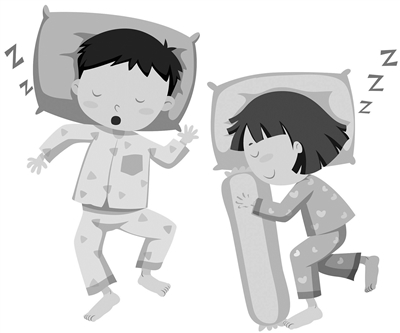
  The five-year-old baby who has not wet the bed for a long time suddenly "draws a map" frequently at night. Is it because of drinking too much water or kidney problems? The answer is beyond Bao Ma’s expectation — — All this is actually snoring.

  Case playback

  Came to the otorhinolaryngology department because of bedwetting

  Cong Cong is a lively and lovely five-year-old boy, but in recent months, Cong Cong, who has long stopped wetting the bed, suddenly began to wet the bed again. At first, my mother didn’t care, just told Cong Cong to go to the toilet before going to sleep, but bed wetting still appeared from time to time, and Cong Cong often couldn’t wake up in the morning. My mother began to worry, and she took Cong Cong to the hospital in a hurry.

  After arriving at the hospital, they went to urology and nephrology, and found no problems. Finally, under the recommendation of these two doctors, they came to otorhinolaryngology head and neck surgery.

  When I came here, the first question the doctor asked turned out to be: "Does the child snore when sleeping?" Congcong’s mother replied, "Yes, there is snoring, but is it related to bed wetting?" The doctor explained in no hurry that snoring does have something to do with bed wetting. These two symptoms seem unrelated, but in fact, many children’s bed wetting at night is caused by snoring.

  How does snoring trigger bed wetting?

  Under normal circumstances, we don’t snore when we sleep. However, if the upper airway of the nasal cavity or throat is locally narrowed for various reasons, when breathing, the airflow passes through the narrow place, and the muscles are vibrated to make a snoring sound.

  Medically, this disease is called "obstructive sleep apnea hypopnea syndrome". The main manifestations of this kind of diseases are sleep snoring, mouth breathing and breath holding. What is more frightening than snoring is that children can’t breathe enough air when they sleep because of local stenosis such as nasal cavity or throat, which leads to insufficient oxygen supply. Over time, chronic hypoxia will affect children’s development in all aspects.

  So, how does snoring cause bed wetting? Bedwetting is medically called nocturnal enuresis, which means that children over 5 years old involuntarily urinate at night. At present, its etiology is not clear, but many research reports show that it is related to obstructive sleep apnea hypopnea syndrome. Mainly, this disease can cause children to suffer from chronic hypoxia, resulting in oxidative stress reaction, leading to bladder instability and enuresis. At the same time, obstructive sleep apnea hypopnea syndrome can cause sympathetic nerve excitation, lead to a large number of catecholamine compounds accumulation, and eventually lead to nocturnal enuresis.

  Due to the long-term lack of oxygen supply, children’s behavior and growth and development will be affected to some extent. In addition, due to long-term oral breathing, the impact of airflow on the hard palate will deform and arch the hard palate, and the development of the oral cavity and maxillofacial region will also change over time. Gradually, children will have short and thick upper lip, high arch of hard palate, irregular teeth arrangement, prominent upper incisors, difficult facial muscles to move, lack of expression, etc. This is the "adenoid face" that is widely concerned by parents at present.

  Remember to see a doctor when your child has these symptoms.

  Remind parents and friends that children snore, don’t underestimate them, and don’t think that children are just "tired of playing" or sleeping soundly.

  Some children show short-term apnea, and parents can find that although the child is still breathing in the chest and abdomen while sleeping, there is no airflow through the mouth and nose. There are also some children who have no apnea, but their breathing during long-term sleep is in a state of insufficient ventilation. In the long run, children’s lack of ventilation at night and disordered sleep structure will cause a series of pathophysiological changes.

  Children who snore often find it difficult to get up in the morning, often feel sleepy during the day, lack of concentration and hyperactivity, poor memory, learning difficulties, or nocturnal enuresis, growth retardation, hypertension, obesity, etc., and even some children may have psychological and behavioral abnormalities, such as abnormal shyness, rebellion or aggressive behavior. If the child often snores in sleep, or is accompanied by breathing with his mouth open, holding his breath at night, wetting the bed, etc., parents should take the child to the otorhinolaryngology head and neck surgery.

  At present, the clinical diagnosis and treatment of obstructive sleep apnea hypopnea syndrome is very mature, and many children have achieved satisfactory results after drug treatment or surgical treatment. Timely diagnosis and treatment can not only restore children’s healthy and happy childhood as soon as possible, but also avoid various complications.

  Text/Zhang Bing Lu Yingxia

  (Children’s Hospital Affiliated to Capital Institute of Pediatrics)

How to promote "trade-in" of consumer goods

  Reporter: Su Jian

  Published in China Newsweek magazine, No.1132, March 18th, 2024.

  On March 1st, Premier Li Qiang of the State Council presided over the the State Council executive meeting, which discussed and adopted the Action Plan for Promoting Large-scale Equipment Renewal and Trade-in of Consumer Goods. The meeting pointed out that "promoting a new round of large-scale equipment renewal and trade-in of consumer goods is a major decision made by the CPC Central Committee focusing on the overall situation of China’s high-quality development".

  In 2023, China’s exports denominated in US dollars decreased by 4.6% year-on-year, which was the first year-on-year negative growth since 2016; Domestically, due to the downturn in the real estate market, the growth rate of investment has also declined. The decision of "trade-in" of consumer goods is put forward in the current complicated domestic and international environment, hoping to play a role in "stabilizing and expanding traditional consumption".

  The meeting pointed out that this round of "trade-in" should "combine the differentiated needs of upgrading various types of equipment and consumer goods, and increase fiscal, taxation, financial and other policy support". In terms of related fields, "actively carry out the trade-in of consumer goods such as automobiles and household appliances, forming the scale effect of upgrading". It can be seen that this round of "trade-in" is more focused on bulk consumption represented by durable goods. Different from the consumption stimulus policies such as automobile tax reduction and exemption since the epidemic, the meeting clearly pointed out that it is necessary to form a "scale effect of upgrading", indicating that the strength of the policy is unprecedented and the goal to be achieved is clear.

  Similar to the "home appliances going to the countryside" that began at the end of 2008, this round of "trade-in" is partly due to the decline of external demand, which is intended to expand the domestic demand market and stabilize economic growth. The difference is that, first, the demand is different. If "home appliances going to the countryside" is to meet the rigid demand of residents’ life, then this round of "trade-in" is to meet the improvement demand, and further improve the standard and improve the quality of life of residents on the premise that the basic living materials of residents are met; Second, the target groups are different. "Home appliances going to the countryside" is more about filling the gap of rural household appliances, that is, it is aimed at the problem of insufficient supply of rural household appliances, but this problem does not exist in this round of "trade-in". At present, even rural families have already achieved the popularization of household appliances, and the target groups of this round are mainly the owners of existing durable consumer goods such as cars and household appliances.

  In view of the characteristics of this round of "trade-in", it can be promoted from the following aspects:

  First, introduce a relative "elimination" model. This round of "trade-in" is aimed at improving demand, and consumers have greater selectivity than just needed. In the face of the downward pressure of economy, most consumers have the psychology of delaying consumption in the face of improving consumption of durable goods with large expenditure. To ensure that the policy achieves the "scale effect of upgrading", it is necessary to increase policy support for some commodities. For automobile consumption, we can give more subsidies and tax incentives to certain types of vehicles, such as new energy vehicles, and promote the popularization and improvement of other supporting facilities needed for this type of vehicles. For consumer goods such as household appliances, the relative "elimination" mode can be introduced through the formulation of corresponding exchange rules, so as to promote trade-in and reduce delayed consumption. For example, through the formulation of exchange standards, the circulation value of old household appliances can be clarified, and then the relative elimination cost of old household appliances can be clarified, so as to promote residents to deal with the consumption of old household appliances as soon as possible and reduce the delayed consumption of household appliances.

  Second, set standards as soon as possible. "Trade-in" first needs to set the standard of "exchange" to meet the needs of different groups, and the standard can be set from different dimensions. From the dimension of consumer goods, it is necessary to set the standard of "old" exchange for "new"; Different subsidies, discounts and exchange standards can also be set for "new", even if the preferential strength is not great, it will have the effect of forcing manufacturers to upgrade their products.

  The purpose of "trade-in" is to improve the quality of life of residents, but it does not mean wasting. Therefore, in the process of "trade-in", we should really consider the rights and interests of consumers and the allocation benefits of resources.

  First, strengthen the recycling of durable goods and develop circular economy. Exchange is divided into two parts: recovery and reuse. The "recycling" part is to exchange the old for the new, which mainly involves the formulation of standards and the operation and maintenance of platform accounts, and the "reuse" part is to further improve social utility through the differentiation of improvement needs. In view of different personal preferences and consumption levels, the performance of some replaced old consumer goods may still be better than that of new consumer goods with relatively low prices. In this way, through reasonable points exchange and the construction of second-hand platforms, both parties can obtain satisfactory results and further improve the effectiveness of both parties. The significance of building the "exchange and recycling" platform lies in improving the liquidity of durable goods such as household appliances, speeding up the process of eliminating and upgrading household appliances, promoting the consumption of durable goods, and improving the quality of life of floating population and renters. The circulation of second-hand household appliances is especially beneficial to the development of the housing rental market and promotes the flow of talents.

  Second, we should respect the property rights of residents’ private property. Household appliances and automobiles are the private property of residents, and they are generally "big items" in household durable goods, with high value, accounting for a relatively large proportion of residents’ property. We should earnestly consider the rights and interests and economic situation of existing consumer goods owners, resolutely put an end to the practice of forcing household durable goods to be scrapped by means of laws and administrative orders, and effectively protect the property rights of residents. "Trade-in" should be implemented on the basis of residents’ willingness. The design and implementation of policies should ensure the realization of "Pareto improvement", that is, the welfare of some people can be improved without harming the welfare of others.

  (The author is a professor at Peking University Institute of Economics and director of the National Economic Research Center)

  China Newsweek No.10, 2024

  Disclaimer: The publication of China Newsweek is authorized in writing.

Dragon Boat Festival is full of Chinese flavor, feeling deeply and loving national conditions.

  The vegetation is lush, the rice is fragrant, and it goes to Duanyang.

  The Dragon Boat Festival, a traditional festival that has lasted for thousands of years, bears the heavy feelings of the Chinese nation for home and country.

  "Patriotism is the deepest and most lasting emotion in the world." "For every Chinese, patriotism is a duty and a duty, where the heart belongs and the feelings belong" … … General Secretary of the Supreme Leader has made many important expositions on patriotism, stressing the need to learn the "four histories" well and cultivate the feelings of loving the Party, patriotism and socialism.

  This year’s Dragon Boat Festival, we are about to celebrate the centenary birthday of the Communist Party of China (CPC). The journey of a hundred years is magnificent, and the initial heart of a hundred years lasts for a long time. Let’s appreciate the profound feelings of home and country from several stories about "taste".

  In August 1920, the first Chinese translation of the communist party Declaration was translated by Chen Wangdao and officially published in Shanghai. This booklet has guided a large number of people with lofty ideals to set up lofty ideals of communism and devote themselves to the cause of national liberation and rejuvenation, which has had an important impact on the birth of the Communist Party of China (CPC) and the victory of the China Revolution.

  In the humble woodshed, a plank was placed on two long benches as a table … … In order to translate the communist party Declaration well, Chen Wangdao, who is proficient in English and Japanese, spent several times as much energy as usual. Once, because he was too focused, he mistook the ink for brown sugar and dipped it in zongzi, and said, "It’s so sweet." This leads to a sentence: the taste of truth is very sweet.

  On November 29th, 2012, General Secretary of the Supreme Leader told the story of Chen Wangdao’s translation of the communist party Declaration when he visited the exhibition Road to Rejuvenation.

  △ On June 3rd, 2021, the Memorial Hall of the First National Congress of communist party, China was newly opened. The picture shows the first and second editions of the communist party Declaration in August and September, 1920.

  Everything goes forward, and we must not forget the road we have traveled; No matter how far you go, you can’t forget the past and why you set out.

  "Now, it is very meaningful for you to actively preach the story of the old headmaster Comrade Chen Wangdao’s pursuit of truth and spread Marxist theory. I hope you will keep doing it and do it better … …” On June 27th, 2020, the Supreme Leader wrote back to all the members of the party member Volunteer Service Team in Fudan University’s communist party Declaration Exhibition Hall, and raised ardent expectations for party member, especially the young party member.

  Generations of the Communist Party of China (CPC) people have planted patriotic feelings, so that the red gene and revolution can be passed down from generation to generation.

  "share the blessings with the masses, share the difficulties, have salt with salt, and have no salt with light." On February 20, 2021, General Secretary of the Supreme Leader stressed at the mobilization meeting of Party history study and education that it is necessary to educate and guide the whole party to deeply understand the nature and purpose of the party, insist on doing everything for the people and relying on the people, always put the people in the highest position in their hearts and take the people’s yearning for a better life as their goal.

  At that time, the Kuomintang reactionaries imposed an economic blockade on the Central Soviet Area in an attempt to prevent "a grain of rice, a pinch of salt and a spoonful of water" from entering the Soviet Area.

  In the face of difficulties, the villagers frequently resorted to clever tricks, either breaking through the joints of the bamboo poles and loading salt, or soaking clothes with salt water, or even pretending to be beggars, and simply transported salt to the Soviet area. The villagers stepped over many obstacles and risked their lives to help the Red Army out of difficulties. The reason is that the Red Army insists that "salt is the same as salt, and no salt is the same as light" and vows that "as long as the Red Army has salt to eat, the dishes and bowls of ordinary people must be salty".

  In the winter of 1928, the Red Army seized salt from local tyrants and distributed it to the villagers. Li Shangfa, a villager, was given salt, so he didn’t want to eat it and wanted to leave it to the Red Army. In order to prevent this precious salt jar from falling into the enemy’s hands, he quietly buried the salt jar in the tree hole behind his house. This hiding is 31 years.

  △ At the Jinggangshan Revolutionary Museum, Li Qiude introduced the salt cans donated by his grandfather Li Shangfa.

  Today, this brown clay pot is quietly displayed in Jinggangshan Revolutionary Museum, and the salt in it has turned black and crystallized.

  "Salt is the same as salt, and no salt is the same as light", which vividly explains the initial mission of communist party people and profoundly demonstrates the flesh-and-blood ties between our party and the people.

  Frogs sing and birds sing, and rice flowers are fragrant. In April, 2018, General Secretary of the Supreme Leader came to Nanfan Scientific and Research Breeding Base during an inspection tour in Hainan and had a cordial conversation with Academician Yuan Longping and other agricultural scientists and technicians.

  The general secretary said earnestly that more than one billion people have to eat, which is China’s biggest national condition. Improved varieties play a key role in promoting grain production. We must make up our minds to develop China’s seed industry, pay close attention to cultivating excellent varieties with independent intellectual property rights, and ensure national food security from the source.

  Enjoy the cool dream under the grain, one rice and one life. Yuan Longping fought for the cause of hybrid rice all his life until the last moment.

  The Supreme Leader stressed that our best memorial to Comrade Yuan Longping is to learn from his noble qualities of loving the Party, the motherland and the people, his firm belief, his perseverance, his courage to innovate and his simplicity, and his noble demeanor of taking the needs of the motherland and the people as his own responsibility, devoting himself to the motherland and the people as his goal, ploughing the fields all his life and writing scientific and technological papers on the land of the motherland in a down-to-earth manner.

  △ On May 14th, 2021, in Nanfan Public Experimental Base, Yazhou District, Sanya City, Hainan Province, the combine harvester was harvesting "Chaoyouqian" hybrid rice.

  Innovation is the first driving force for development.

  On May 28th, 2021, the Supreme Leader emphasized at the Academician Conference of the Chinese Academy of Sciences and the Tenth National Congress of China Association for Science and Technology: "Practice has proved that China’s independent innovation is promising! The vast number of scientific and technological workers in our country have great achievements! With the spirit of keeping pace with the times, the courage of innovation and perseverance, the vast number of scientific and technological workers in China should face the world’s scientific and technological frontier, the main battlefield of the economy, the major needs of the country, and people’s lives and health, grasp the general trend, seize the opportunities, face problems directly, face difficulties, shoulder the heavy responsibility entrusted by the times, and strive to achieve high-level scientific and technological self-reliance! "

  "Chang ‘e V" realized the sampling and return of extraterrestrial objects, "Tianwen-1" started the Mars exploration, "Haidou I" completed the 10,000-meter sea trial, "Endeavor" successfully sat down, Beidou satellite navigation system was fully opened, China Space Station and core module were successfully launched, and 5G mobile communication technology took the lead in realizing large-scale application & HELIP; … On the journey of the great rejuvenation of the Chinese nation, generation after generation of scientists are concerned about the motherland and the people, fearless and selfless, and have made great contributions to the progress of science and technology, the improvement of people’s lives and the development of the Chinese nation.

  Cultivate the feelings of home and country and continue the spiritual blood. Hone your heart for a hundred years, and build up your strength.

  Producer: Wang Shanshan Ou Zhang

  Producer Xing Xing Lai Wu Xuan

  Editor-in-Chief Ning Lili

  Editor Zhang Yanan

  Visual sense Jiang yuhang

  Proofread Cheng Yu

Bulletin on the progress of key people’s livelihood in the first three quarters of 2020.

  According to the work arrangement of the provincial government, the progress of key people’s livelihood in the first three quarters of this year is hereby notified as follows:

  1. About 1.1 million new urban jobs.In the first three quarters, 849,500 new jobs were created in cities and towns in the province, and 77.23% of the annual tasks were completed.

  Second, on promoting the transformation and upgrading of old urban communities.By the end of September, the province had completed the renovation of 512,800 old residential quarters, accounting for 102.56% of the annual tasks.

  Three, on the improvement of women’s "two cancers" screening, prenatal screening and neonatal disease screening mechanism.(1) free "two cancers" screening. By the end of September, 1,286,100 people had been screened for cervical cancer and 1,324,500 for breast cancer, accounting for 91.86% and 94.61% of the annual targets respectively. (2) free "two" screening. By the end of September, 458,200 cases of free prenatal ultrasound screening and 494,300 cases of serological prenatal screening were completed in the province, and the coverage rate of the target population of prenatal screening reached 62.41% and 67.32%, which were 7.41 and 12.32 percentage points higher than the annual target respectively. 717,500 cases of neonatal "two diseases" screening and 700,500 cases of hearing screening were completed, and the screening rates were 97.71% and 95.40%, respectively, which were 7.71 and 5.4 percentage points higher than the annual task targets.

  Four, on improving the living security level of the needy and retirees.As of October 21, all counties (cities, districts) in the province have completed the distribution of urban and rural subsistence allowances and relief funds for the extremely poor in the third quarter. The basic pension adjustment document for retirees was issued on July 14th, and all the pensions adjusted and increased by retirees of government agencies, institutions and enterprises in the whole province were paid in place before the end of July, and a total of 5,032,100 retirees were reissued with 5,055 million yuan from January to July.

  Five, on the protection of urban and rural residents "rice bags" and "vegetable baskets".In terms of production, the total output of summer grain in the province was 75.075 billion Jin, an increase of 167 million Jin over the previous year, reaching the highest level in history; As of October 16, the autumn crops in the province have harvested 110.66 million mu, accounting for 94.6% of the sown area of autumn crops; As of October 7, the area of vegetables in the province was 9.0272 million mu; At the end of September, the number of live pigs and fertile sows in large-scale pig farms in the province increased by 70.5% and 59.5% respectively, achieving positive growth for 13 consecutive months. In terms of ensuring supply and price stability, the consumer price of the province in the first three quarters increased by 3.6% year-on-year, down by 0.5 percentage points from the first half of the year; From January to July, the province’s actual price temporary subsidy was about 1.2 billion yuan, which actually benefited about 30.3962 million people in need.

  Six, on the continued implementation of rehabilitation assistance for disabled children.By the end of September, 20153 disabled children aged 0-6 had received rehabilitation assistance services (including operation, adaptation of assistive devices, and basic rehabilitation training in designated rehabilitation institutions), and the rehabilitation service rate was 108.69%.

  Seven, on the continuous improvement of atmospheric environmental quality.In the first three quarters, the concentration of PM2.5 in the province was 46.75 μ g/m3, down 17.9% year-on-year.

  Eight, on the implementation of rural highway "100 counties into the group" project.In the first three quarters, the province achieved a total of 15,500 natural villages with hardened roads, accounting for 103% of the annual target tasks.

  Nine, on the continuous construction of rural power grid.By the end of September, 2,806 of the 3,000 radio distribution areas in the province had been completed, accounting for 93.53% of the annual tasks.

  Ten, on the completion of the remaining county (city) people’s hospital upgrading.By the end of September, 43 county (city) people’s hospitals and 4 county (city) Chinese medicine hospitals had passed the "second-class first-class" hospital evaluation, and 85.45% of the annual target tasks had been completed.

  Eleven, accelerate the construction of rural teachers’ turnover dormitory.By the end of September, 8,000 rural teachers’ revolving dormitories had been completed or delivered to 4,693, with a completion rate of 58.66%.