Xinhua News Agency, Beijing, June 1 ST: All 25 "new departments" were unveiled, and institutional reform was deepened.
Xinhua News Agency reporters Jiang Lin and Luo Zhengguang
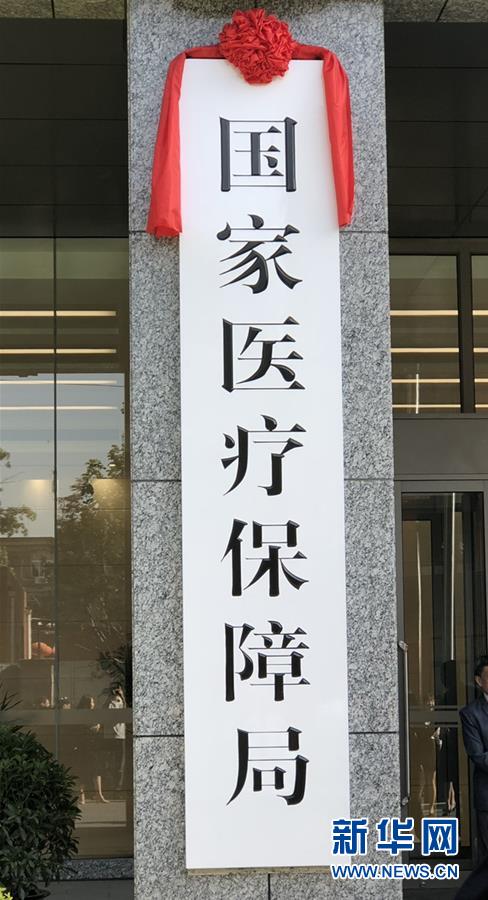
On the last day of May, the National Health Insurance Bureau, which integrated the relevant responsibilities of the Ministry of Human Resources and Social Security, the National Development and Reform Commission and the Ministry of Civil Affairs, was officially unveiled. So far, all the 25 newly established or reorganized departments that should be listed in the deepening party and state institutional reform plan have been listed.
Intense preparation, pragmatic and efficient. From centralized office to establishment of institutions, from the first publication to the first press conference, all departments have fully implemented the central deployment, and a new round of institutional reform has steadily advanced in depth.
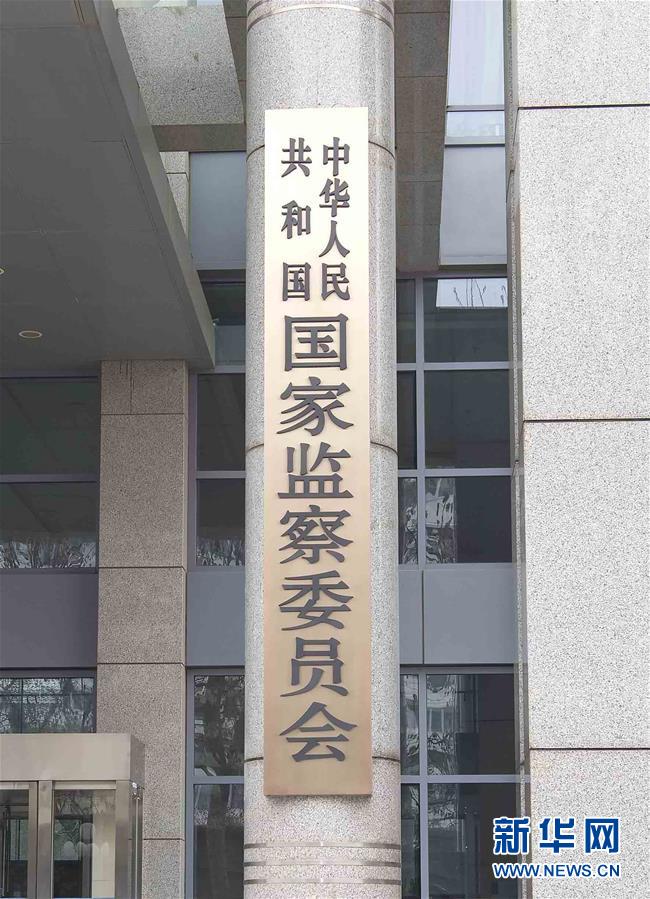
Institutional reform is advancing in depth. This is the brand of the National Supervisory Commission (NSC), People’s Republic of China (photo taken on March 23rd). Xinhua News Agency reporter Li Tao photo
Intensive listing of 25 departments highlights the determination to reform
At No.2 North Street, Yuetan, a brand-new brand of National Health Insurance Bureau came into public view.
"As an important part of deepening the reform of the party and state institutions, the establishment of the National Medical Security Bureau will effectively strengthen the government’s medical security function and promote medical care, medical insurance and medicine as a whole ‘ Three medical linkage ’ Have an important impact. " Hu Yinglian, an associate professor at the Central Party School (National School of Administration), said.
The adjustment of the party and state institutions is a profound change in promoting the modernization of the national governance system and governance capacity. The great adjustment and rapid formation of the new department fully demonstrate the courage and determination of reform.
Only two days after the full text of "Deepening the Reform of Party and State Institutions" was published, the newly formed the National Supervisory Commission (NSC) was officially unveiled and began to operate.
Since then, a number of newly established departments, such as the National Health and Wellness Commission, the National Immigration Bureau, the Ministry of Agriculture and Rural Affairs, and the State Grain and Material Reserve Bureau, have been listed in place one after another.
Thirteen responsibilities of 10 departments have been integrated, and the emergency management department involves many fields and many people, which is called the "super department" in this adjustment.
"In the process of formation, it is required that the mind is not chaotic, the work is constant, the team is not scattered, and the enthusiasm is not reduced." Flash Chunchang, head of the the State Council Emergency Management Expert Group, said that unifying all emergency rescue functions in one system will enhance the overall ability to resolve security risks.
In the early morning of May 28th, an earthquake of magnitude 5.7 occurred in Songyuan, Jilin. The Emergency Management Department, which was established just over a month ago, immediately deployed relevant emergency response work. In order to be a good "night watchman" of the party and the people, a department leader is on duty 24 hours a day.
The newly established State Administration of Market Supervision has realized "one team in charge of the market", aiming at solving the problem of "Jiulong Water Control and Multi-head Management".
"Institutional reform is first and foremost the transformation of government functions." Zhang Mao, director of the State Administration of Market Supervision, said, "We should promote the work of market supervision through institutional reform so that the people can truly feel the fruits of reform."
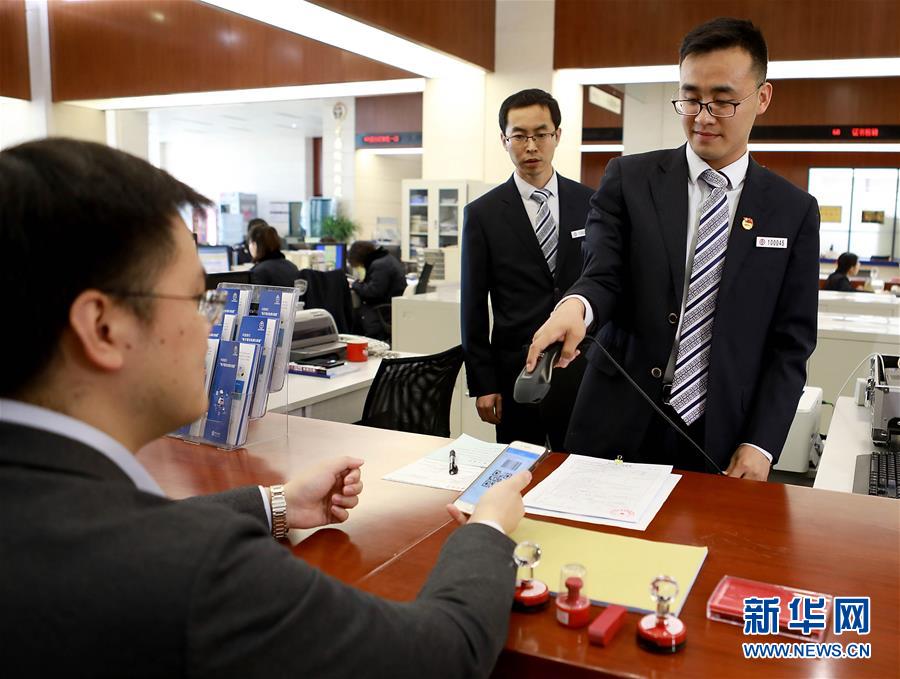
On April 9th, the mobile phone version of the electronic business license launched by the State Administration of Markets of China was distributed in Dongjiang District of Tianjin Pilot Free Trade Zone for the first time. This is the staff scanning code registration for Chen Pengyun (first from left), the chairman of Tianjin Peanut Good Car Automobile Trade Co., Ltd. Xinhua news agency
Fully implement the central government’s deployment, and the positive effects of reform are beginning to appear.
Deepening the reform of the party and state institutions is not only a physical reorganization and assembly of institutions, but also a "chemical reaction" through the reform to promote personnel integration, business integration and functional optimization.
Over the past three months, various departments have accelerated the implementation of the central government’s deployment, and the reform effect has initially appeared. Some party and government organizations with overlapping functions and overlapping work have been successfully integrated, and the overall leadership of the party has been effectively strengthened.
"The Central Rural Work Leading Group Office is located in the Ministry of Agriculture and Rural Affairs, which further strengthens the Party’s support for ‘ Agriculture, countryside and farmers ’ Centralized and unified leadership in work, focusing on ‘ Above the neck ’ Service top-level design, also grasp ‘ Below the neck ’ The implementation of the implementation has integrated decision-making staff, implementation and implementation. " The relevant person in charge of the Ministry of Agriculture and Rural Affairs said.
At present, the central agricultural office and the Ministry of Agriculture and Rural Affairs have been fully integrated, and the reform has basically been put in place. The Secretariat Group of the Central Leading Group for Education, located in the Ministry of Education, has also started operation recently.
Through the reform, the functions of various departments are more optimized, the powers and responsibilities are more coordinated and the operation is more efficient.
Three batches, more than 170 newly discovered problems. This is the first round of national special supervision on environmental protection of drinking water sources recently notified by the Ministry of Ecology and Environment.
After integrating the water environment management functions originally scattered in the Ministry of Water Resources, the State Oceanic Administration and other departments, the Ministry of Ecology and Environment has a more powerful pace to win the "clear water defense war".
The reform measures directed at the pain points and the continuous release of the reform potential have continuously enhanced the people’s sense of gain.
From April 20, the administrative examination and approval items of customs, inspection and quarantine will be fully integrated in one window, and the customs clearance of inbound and outbound passengers’ carry-on luggage will be "one-time inspection", and the supervision of mail express will be streamlined from the original 26 links to 10 links;
The Ministry of Culture and Tourism organized a centralized law enforcement inspection of online performances and online game markets in response to the outstanding violations of laws and regulations of webcasting reflected by the masses.
The National Immigration Bureau announced that the system of "only running once" for handling entry and exit documents will be implemented nationwide from May 1;
"Deepening the reform of the party and state institutions is to better meet the people’s growing needs for a better life and fully let the people enjoy the dividends of reform." The relevant person in charge of the National Immigration Bureau said.
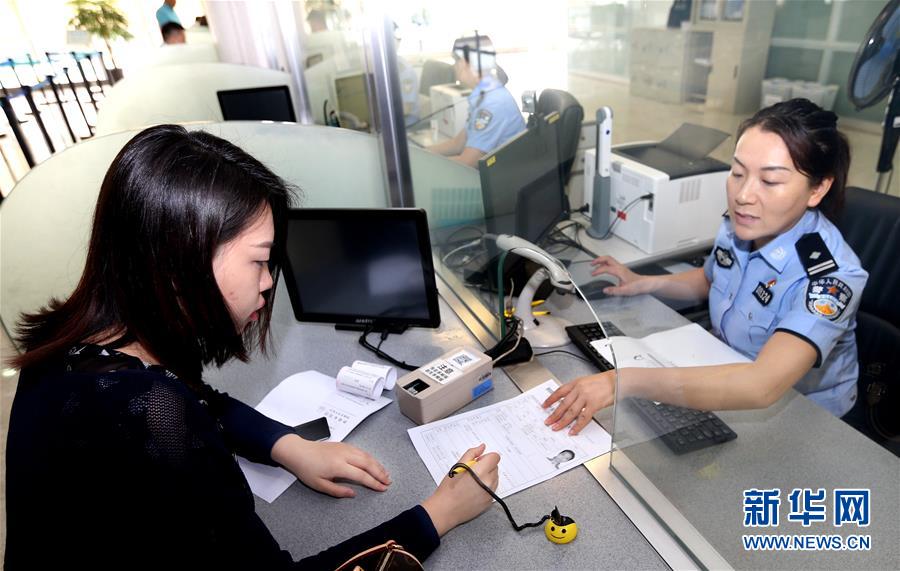
On May 31, citizen Dou Yuewen went through the online appointment window of the Exit-Entry Administration of Shanghai Public Security Bureau. Since the National Immigration Bureau implemented the system of "only running once" in the whole country in early May, the Exit-Entry Administration of Shanghai Public Security Bureau has further introduced five new measures to facilitate the people, such as reducing the burden of proof of applicants, adding self-service camera equipment and extending the green channel service, so as to provide the people with a more refined and humanized service experience. Xinhua News Agency reporter Fan Junshe
"Running at a steady pace" to ensure that the reform task is put in place
All the 25 "new departments" that should be listed are listed, which indicates that the first phase of the reform of the party and state institutions has been basically completed, but there are still more arduous tasks in the reform.
This institutional reform involves more than 80 central and state organs, departments and directly affiliated units. The scale of reform and adjustment and the depth of interests are the highest in the 40 years of reform and opening up. Only by grasping the key links and doing the work in detail can we promote the reform in a solid and orderly manner.
"From the Ministry of Environmental Protection to the Ministry of Ecology and Environment, it is not just the name that changes." Liu Youbin, spokesman of the Ministry of Ecology and Environment, said, "We will actively cooperate to do a good job in ‘ Sanding ’ The formulation of the plan ensures the smooth transition of the old and new institutions, and ensures the efficient operation of the new institutions as soon as possible, and earnestly shoulders the new missions, new responsibilities and new tasks entrusted by the central authorities. "
In the year of deepening institutional reform, the ability to "break" and "stand" is deeply rooted.
In order to solve the problems of incompatibility and disharmony between some internal party regulations and documents and institutional reform, recently, the CPC Central Committee deployed a special clean-up of internal party regulations and related documents involving the reform of the party and state institutions, and will abolish 3 pieces and amend 35 pieces of regulations and documents.
The hoof moves steadily and advances gradually.
The reform plan requires that the institutional reform of the central and state organs should be put in place before the end of 2018; The reform plan of provincial party and government institutions should be reported to the Party Central Committee for approval before the end of September 2018, and the institutional adjustment should be basically in place before the end of 2018.
Guo Shuqing, Chairman of the Insurance Regulatory Commission of the Bank of China, said that the next step will be to transfer relevant functions and select the best cadres. At the same time, we must do a good job in supervision and ensure that the organization and supervision work are "correct and promoted".
According to Ma Xiaowei, director of the National Health and Wellness Committee, the next step will be to optimize the setting of departments with the focus on changing functions, and form a management system with reasonable division of labor, consistent powers and responsibilities and efficient operation, so as to ensure the full realization of the reform intention of the CPC Central Committee.