Trade-in is setting off a boom in household appliances consumption, and many measures are taken to help old household appliances "turn waste into treasure"

  CCTV News:Recently, since the issuance of the Action Plan for Promoting Large-scale Equipment Renewal and Trade-in of Consumer Goods, in order to benefit consumers more, local government departments, e-commerce platforms and brand enterprises are launching various trade-in subsidies and preferential activities. Let’s look at the report.

  The old air conditioner in Shanghai citizen Li Yangjun’s home has been with him for many years, but now the cooling and heating functions are not as good as before. On the same day, the home appliance installer will provide on-site service after placing an order in the shopping mall through the preferential policy of trade-in for new ones. The old air conditioner was dismantled and taken away, and the new air conditioner was installed and debugged.

Trade-in is setting off a boom in household appliances consumption, and many measures are taken to help old household appliances "turn waste into treasure"

  Li Yangjun, a Shanghai consumer, said: "The subsidy for dismantling old machines is 280 yuan. In addition, there is a part of subsidy for buying new machines. Together with the preferential activities of shopping malls, the original price of this air conditioner is more than 5,800 yuan, and the actual payment is only more than 3,500 yuan. Security is guaranteed and it is very convenient. "

  Wang Lidong, a home appliance replacement worker in Shanghai, said: "Now, on average, we need more than a dozen orders a day. There are more such large household appliances as washing machines, air conditioners and televisions, including demolition, which is much more than the previous two months."

Trade-in is setting off a boom in household appliances consumption, and many measures are taken to help old household appliances "turn waste into treasure"

  During this period, electrical shopping malls all over the country are cooperating with air conditioners, televisions, refrigerators and other manufacturers to carry out joint promotion activities for home appliances, which are deeply loved by consumers.

Trade-in is setting off a boom in household appliances consumption, and many measures are taken to help old household appliances "turn waste into treasure"

  According to statistics, in the first quarter, the order volume of smart home appliances trade-in increased significantly compared with the same period, especially since March, trade-in is setting off a boom in home appliance consumption. During the Spring Home Decoration Festival, the sales of smart air conditioners increased by over 150% year-on-year, and the central air conditioners increased by over 190%.

  The old household appliances that have been taken away have a place to go.

  With the issuance of the trade-in action plan for consumer goods, various ways of trade-in activities have been carried out in various places, and the old household appliances that have been taken away have been classified and stored, and copper, aluminum, plastics and rare metals will re-enter the household appliance manufacturing process.

  China produces a large number of electrical and electronic products every year. Statistics from the National Bureau of Statistics show that the output in 2022 is 195.78 million color TV sets, 86.64 million refrigerators, 91.06 million washing machines, 222.47 million air conditioners, 434.18 million microcomputers and 39.7 million range hoods. The amount of electrical and electronic products is large, and the centralized entry into the elimination period has caused a sharp increase in the amount of electronic waste. It is estimated that more than 200 million household appliances will be scrapped in 2023.

Trade-in is setting off a boom in household appliances consumption, and many measures are taken to help old household appliances "turn waste into treasure"

  The collected old household appliances will finally be transported to the environmental protection dismantling company designated by the state for dismantling and sorting treatment, and the dismantled parts will be transported to the next link by the dismantling factory, and after the next deep processing, they will be reused as raw materials.

  Yao Kai, president of a logistics operation center of an e-commerce platform, said: "We have a traceability mechanism for old machines, which strengthens the flow management of old machines, ensures that the flow of each old machine is well documented, and promotes environmental protection and safety."

Trade-in is setting off a boom in household appliances consumption, and many measures are taken to help old household appliances "turn waste into treasure"

  In Jiaxing, Zhejiang Province, through the "Jiajiashou" WeChat applet, citizens fill in the relevant information, and staff will come to collect old household appliances and pay the citizens a certain depreciation fee.

  Li Lin, deputy manager of the operation management department of a waste commodity recycling company in Jiaxing, Zhejiang Province, said: "In 2023, we recycled more than 10,000 waste household appliances. This year, with the launch of the new round of trade-in policy, it is expected that the business volume will increase by 20%."

  This is an old household appliance sorting center in Yuhang District, Hangzhou. The staff are sorting and storing the recycled waste household appliances such as refrigerators, computers and air conditioners, waiting to be sent downstream for dismantling. After dismantling, more than 200 categories of disassembled products will be classified and stored, and copper, aluminum, plastics and rare metals will re-enter the manufacturing process of household appliances.

Trade-in is setting off a boom in household appliances consumption, and many measures are taken to help old household appliances "turn waste into treasure"

  Tang Feng, the brand director of a waste management company in Zhejiang, said: "The whole process is digitally supervised, and at the same time, a large number of renewable resources are provided for terminal enterprises, so that they can turn waste into treasure."

Trade-in is setting off a boom in household appliances consumption, and many measures are taken to help old household appliances "turn waste into treasure"

  China has set up the "Waste Electrical and Electronic Products Disposal Fund" to subsidize the recycling and disposal of waste electrical and electronic products. According to the Administrative Measures for the Collection and Use of Waste Electrical and Electronic Products Disposal Funds, from 2012 to 2022, China has issued a total subsidy of nearly 26.8 billion yuan, with remarkable pollution prevention and control effects, a substantial increase in standardized recycling capacity, and a steady increase in the output rate of resources such as copper, aluminum, iron and plastics.

[Editor in charge:

]

Update of dengue fever diagnosis and treatment plan

Recently, National Health Commission and the State Administration of Traditional Chinese Medicine issued the latest version of the Dengue Fever Diagnosis and Treatment Plan (2024), which was updated after ten years.

According to the chief expert of CDC, with the global warming, Aedes mosquitoes, the vector of dengue fever, have gained a broader living space, and they are also carrying this infectious disease to expand their territory. In China, dengue fever has been "northward" and there has been a small outbreak across the Yellow River.

In China, there is no vaccine for dengue fever and no effective antiviral drugs. For dengue cases, anti-mosquito isolation treatment should be taken.

After ten years, the dengue fever diagnosis and treatment plan was updated.

"Dengue Fever Diagnosis and Treatment Plan (2024)" was recently released. Based on the Guide to Dengue Fever Diagnosis and Treatment (2nd Edition, 2014), the scheme was formulated by combining the research progress and diagnosis and treatment experience at home and abroad.

Dengue fever is an acute infectious disease caused by dengue virus and spread by the bite of Aedes vector. Dengue fever is a systemic disease with complicated clinical manifestations, including sudden fever, systemic pain, rash, bleeding and leukopenia.

In mid-June, a dengue fever patient was admitted to the Department of Infection and Clinical Microbiology of Beijing Chaoyang Hospital. Li Ran, deputy director of the department, introduced that the patient started to have a fever on the way out of the country for five days. After returning to China, he found that white blood cells and platelets decreased, accompanied by a rash on the inner thigh, and finally he was admitted to the hospital for treatment.

As a self-limited disease, dengue fever usually has a good prognosis. A small number of severe cases of dengue fever can die due to organ failure. The factors affecting the prognosis include the patient’s age, basic diseases, serious complications, and previous history of dengue virus infection.

Dengue fever is "expanding the territory"

Dengue fever is widespread in tropical and subtropical areas where Aedes mosquitoes are distributed around the world, involving more than 100 countries and regions around the world. In Latin America, the Western Pacific, Southeast Asia and the Eastern Mediterranean, the spread of dengue fever can occur all the year round.

Although China has not yet formed a stable local epidemic focus of dengue fever, imported cases can be seen all the year round. Guangdong, Yunnan, Fujian, Zhejiang, Guangxi, Hainan and other provinces have experienced many local epidemics of dengue fever caused by imports, with high incidence in summer and autumn. People of all ages can get sick, mainly young and middle-aged.

In recent years, the local spread of dengue fever caused by China’s import is expanding, and it tends to spread from the subtropical region in the south to the temperate regions in the middle and north.

Liu Qiyong, chief expert of vector biology in China CDC, said in an interview with the Beijing News that dengue fever used to be a typical tropical infectious disease. Now it has crossed the Yangtze River and pushed to the Yellow River in China, and there was a small outbreak on the north bank of the Yellow River.

The reason for the "expansion" of dengue fever lies in climate change. With global warming, the vector of dengue fever has gained a wider warm zone, and the disease has been "northward".

There are no antiviral drugs and vaccines on the market.

The treatment principle of dengue fever is early detection, early diagnosis and early treatment.

Early identification and timely treatment of severe cases are the key to reduce mortality. Symptomatic supportive treatment is the main treatment, and there is no effective antiviral treatment at present. Cases should be treated with anti-mosquito isolation, and the isolation can be lifted if the course of disease exceeds 5 days and the body temperature naturally drops to normal for more than 24 hours or more.

Measures to kill adult mosquitoes should be carried out in the hospital ward, in the hospital and around the hospital; Install screen doors and screens in wards and duty rooms. Medical staff should do personal protection and use repellent to prevent mosquito bites.

Dengue fever should be distinguished from fever with rash diseases such as Zika virus disease, Chikungunya fever, measles, rubella, urticaria, scarlet fever, meningitis, typhus and tsutsugamushi disease. Fever with bleeding diseases such as hemorrhagic fever with renal syndrome, fever with thrombocytopenia syndrome, etc. Severe dengue fever should also be differentiated from other infectious shock, leptospirosis, yellow fever, Japanese encephalitis and other diseases.

There is no dengue vaccine listed in China.

The main preventive measures of the disease are mosquito control and cutting off the transmission route, such as carrying out patriotic health campaigns regularly, cleaning up the dead corner of health, eliminating the breeding ground of Aedes mosquitoes and reducing the density of mosquito vectors; Community residents use screens, screens, doors, mosquito nets and mosquito coils in their homes; Use mosquito repellent outside to avoid the bite of Aedes mosquitoes. For patients at home, we should guide them to implement anti-mosquito isolation measures to control the spread of dengue virus.

Beijing News reporter Dai Xuan

Editor Zhang Qian proofreads Lin Zhao.

25 "new departments" all appeared, and institutional reform was deepened.
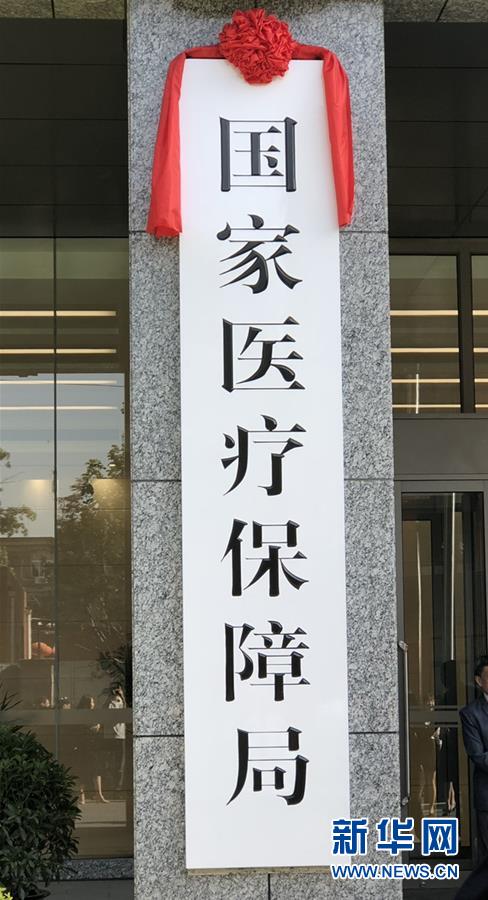
  Xinhua News Agency, Beijing, June 1 ST: All 25 "new departments" were unveiled, and institutional reform was deepened.

  Xinhua News Agency reporters Jiang Lin and Luo Zhengguang

  On the last day of May, the National Health Insurance Bureau, which integrated the relevant responsibilities of the Ministry of Human Resources and Social Security, the National Development and Reform Commission and the Ministry of Civil Affairs, was officially unveiled. So far, all the 25 newly established or reorganized departments that should be listed in the deepening party and state institutional reform plan have been listed.

  Intense preparation, pragmatic and efficient. From centralized office to establishment of institutions, from the first publication to the first press conference, all departments have fully implemented the central deployment, and a new round of institutional reform has steadily advanced in depth.
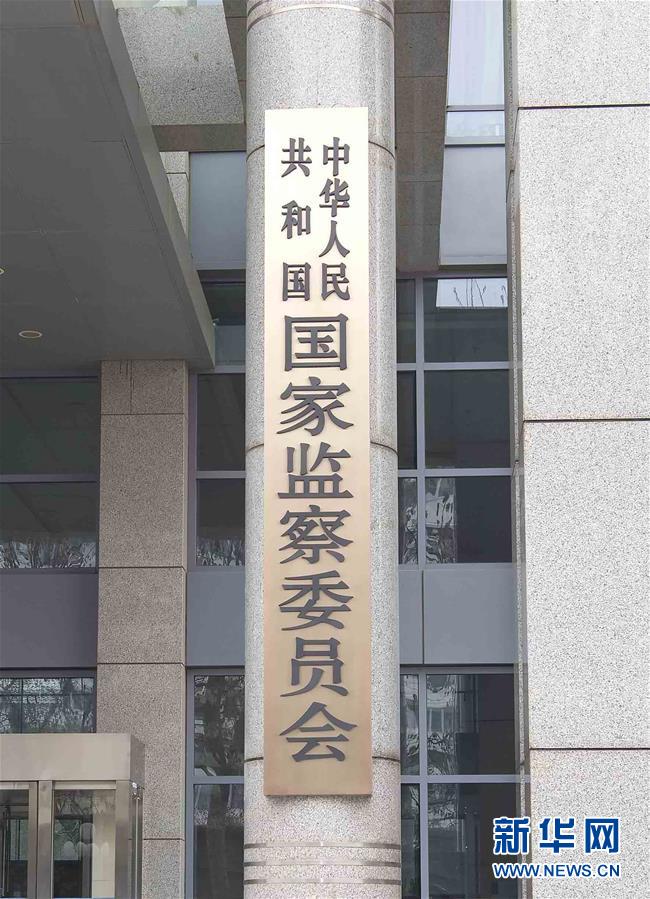
  Institutional reform is advancing in depth. This is the brand of the National Supervisory Commission (NSC), People’s Republic of China (photo taken on March 23rd). Xinhua News Agency reporter Li Tao photo

  Intensive listing of 25 departments highlights the determination to reform

  At No.2 North Street, Yuetan, a brand-new brand of National Health Insurance Bureau came into public view.

  "As an important part of deepening the reform of the party and state institutions, the establishment of the National Medical Security Bureau will effectively strengthen the government’s medical security function and promote medical care, medical insurance and medicine as a whole ‘ Three medical linkage ’ Have an important impact. " Hu Yinglian, an associate professor at the Central Party School (National School of Administration), said.

  The adjustment of the party and state institutions is a profound change in promoting the modernization of the national governance system and governance capacity. The great adjustment and rapid formation of the new department fully demonstrate the courage and determination of reform.

  Only two days after the full text of "Deepening the Reform of Party and State Institutions" was published, the newly formed the National Supervisory Commission (NSC) was officially unveiled and began to operate.

  Since then, a number of newly established departments, such as the National Health and Wellness Commission, the National Immigration Bureau, the Ministry of Agriculture and Rural Affairs, and the State Grain and Material Reserve Bureau, have been listed in place one after another.

  Thirteen responsibilities of 10 departments have been integrated, and the emergency management department involves many fields and many people, which is called the "super department" in this adjustment.

  "In the process of formation, it is required that the mind is not chaotic, the work is constant, the team is not scattered, and the enthusiasm is not reduced." Flash Chunchang, head of the the State Council Emergency Management Expert Group, said that unifying all emergency rescue functions in one system will enhance the overall ability to resolve security risks.

  In the early morning of May 28th, an earthquake of magnitude 5.7 occurred in Songyuan, Jilin. The Emergency Management Department, which was established just over a month ago, immediately deployed relevant emergency response work. In order to be a good "night watchman" of the party and the people, a department leader is on duty 24 hours a day.

  The newly established State Administration of Market Supervision has realized "one team in charge of the market", aiming at solving the problem of "Jiulong Water Control and Multi-head Management".

  "Institutional reform is first and foremost the transformation of government functions." Zhang Mao, director of the State Administration of Market Supervision, said, "We should promote the work of market supervision through institutional reform so that the people can truly feel the fruits of reform."
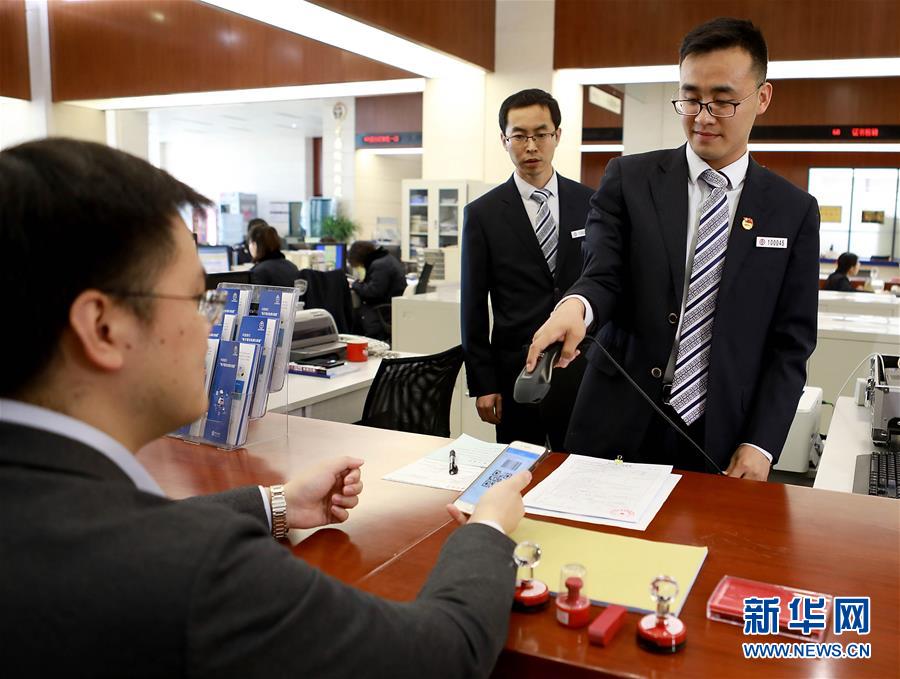
  On April 9th, the mobile phone version of the electronic business license launched by the State Administration of Markets of China was distributed in Dongjiang District of Tianjin Pilot Free Trade Zone for the first time. This is the staff scanning code registration for Chen Pengyun (first from left), the chairman of Tianjin Peanut Good Car Automobile Trade Co., Ltd. Xinhua news agency

  Fully implement the central government’s deployment, and the positive effects of reform are beginning to appear.

  Deepening the reform of the party and state institutions is not only a physical reorganization and assembly of institutions, but also a "chemical reaction" through the reform to promote personnel integration, business integration and functional optimization.

  Over the past three months, various departments have accelerated the implementation of the central government’s deployment, and the reform effect has initially appeared. Some party and government organizations with overlapping functions and overlapping work have been successfully integrated, and the overall leadership of the party has been effectively strengthened.

  "The Central Rural Work Leading Group Office is located in the Ministry of Agriculture and Rural Affairs, which further strengthens the Party’s support for ‘ Agriculture, countryside and farmers ’ Centralized and unified leadership in work, focusing on ‘ Above the neck ’ Service top-level design, also grasp ‘ Below the neck ’ The implementation of the implementation has integrated decision-making staff, implementation and implementation. " The relevant person in charge of the Ministry of Agriculture and Rural Affairs said.

  At present, the central agricultural office and the Ministry of Agriculture and Rural Affairs have been fully integrated, and the reform has basically been put in place. The Secretariat Group of the Central Leading Group for Education, located in the Ministry of Education, has also started operation recently.

  Through the reform, the functions of various departments are more optimized, the powers and responsibilities are more coordinated and the operation is more efficient.

  Three batches, more than 170 newly discovered problems. This is the first round of national special supervision on environmental protection of drinking water sources recently notified by the Ministry of Ecology and Environment.

  After integrating the water environment management functions originally scattered in the Ministry of Water Resources, the State Oceanic Administration and other departments, the Ministry of Ecology and Environment has a more powerful pace to win the "clear water defense war".

  The reform measures directed at the pain points and the continuous release of the reform potential have continuously enhanced the people’s sense of gain.

  From April 20, the administrative examination and approval items of customs, inspection and quarantine will be fully integrated in one window, and the customs clearance of inbound and outbound passengers’ carry-on luggage will be "one-time inspection", and the supervision of mail express will be streamlined from the original 26 links to 10 links;

  The Ministry of Culture and Tourism organized a centralized law enforcement inspection of online performances and online game markets in response to the outstanding violations of laws and regulations of webcasting reflected by the masses.

  The National Immigration Bureau announced that the system of "only running once" for handling entry and exit documents will be implemented nationwide from May 1;

  "Deepening the reform of the party and state institutions is to better meet the people’s growing needs for a better life and fully let the people enjoy the dividends of reform." The relevant person in charge of the National Immigration Bureau said.
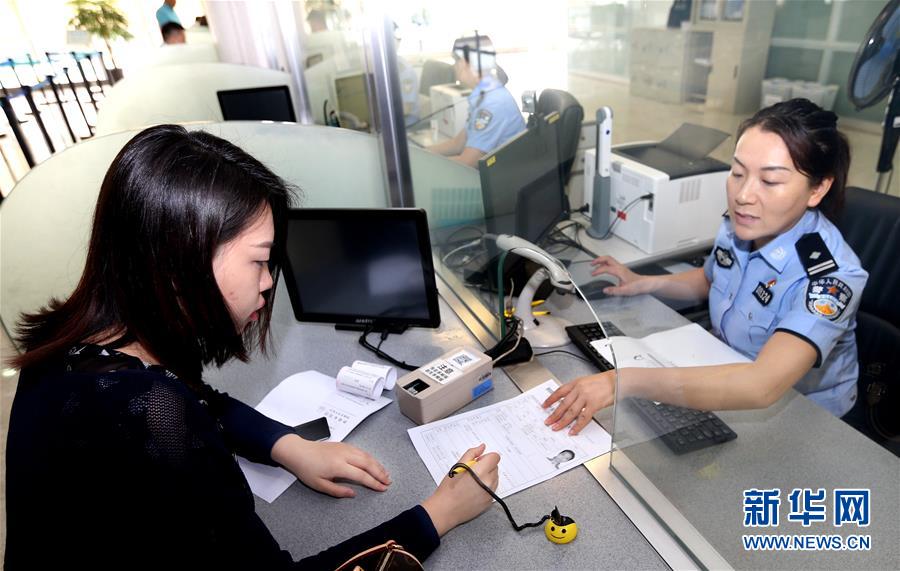
  On May 31, citizen Dou Yuewen went through the online appointment window of the Exit-Entry Administration of Shanghai Public Security Bureau. Since the National Immigration Bureau implemented the system of "only running once" in the whole country in early May, the Exit-Entry Administration of Shanghai Public Security Bureau has further introduced five new measures to facilitate the people, such as reducing the burden of proof of applicants, adding self-service camera equipment and extending the green channel service, so as to provide the people with a more refined and humanized service experience. Xinhua News Agency reporter Fan Junshe

  "Running at a steady pace" to ensure that the reform task is put in place

  All the 25 "new departments" that should be listed are listed, which indicates that the first phase of the reform of the party and state institutions has been basically completed, but there are still more arduous tasks in the reform.

  This institutional reform involves more than 80 central and state organs, departments and directly affiliated units. The scale of reform and adjustment and the depth of interests are the highest in the 40 years of reform and opening up. Only by grasping the key links and doing the work in detail can we promote the reform in a solid and orderly manner.

  "From the Ministry of Environmental Protection to the Ministry of Ecology and Environment, it is not just the name that changes." Liu Youbin, spokesman of the Ministry of Ecology and Environment, said, "We will actively cooperate to do a good job in ‘ Sanding ’ The formulation of the plan ensures the smooth transition of the old and new institutions, and ensures the efficient operation of the new institutions as soon as possible, and earnestly shoulders the new missions, new responsibilities and new tasks entrusted by the central authorities. "

  In the year of deepening institutional reform, the ability to "break" and "stand" is deeply rooted.

  In order to solve the problems of incompatibility and disharmony between some internal party regulations and documents and institutional reform, recently, the CPC Central Committee deployed a special clean-up of internal party regulations and related documents involving the reform of the party and state institutions, and will abolish 3 pieces and amend 35 pieces of regulations and documents.

  The hoof moves steadily and advances gradually.

  The reform plan requires that the institutional reform of the central and state organs should be put in place before the end of 2018; The reform plan of provincial party and government institutions should be reported to the Party Central Committee for approval before the end of September 2018, and the institutional adjustment should be basically in place before the end of 2018.

  Guo Shuqing, Chairman of the Insurance Regulatory Commission of the Bank of China, said that the next step will be to transfer relevant functions and select the best cadres. At the same time, we must do a good job in supervision and ensure that the organization and supervision work are "correct and promoted".

  According to Ma Xiaowei, director of the National Health and Wellness Committee, the next step will be to optimize the setting of departments with the focus on changing functions, and form a management system with reasonable division of labor, consistent powers and responsibilities and efficient operation, so as to ensure the full realization of the reform intention of the CPC Central Committee.

Interim Measures for the Pilot Project of Mortgage Loan for Farmers’ Housing Property Rights (full text)

  In order to promote the pilot project of mortgage loan for farmers’ housing property rights in accordance with the law, According to the spirit of "Guiding Opinions of the State Council on Piloting the Management Right of Rural Contracted Land and Mortgage Loan for Farmers’ Housing Property Rights" (Guo Fa [2015] No.45) and "Decision of the National People’s Congress Standing Committee (NPCSC) on authorizing the State Council to temporarily adjust and implement relevant laws and regulations in 232 pilot counties (cities, districts) such as Daxing District in Beijing and 59 pilot counties (cities, districts) such as Jixian County in Tianjin", The "Interim Measures" (Annex 1) and "List of pilot counties (cities, districts) for mortgage loans of farmers’ housing property rights" (Annex 2) are hereby printed and distributed to you, please conscientiously implement them according to the actual situation.

  Annex: 1. Interim Measures for the Pilot Project of Mortgage Loan for Farmers’ Housing Property Rights

  2. List of pilot counties (cities, districts) for mortgage loans of farmers’ housing property rights.

  China people’s bank CBRC CIRC

  Ministry of Finance, Ministry of Land and Resources, Ministry of Housing and Urban-Rural Development

  March 15, 2016

  Annex 1

  Interim measures for the pilot project of mortgage loan for farmers’ housing property rights

  Article 1 In order to promote the pilot project of mortgage loans for farmers’ housing property rights in accordance with the law, increase effective financial support for agriculture, rural areas and farmers, and protect the legitimate rights and interests of borrowers, These measures are formulated in accordance with policies and regulations such as "Guiding Opinions of the State Council on Piloting the Management Right of Rural Contracted Land and Mortgage Loan for Farmers’ Housing Property Rights" (Guo Fa [2015] No.45) and "Decision of the NPC Standing Committee on authorizing the State Council to temporarily adjust and implement relevant laws and regulations in 232 pilot counties (cities, districts) such as Daxing District in Beijing and 59 pilot counties (cities, districts) such as Jixian County in Tianjin.

  Article 2 The term "mortgage loan for farmers’ housing property rights" as mentioned in these Measures refers to a loan that is issued by a banking financial institution (hereinafter referred to as the lender) to eligible farmers’ housing owners (hereinafter referred to as the borrower) with the farmers’ housing ownership and the right to use the homestead as collateral without changing the nature of the homestead ownership, and repays the principal and interest within the agreed period.

  Article 3 The term "pilot areas" as mentioned in these Measures refers to the counties (cities, districts) explicitly authorized by the Decision of the NPC Standing Committee on authorizing the State Council to temporarily adjust and implement the relevant laws and regulations in the administrative areas of 232 pilot counties (cities, districts) such as Daxing District in Beijing and 59 pilot counties (cities, districts) such as Jixian County in Tianjin.

  Article 4 Where a borrower applies for a loan with the ownership of farmers’ housing and the right to use the homestead as collateral, it shall meet the following conditions at the same time:

  (1) Having full capacity for civil conduct and no bad credit record;

  (two) there is no dispute about the ownership of the mortgaged house and the right to use the homestead, and it has the ownership certificate issued by the relevant government departments according to law, which is not included in the scope of land acquisition and demolition;

  (3) The borrower shall have other long-term and stable living places except the peasant houses used for mortgage, and be able to provide relevant certification materials;

  (four) the collective economic organization where it is located agrees in writing that the right to use the homestead shall be mortgaged and disposed of together with the farmers’ housing.

  If the farmers’ houses are mortgaged, the written consent of other co-owners shall also be obtained.

  Article 5 The mortgage loan of farmers’ housing property rights obtained by the borrower shall be given priority for legal purposes recognized by the lender, such as agricultural production and operation.

  Article 6 The lender shall make overall consideration of the borrower’s credit status, loan demand and repayment ability, the ownership of the house used for mortgage and the value of the right to use the homestead, and reasonably and independently determine the mortgage rate and actual loan amount of the farmer’s housing property right mortgage loan. Lenders are encouraged to appropriately increase the loan mortgage rate for borrowers who are honest and trustworthy, supported by financial discount, agricultural insurance or farmers’ housing insurance.

  Article 7 Lenders shall refer to the benchmark interest rate of the same period and grade published by the People’s Bank of China, and determine the interest rate of farmers’ housing property mortgage loan reasonably and independently in combination with the actual situation of borrowers.

  Article 8 The lender shall reasonably and independently determine the loan term by taking into account the borrower’s age, loan amount, loan purpose, repayment ability and the conditions of farmers’ houses and homesteads used for mortgage.

  Article 9 Lenders and borrowers can determine the value of house ownership and homestead use right fairly, justly and objectively by entrusting a third-party real estate appraisal agency for appraisal, self-appraisal by the lender or negotiation between the two parties.

  Article 10 Lenders are encouraged to actively innovate credit products and service methods according to the needs of borrowers, simplify loan procedures, strengthen loan risk control, and comprehensively improve the quality and efficiency of loan services. In addition to the loan interest rate agreed in the mortgage contract of farmers’ housing property rights, other borrowing costs shall not be increased in addition or in disguise.

  Article 11 Both borrowers and lenders shall, according to the provisions of the pilot areas, handle mortgage registration of house ownership and homestead use right at the real estate registration institution determined by the government in the pilot areas.

  Article 12 If the borrower fails to perform the due debts or needs to exercise the mortgage right according to the circumstances agreed by the borrower and the borrower, the lender shall, in combination with the actual situation in the pilot area, cooperate with the government of the pilot area to dispose of the collateral through loan restructuring, orderly settlement, real estate sale or auction, etc., and the proceeds from the disposal of the collateral shall be given priority by the lender. In principle, the transferee’s scope should be limited to the relevant laws and regulations and the scope stipulated by the State Council when selling or auctioning the mortgaged farmers’ houses.

  Article 13 The governments in the pilot areas should accelerate the registration and certification of the investigation on the ownership of houses and the right to use homesteads within their administrative areas, and actively organize and do a good job in the formulation of benchmark land prices for collective construction land, value evaluation, collateral disposal mechanism and other supporting work.

  Article 14 Governments in pilot areas are encouraged to set up risk compensation funds for farmers’ housing property mortgage loans, which are used to share loan losses caused by force majeure such as natural disasters and protect farmers’ basic housing rights and interests during the period of collateral disposal, or to give appropriate interest subsidies to farmers’ housing property mortgage loans according to local financial resources, so as to enhance lenders’ lending incentives.

  Fifteenth pilot areas are encouraged to provide guarantees for farmers’ housing property rights mortgage loans through government guarantee companies.

  Article 16 The branches of the People’s Bank of China in the pilot areas should increase the support for re-lending agriculture to lenders who have achieved good results in carrying out mortgage loans for farmers’ housing property rights.

  Article 17 The banking supervision institution shall make overall research, reasonably determine the calculation rules and incentive policies on the risk weight, capital provision and loan classification of farmers’ housing property rights mortgage loans, and support financial institutions to carry out farmers’ housing property rights mortgage loans.

  Eighteenth insurance supervision and management institutions should speed up the improvement of agricultural insurance and farmers’ housing insurance policies, and provide credit support for borrowers by exploring various ways such as developing farmers’ housing property rights mortgage loan guarantee insurance business.

  Nineteenth pilot working groups in each pilot area should strengthen overall coordination, rely on the actual division of responsibilities, and do a solid job in organizing the implementation, follow-up guidance and summary evaluation of pilot organizations within their jurisdiction. During the pilot period, the provinces will form an annual pilot summary report at the end of each year, which should be sent to the pilot steering group in the name of the provincial people’s government before the end of January each year (postponed in case of holidays).

  Article 20 Branches of the People’s Bank of China shall strengthen pilot monitoring, business guidance and evaluation summary together with banking supervision institutions and other departments. The pilot counties (cities, districts) shall submit quarterly summary reports and policy suggestions, which shall be summarized by the branches above the sub-provincial city center branch of the People’s Bank of China in conjunction with the banking regulatory bureau and submitted to the office of the pilot steering group within 20 working days after the season, and printed and sent to all members of the steering group.

  Article 21 All banking financial institutions may, in accordance with the relevant provisions of these Measures, formulate the management system and detailed rules for the implementation of farmers’ housing property rights mortgage loans, and send a copy to the People’s Bank of China and banking supervision and management institutions.

  Twenty-second for farmers’ housing property rights to provide guarantees for others’ loans, can be implemented with reference to these measures.

  Article 23 These Measures shall be interpreted by the People’s Bank of China, the China Banking Regulatory Commission and the relevant member units of the pilot steering group.

  Article 24 These Measures shall come into force as of the date of promulgation.

  Annex 2

  List of pilot counties (cities, districts) for mortgage loans of farmers’ housing property rights


province

Pilot counties (cities, districts)

Tianjin

Jixian county

Shanxi province

Yuci District, Jinzhong City

Inner Mongolia Autonomous Region

Horinger County and Ulanhot City

Liaoning province

Tieling County, kaiyuan city

Jilin province

Jiutai District, Changchun City

Heilongjiang province

Lindian County, founder county County and Dumont County.

Jiangsu Province

Wujin District, Yizheng City and Sihong County, Changzhou City

Zhejiang Province

Yueqing, qingtian county, Yiwu and Ruian.

Anhui province

Jinzhai County, Xuanzhou District of Xuancheng City

Fujian Province

Jinjiang City, Gutian County, Shanghang County, shishi city

Jiangxi province

Yujiang county County, Huichang County and Wuyuan County.

Shandong Province

Feicheng City, Tengzhou City, Wenshang County

Henan Province

Hua county, lankao county.

Hubei province

Yicheng City and Jiangxia District of Wuhan City

Hunan province

Liuyang City, leiyang city, Mayang County

Guangdong Province

Wuhua County and Lianzhou City


Guangxi autonomous region

Tianyang county

Hainan province

Wenchang City, Qiongzhong County

Chongqing

Jiangjin district, Kaixian and Youyang counties.

Sichuan Province

Luxian County and Pixian CountyPengshan District, Meishan City

Guizhou Province

Jinsha County and Meitan County

Yunnan Province

Dali City, Qiubei County and Wuding County

Xizang Autonomous Region

Qushui county

Shaanxi province

Pingli County, Gaoling District of Xi ‘an City

Gansu province

longxi county

Qinghai province

huangyuan county

Ningxia autonomous region

pingluo xian

Xinjiang autonomous region

Yining city