Determination of the validity of contractual relationship

  In contract dispute cases, the validity of contractual relationship is not only the focus of disputes between the parties, but also the difficulty for judges to judge the entity of the case. The author combines the trial practice and the theory of contract law to further discuss the related issues.

  I. Factors that do not affect the effectiveness of the contract

  Article 52 of the General Principles of the Contract Law stipulates the statutory circumstances that constitute the invalidity of a contract, and a contract is invalid when it has any of the prescribed circumstances. However, the following circumstances cannot be used as a reason for determining that the contract is invalid:

  1. The terms of the contract are incomplete. Regarding the conditions for the establishment of a contract, the contract law does not stipulate. In practice, the provisions of Article 9 of the Economic Contract Law (the parties agree on the main terms of the contract, and the economic contract is established) are generally used as a reference. Whether the main terms of a contract (referring to the terms that must be met according to the nature of the contract and the agreement of the parties) are available only involves whether the contract is established, and whether the contract is established only involves the interests of the parties to the contract, not the national and social public interests, so the contract cannot be deemed invalid because the main terms of the contract are not available. According to the relevant provisions of the contract law, the contract that does not have the main terms can be filled by the rules of contract interpretation, and the contract terms can be supplemented to make it effective.

  2. Form of contract. The form of the contract is only the carrier of the contract content and the evidence of the existence of the contract, which does not affect the validity of the contract and cannot be used as the basis for judging the validity of the contract. If the written form is required by laws and administrative regulations, if the parties fail to use the written form, the contract is also established if there is other evidence to prove the existence of the contract. The legal norms set by the law for the form of contract are advocacy norms, which are only the norms of the parties’ behavior, not the norms of judges’ judgment. Whether the parties take the written form will only concern the private interests of the parties to the contract, and there is no need for the state to intervene. Violation of the advocacy provisions will not lead to the invalidity of the contract. The requirement of written form made by laws and administrative regulations for a specific contractual relationship is neither an important requirement for the establishment of a contract nor an important requirement for the entry into force of a contract. It mainly has the functions of evidence and urging the parties to trade cautiously. Mandatory standard clauses in the contract law are set for the interests of the state, the public and the unspecified third party, and cannot be changed by the parties. Violation of this contract is of course invalid, and judges can directly apply it.

  3, beyond the scope of business. In China, mandatory norms for market access are set for specific industries, such as mining license and network culture business license. Regarding the relationship between the mandatory norms for market access for specific industries and the effectiveness of contracts, according to the provisions of Article 10 of the Judicial Interpretation of Contract Law (I), the effectiveness of contracts is generally not affected, but contracts that seriously exceed the business scope in violation of state restrictions, franchising and laws and administrative regulations (such as drugs and guns) are invalid. In my opinion, contracts that violate restricted operation and franchise can’t all be deemed invalid, so it is necessary to distinguish different situations.

  4, in violation of local regulations and the State Council departmental rules. Encouraging transactions is an important spirit of contract legislation. After the implementation of the contract law, the validity of the contract can only be confirmed according to the laws formulated by the National People’s Congress and its Standing Committee and the administrative regulations formulated by the State Council. In the trial of contract disputes, except for the prohibitive provisions stipulated by laws and administrative regulations, the contract cannot be confirmed invalid according to the rules and local regulations promulgated by the relevant competent departments of the State Council. Mandatory provisions (such as foreign exchange and foreign trade management) in administrative rules and regulations related to the national economy and people’s livelihood and the vital interests of the country promulgated by the relevant competent authorities in the State Council, which have been interpreted by the judiciary before they are upgraded to laws and administrative regulations, shall be applied in accordance with the provisions of judicial interpretation, and the contract that violates the above provisions shall be confirmed to be invalid; If there is no judicial interpretation, the contract may be confirmed to be invalid on the grounds of harming public interests according to the provisions of Item (4) of Article 52 of the Contract Law. It can be seen that the position of regulations in the confirmation of contract validity is not absolutely denied, but there is still room for application considering its particularity.

  II. Establishment, Effectiveness and Validity of the Contract

  1. Establishment, validity and effectiveness of the contract. When a contract comes into effect, the parties must first reach an agreement on the main terms of the contract (the contract is established). Secondly, the contents of the contract do not violate the provisions of Article 52 of the Contract Law (the contract is valid), and the attached conditions and deadlines are achieved (the contract comes into effect). The entry into force of a contract is based on the establishment of the contract, and there are also differences in principle between the two: first, the constituent elements are different, the sign of the establishment of a contract is that the parties agree on their intentions, and some contracts need approval or agreed conditions for entry into force; Second, the legal effect is different, the contract is not legally binding, and the effective contract is legally binding on the parties. There is also a difference between the validity of a contract and the validity of the contract. The validity of the contract corresponds to the ineffectiveness of the contract, and the validity of the contract corresponds to the invalidity of the contract. The ineffectiveness of the contract does not mean that the contract is invalid, and the ineffective contract can be valid; The validity of the contract does not mean that the contract comes into effect, and the valid contract may not come into effect with conditions. Effective and effective focus is different: whether effective or not focuses on the characterization of the contract, which is to evaluate the legal nature of the contract in a certain state; Whether the contract comes into effect or not focuses on the time when the contract comes into effect, that is, the time when the rights and obligations stipulated in the contract become binding on the contracting parties. In the trial practice, we should pay attention to distinguish between invalid contract, invalid contract and ineffective contract, because this directly affects the determination of the nature of civil behavior and the determination of substantive responsibility. A contract that is not effective or established cannot be equated with invalidity, because the legal consequences are different.In fact, some contracts that are not effective are effective. For some contracts that are not established, the parties can make them effective through consultation and achieve the purpose of trading.

  2. The influence of approval and registration on the validity of the contract. Judicial Interpretation of Contract Law (1) The provisions of Article 9 actually distinguish the approval and registration stipulated in Article 44 of the Contract Law. If laws and administrative regulations stipulate that a contract shall come into effect after it has been approved and registered, and the parties concerned have not completed the approval and registration before the end of the debate in the court of first instance, the court shall consider the contract not to come into effect, but to be invalid. At this time, it should be noted that although the contract did not come into effect due to the failure to go through the approval or registration procedures, the provisions such as the liability for breach of contract and the way to resolve disputes should be handled in accordance with the relevant provisions of the contract law, that is, they should be considered effective. If laws and administrative regulations stipulate that a contract should be approved and registered, but it does not come into effect after approval and registration, the failure of the parties to approve and register will not affect the effectiveness of the contract, and the contract will still come into effect, but the ownership of the subject matter of the contract cannot be transferred. At this point, the parties can request the other party to perform the obligation of transferring ownership or property right according to the contract.

  Third, the identification of mandatory clauses in contract law

  Mandatory provisions include management norms and effectiveness norms. Administrative norms refer to norms that are not clearly stipulated by laws and administrative regulations, and violation of such norms will lead to the invalidity of the contract. Such norms aim to manage and punish violations, but they do not deny the effectiveness of such acts in civil and commercial law. Validity norms refer to the norms that laws and administrative regulations clearly stipulate that the violation of such regulations will lead to the invalidity of the contract, or that the violation will lead to the invalidity of the contract, but if the contract continues to be effective, it will harm the national interests and social public interests. Such norms are not only aimed at punishing violations, but also at denying their effectiveness in civil and commercial law. Mandatory norms usually use words and wording such as "must, should, shall not, and prohibit", but some of the above-mentioned words and clauses contained in the norms are advocacy norms and some are industrial administrative norms. If only the provisions contain the above-mentioned words and wording indiscriminately, they will be considered as mandatory provisions, which obviously does not conform to the legislative intent of the contract. It is necessary to identify mandatory clauses by combining the following factors:

  1. To judge whether a certain legal provision is mandatory, we should consider the legislative purpose of the law, the degree of damage to the interests of the state, the collective, the third party and the public interest in violation of the provision. Mandatory provisions in contract law generally involve major social interests and public morality, or are related to important macro-control measures of the state, the basic order of market economy, and the basic rights of market economic subjects.

  2. The mandatory provisions in the contract law generally involve the prohibition of the trading behavior of both parties, rather than the administrative management norms that prohibit the behavior of one party in the industry for the sake of industry management. Administrative norms maintain a specific management order and do not directly involve public interests; Administrative norms, the law does not prohibit such transactions, but prohibits an element of the transaction. For example, Article 39 of the Commercial Bank Law stipulates that commercial banks shall not extend loans beyond a certain deposit ratio; Article 40 stipulates that commercial banks shall not issue loans to related parties. Among them, the "no" is the nature of industry management, which shows that the People’s Bank of China has strengthened its prudent supervision over the loan business of commercial banks more effectively. Because the commercial bank law is the organization and management law of commercial banks, it restricts the behavior of commercial banks, but cannot directly restrict the customers of commercial banks. Commercial banks that violate this provision shall be subject to administrative punishment, but the validity of the contract shall not be affected.

  3. The mandatory provisions of the contract law generally have corresponding sanctions for both parties. Sometimes the content of sanctions against both parties may not be stipulated in the same article or even the same law. Because mandatory prohibitive norms prohibit anyone from engaging in this behavior at any time, anywhere and in any form, unlike administrative norms that only restrict one party or a certain element of the transaction, there are sanctions for both parties to the transaction. If only one party is sanctioned or punished, it may be an administrative provision.

  Four, the application of mandatory provisions to determine the effectiveness of the contract should be paid attention to.

  First, the contract can only be deemed invalid if the rights and obligations stipulated in the contract itself violate the mandatory provisions. If the parties perform the contract in violation of the mandatory provisions, the contract cannot be deemed invalid. If the transaction itself does not violate the prohibitive norms, only the performance violates the prohibitive norms, then the contract shall be valid. We must pay attention to the fact that the performance of the contract will not lead to the invalidity of the contract, and we must distinguish between the contract behavior and the performance behavior. For example, the two sides signed a contract to buy and sell crude oil, and delivered it by smuggling oil. This performance definitely violated the prohibitive provisions of the law, and the performance was invalid, but the contract should be valid. Second, the effectiveness of the contract cannot be judged by whether the effect of contract performance is realized. Third, for a contract whose rights and obligations are separable, only the clauses that violate the mandatory provisions are invalid, and the whole contract cannot be invalidated, which will hinder the transaction. For example, according to the provisions of the contract law, the exemption clause that industrial injury is not responsible in the standard contract is invalid, and other contents are still valid.

  (Author: Anhui Higher People’s Court)
25 "new departments" all appeared, and institutional reform was deepened.

  Xinhua News Agency, Beijing, June 1 ST: All 25 "new departments" were unveiled, and institutional reform was deepened.

  Xinhua News Agency reporters Jiang Lin and Luo Zhengguang

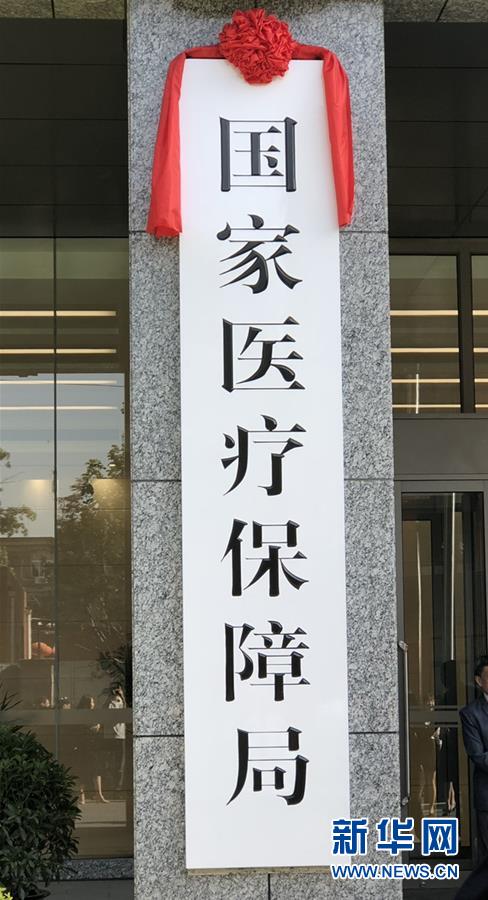
  On the last day of May, the National Health Insurance Bureau, which integrated the relevant responsibilities of the Ministry of Human Resources and Social Security, the National Development and Reform Commission and the Ministry of Civil Affairs, was officially unveiled. So far, all the 25 newly established or reorganized departments that should be listed in the deepening party and state institutional reform plan have been listed.

  Intense preparation, pragmatic and efficient. From centralized office to establishment of institutions, from the first publication to the first press conference, all departments have fully implemented the central deployment, and a new round of institutional reform has steadily advanced in depth.

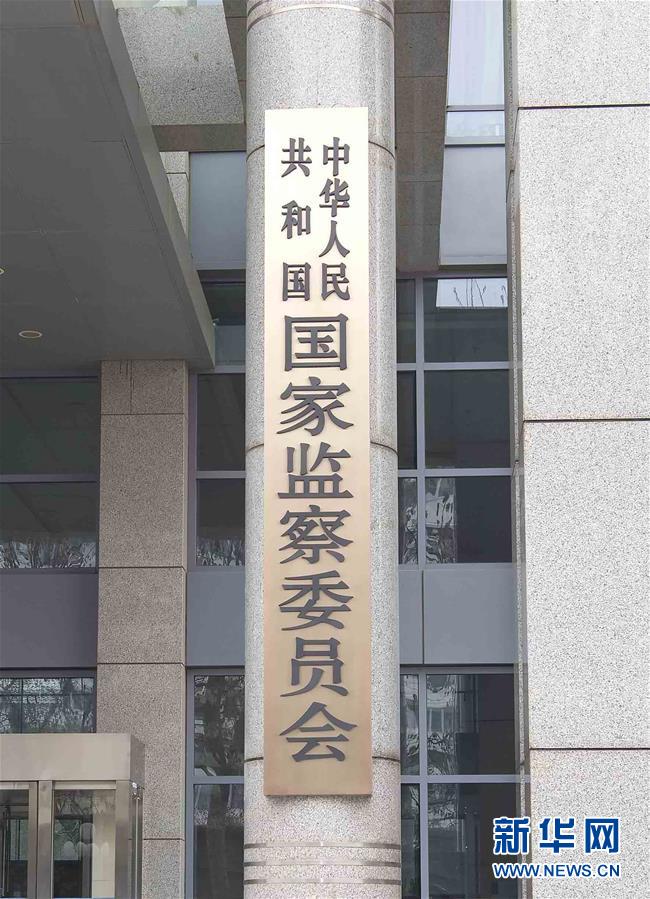
  Institutional reform is advancing in depth. This is the brand of the National Supervisory Commission (NSC), People’s Republic of China (photo taken on March 23rd). Xinhua News Agency reporter Li Tao photo

  Intensive listing of 25 departments highlights the determination to reform

  At No.2 North Street, Yuetan, a brand-new brand of National Health Insurance Bureau came into public view.

  "As an important part of deepening the reform of the party and state institutions, the establishment of the National Medical Security Bureau will effectively strengthen the government’s medical security function and promote medical care, medical insurance and medicine as a whole ‘ Three medical linkage ’ Have an important impact. " Hu Yinglian, an associate professor at the Central Party School (National School of Administration), said.

  The adjustment of the party and state institutions is a profound change in promoting the modernization of the national governance system and governance capacity. The great adjustment and rapid formation of the new department fully demonstrate the courage and determination of reform.

  Only two days after the full text of "Deepening the Reform of Party and State Institutions" was published, the newly formed the National Supervisory Commission (NSC) was officially unveiled and began to operate.

  Since then, a number of newly established departments, such as the National Health and Wellness Commission, the National Immigration Bureau, the Ministry of Agriculture and Rural Affairs, and the State Grain and Material Reserve Bureau, have been listed in place one after another.

  Thirteen responsibilities of 10 departments have been integrated, and the emergency management department involves many fields and many people, which is called the "super department" in this adjustment.

  "In the process of formation, it is required that the mind is not chaotic, the work is constant, the team is not scattered, and the enthusiasm is not reduced." Flash Chunchang, head of the the State Council Emergency Management Expert Group, said that unifying all emergency rescue functions in one system will enhance the overall ability to resolve security risks.

  In the early morning of May 28th, an earthquake of magnitude 5.7 occurred in Songyuan, Jilin. The Emergency Management Department, which was established just over a month ago, immediately deployed relevant emergency response work. In order to be a good "night watchman" of the party and the people, a department leader is on duty 24 hours a day.

  The newly established State Administration of Market Supervision has realized "one team in charge of the market", aiming at solving the problem of "Jiulong Water Control and Multi-head Management".

  "Institutional reform is first and foremost the transformation of government functions." Zhang Mao, director of the State Administration of Market Supervision, said, "We should promote the work of market supervision through institutional reform so that the people can truly feel the fruits of reform."

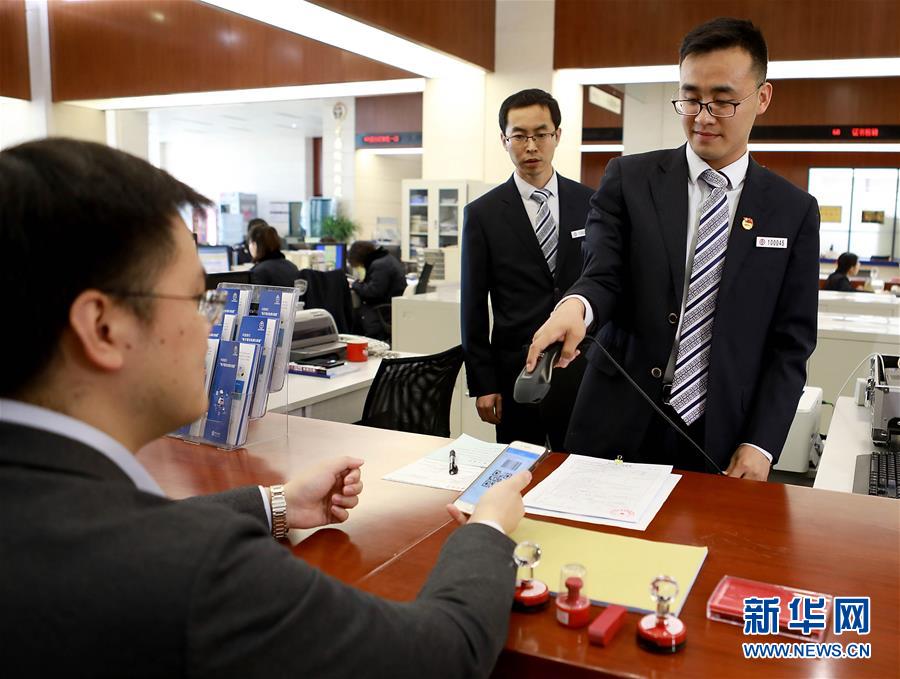
  On April 9th, the mobile phone version of the electronic business license launched by the State Administration of Markets of China was distributed in Dongjiang District of Tianjin Pilot Free Trade Zone for the first time. This is the staff scanning code registration for Chen Pengyun (first from left), the chairman of Tianjin Peanut Good Car Automobile Trade Co., Ltd. Xinhua news agency

  Fully implement the central government’s deployment, and the positive effects of reform are beginning to appear.

  Deepening the reform of the party and state institutions is not only a physical reorganization and assembly of institutions, but also a "chemical reaction" through the reform to promote personnel integration, business integration and functional optimization.

  Over the past three months, various departments have accelerated the implementation of the central government’s deployment, and the reform effect has initially appeared. Some party and government organizations with overlapping functions and overlapping work have been successfully integrated, and the overall leadership of the party has been effectively strengthened.

  "The Central Rural Work Leading Group Office is located in the Ministry of Agriculture and Rural Affairs, which further strengthens the Party’s support for ‘ Agriculture, countryside and farmers ’ Centralized and unified leadership in work, focusing on ‘ Above the neck ’ Service top-level design, also grasp ‘ Below the neck ’ The implementation of the implementation has integrated decision-making staff, implementation and implementation. " The relevant person in charge of the Ministry of Agriculture and Rural Affairs said.

  At present, the central agricultural office and the Ministry of Agriculture and Rural Affairs have been fully integrated, and the reform has basically been put in place. The Secretariat Group of the Central Leading Group for Education, located in the Ministry of Education, has also started operation recently.

  Through the reform, the functions of various departments are more optimized, the powers and responsibilities are more coordinated and the operation is more efficient.

  Three batches, more than 170 newly discovered problems. This is the first round of national special supervision on environmental protection of drinking water sources recently notified by the Ministry of Ecology and Environment.

  After integrating the water environment management functions originally scattered in the Ministry of Water Resources, the State Oceanic Administration and other departments, the Ministry of Ecology and Environment has a more powerful pace to win the "clear water defense war".

  The reform measures directed at the pain points and the continuous release of the reform potential have continuously enhanced the people’s sense of gain.

  From April 20, the administrative examination and approval items of customs, inspection and quarantine will be fully integrated in one window, and the customs clearance of inbound and outbound passengers’ carry-on luggage will be "one-time inspection", and the supervision of mail express will be streamlined from the original 26 links to 10 links;

  The Ministry of Culture and Tourism organized a centralized law enforcement inspection of online performances and online game markets in response to the outstanding violations of laws and regulations of webcasting reflected by the masses.

  The National Immigration Bureau announced that the system of "only running once" for handling entry and exit documents will be implemented nationwide from May 1;

  "Deepening the reform of the party and state institutions is to better meet the people’s growing needs for a better life and fully let the people enjoy the dividends of reform." The relevant person in charge of the National Immigration Bureau said.

  On May 31, citizen Dou Yuewen went through the online appointment window of the Exit-Entry Administration of Shanghai Public Security Bureau. Since the National Immigration Bureau implemented the system of "only running once" in the whole country in early May, the Exit-Entry Administration of Shanghai Public Security Bureau has further introduced five new measures to facilitate the people, such as reducing the burden of proof of applicants, adding self-service camera equipment and extending the green channel service, so as to provide the people with a more refined and humanized service experience. Xinhua News Agency reporter Fan Junshe

  "Running at a steady pace" to ensure that the reform task is put in place

  All the 25 "new departments" that should be listed are listed, which indicates that the first phase of the reform of the party and state institutions has been basically completed, but there are still more arduous tasks in the reform.

  This institutional reform involves more than 80 central and state organs, departments and directly affiliated units. The scale of reform and adjustment and the depth of interests are the highest in the 40 years of reform and opening up. Only by grasping the key links and doing the work in detail can we promote the reform in a solid and orderly manner.

  "From the Ministry of Environmental Protection to the Ministry of Ecology and Environment, it is not just the name that changes." Liu Youbin, spokesman of the Ministry of Ecology and Environment, said, "We will actively cooperate to do a good job in ‘ Sanding ’ The formulation of the plan ensures the smooth transition of the old and new institutions, and ensures the efficient operation of the new institutions as soon as possible, and earnestly shoulders the new missions, new responsibilities and new tasks entrusted by the central authorities. "

  In the year of deepening institutional reform, the ability to "break" and "stand" is deeply rooted.

  In order to solve the problems of incompatibility and disharmony between some internal party regulations and documents and institutional reform, recently, the CPC Central Committee deployed a special clean-up of internal party regulations and related documents involving the reform of the party and state institutions, and will abolish 3 pieces and amend 35 pieces of regulations and documents.

  The hoof moves steadily and advances gradually.

  The reform plan requires that the institutional reform of the central and state organs should be put in place before the end of 2018; The reform plan of provincial party and government institutions should be reported to the Party Central Committee for approval before the end of September 2018, and the institutional adjustment should be basically in place before the end of 2018.

  Guo Shuqing, Chairman of the Insurance Regulatory Commission of the Bank of China, said that the next step will be to transfer relevant functions and select the best cadres. At the same time, we must do a good job in supervision and ensure that the organization and supervision work are "correct and promoted".

  According to Ma Xiaowei, director of the National Health and Wellness Committee, the next step will be to optimize the setting of departments with the focus on changing functions, and form a management system with reasonable division of labor, consistent powers and responsibilities and efficient operation, so as to ensure the full realization of the reform intention of the CPC Central Committee.

Pension investment results were released last year. What is the rate of return of 10.95%?

  The trillions of pension investment transcripts that have received much attention have been released.

  On September 14th, the National Social Security Fund Council issued the Annual Report on the Entrusted Operation of the Basic Endowment Insurance Fund of the National Social Security Fund Council (2020), which showed that at the end of 2020, the total assets of the basic endowment insurance fund were 1,395.085 billion yuan, and the income from the equity investment of the basic endowment insurance fund was 113.577 billion yuan, with an investment return rate of 10.95% last year, higher than the level of 9.03% in 2019.

  According to the semi-annual report of listed companies, the reporter counted the latest shareholding roadmap of social security fund and basic endowment insurance fund respectively. From the industry distribution of the top five heavyweight stocks, social security funds still prefer finance.

  The return on investment is 10.95%

  The basic old-age insurance fund is a part of the balance fund of basic old-age insurance and its investment income entrusted by the people’s governments of all provinces (autonomous regions and municipalities directly under the Central Government) according to the Measures for Investment Management of Basic Old-age Insurance Fund issued and implemented in the State Council on August 17, 2015. According to the Measures for the Administration of Investment in Basic Endowment Insurance Funds and the entrusted investment management contracts signed by the Social Security Fund and the people’s governments of the entrusted provinces (autonomous regions and municipalities directly under the Central Government), the Social Security Fund will implement separate management, centralized operation and independent accounting for the entrusted basic endowment insurance funds.

  According to the data, in 2020, the income from equity investment of the basic pension insurance fund was 113.577 billion yuan, with an investment return rate of 10.95%, of which: realized income was 85.327 billion yuan (realized return rate was 8.50%), and the change in fair value of trading assets was 28.250 billion yuan. Since the basic endowment insurance fund was commissioned in December 2016, the accumulated investment income was 198.646 billion yuan, with an average annual investment return rate of 6.89%.

  It is reported that the investment scope of the basic old-age insurance fund mainly includes: bank deposits, central bank bills and interbank deposit certificates; Treasury bonds, policy and development bank bonds, financial bonds with credit rating above investment grade, corporate bonds, local government bonds, convertible bonds (including convertible bonds with separate transactions), short-term financing bonds, medium-term notes, asset-backed securities, and bond repurchase; Pension products, listed securities investment funds, stocks, equity, stock index futures, treasury bonds futures. In addition, the basic old-age insurance fund can participate in the investment of major national projects and major projects through appropriate means. When key state-owned enterprises are restructured and listed, the basic endowment insurance fund can make equity investment.

  The annual report pointed out that the Social Security Fund has formed a relatively complete asset allocation system including strategic asset allocation plan, annual tactical asset allocation plan and quarterly asset allocation implementation plan in its investment and operation. Among them, the strategic asset allocation plan determines the medium and long-term target allocation ratio and proportion range of various assets. The annual tactical asset allocation plan is to determine the allocation ratio of various assets in the year within the range of various asset ratios specified in the strategic asset allocation plan. The quarterly asset allocation implementation plan is to determine the specific quarterly implementation plan and make dynamic adjustments through the analysis of the situation and the examination of the annual asset allocation plan.

  In terms of investment methods, the social security fund will adopt a combination of direct investment and entrusted investment to carry out investment operations. Direct investment is directly managed and operated by the Social Security Fund, mainly including bank deposits and equity investments. The entrusted investment is managed and operated by the investment manager entrusted by the Social Security Fund, mainly including domestic stocks, bonds, pension products, listed and circulated securities investment funds, stock index futures, treasury bonds futures, etc.

  According to the annual report, at the end of 2020, the total assets of the basic old-age insurance fund were 1,395.085 billion yuan, the total liabilities were 150.627 billion yuan (mainly short-term liabilities formed in the investment and operation of the basic old-age insurance fund), and the total equity was 1,244.458 billion yuan, of which: the direct investment was 470.006 billion yuan, accounting for 37.77%; The entrusted investment was 774.452 billion yuan, accounting for 62.23%.

  Steady investment performance

  As the weather vane of long-term capital in the capital market, what is the investment performance of the basic endowment insurance fund?

  On August 18th, the 2020 Annual Report of Social Security Fund was released. The National Social Security Fund is a national social security reserve fund, which is used to supplement and adjust social security expenditures such as endowment insurance during the peak period of population aging. The National Social Security Fund consists of central budget allocation, state-owned capital transfer, fund investment income and funds raised in other ways approved by the State Council.

  By the end of 2020, the total assets of the social security fund were 2,922.661 billion yuan, the investment income of the social security fund was 378.660 billion yuan, and the investment return rate was 15.84%. Among them, the realized income was 204.574 billion yuan (realized rate of return was 9.58%), and the fair value change of trading assets was 174.086 billion yuan; Since the establishment of the Social Security Fund, the average annual investment return rate is 8.51%, and the accumulated investment income is 1,625.066 billion yuan.

  Compared with the index performance, at the end of 2020, the Shanghai Composite Index closed at 3,473.07 points, an increase of 13.9%; Shenzhen Component Index closed at 14,470.68 points, up 4,039.91 points or 38.7% from the end of last year.

  Compared with the investment income of insurance funds, some market statistics show that in 2020, the investment income of insurance funds on stocks and securities investment funds totaled 310.1 billion yuan. Among them, the rate of return of insurance investment securities investment funds is 12.2%, and the rate of return of investment stocks is 10.87%.

  The data shows that the total net investment income of listed insurance companies in 2020 was 481.656 billion yuan, a year-on-year increase of 10.03%; The total investment income increased by 14.20% to 585.634 billion yuan.

  List of Awkwardness Stocks Released

  Recently, the semi-annual report of listed companies has been disclosed, and the latest shareholding roadmap of social security funds and basic endowment insurance funds has also surfaced.

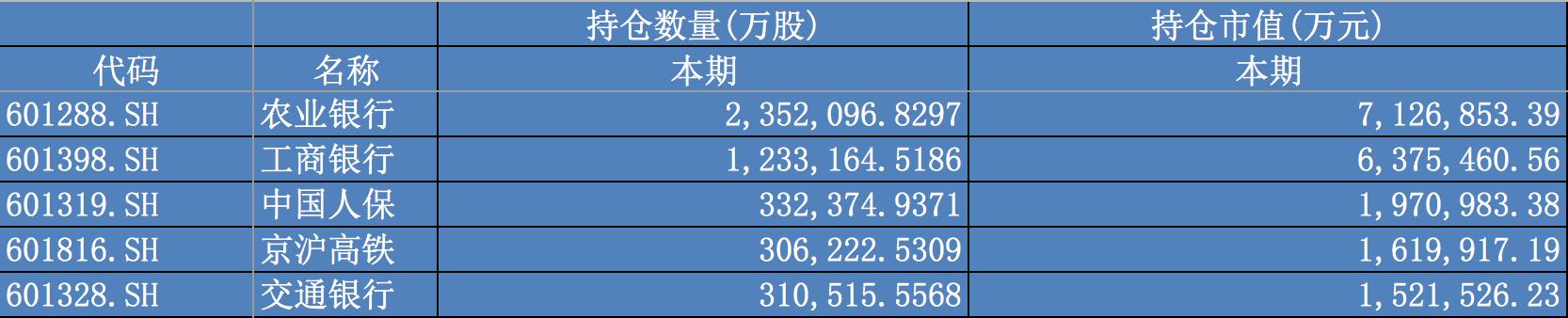
  According to the reporter’s statistics, at the end of the second quarter, the social security fund held the highest market value of Agricultural Bank of China (601288.SH), reaching 71.3 billion yuan, with 23.5 billion shares. From the industry distribution of the top five heavyweight stocks, social security funds still prefer finance.

  In terms of basic endowment insurance funds, in terms of the number of shares held, Focus Media has the largest number of shares in the first half of the year, with a shareholding of 133,594,900 shares; Judging from the stock market value, the market value of Renfu Medicine’s positions reached 1,324,672,800 yuan.

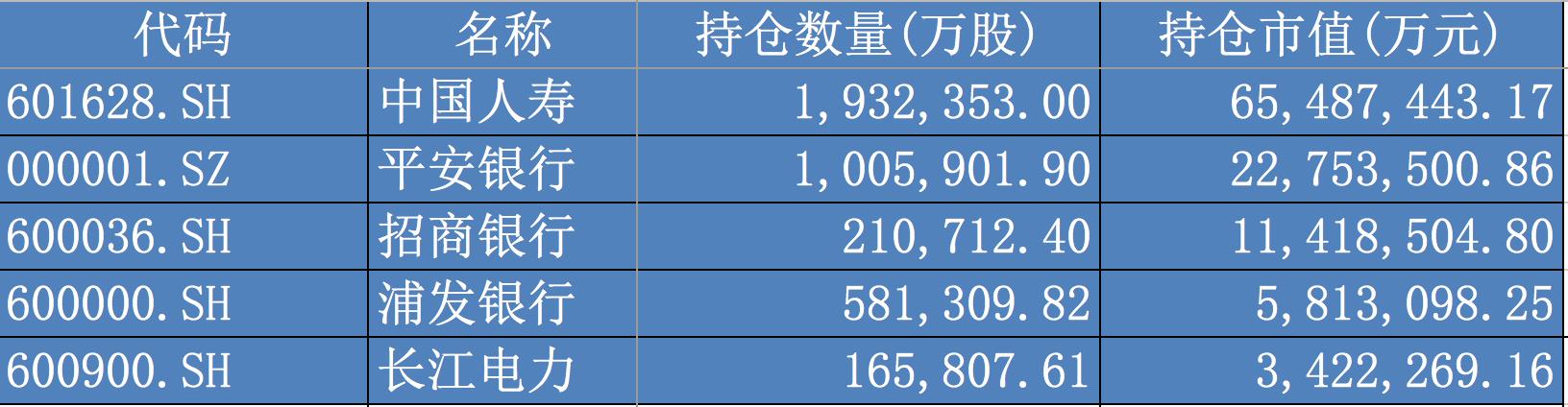
  In addition, insurance funds are also one of the weathervanes of long-term funds in the capital market. According to statistics, at the end of the second quarter, China Life Insurance held the highest market value, reaching 654.8 billion yuan, with 19.3 billion shares.